



US grants India 30-day waiver to buy Russian oil stranded at sea as Iran war escalates
- In Reports
- 01:17 PM, Mar 06, 2026
- Myind Staff
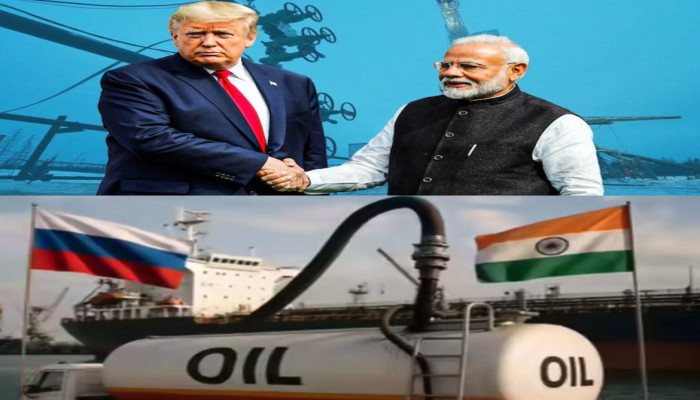
The United States has issued a temporary 30-day waiver allowing Indian refiners to purchase Russian crude oil that is currently stranded at sea. The U.S. Treasury Department announced the decision as a short-term measure to ensure that global oil supplies continue to flow despite disruptions caused by the ongoing conflict in the Middle East.
The waiver comes at a time when India is trying to deal with a possible oil supply shortage triggered by tensions in West Asia. According to sources familiar with the matter, Indian refiners have started buying millions of barrels of Russian crude oil for immediate delivery as the country attempts to secure energy supplies during the crisis.
U.S. Treasury Secretary Scott Bessent said the waiver was issued to ensure stability in global energy markets. He explained that the step was taken to allow Indian refiners to buy Russian oil that is already floating at sea and unable to reach buyers due to existing restrictions.
“To enable oil to keep flowing into the global market, the Treasury Department is issuing a temporary 30-day waiver to allow Indian refiners to purchase Russian oil,” Bessent said.
He further clarified that the measure is strictly limited in scope and will not significantly benefit the Russian government financially.
“This deliberately short-term measure will not provide significant financial benefit to the Russian government as it only authorises transactions involving oil already stranded at sea,” he said in a statement.
Bessent described the decision as a temporary step meant to manage the current situation. He also said that the United States expects India to increase its purchases of American oil in the future.
“India is an essential partner of the United States, and we fully anticipate that New Delhi will ramp up purchases of U.S. oil,” he said. “This stopgap measure will alleviate pressure caused by Iran’s attempt to take global energy hostage.”
India has become vulnerable to supply disruptions because of its heavy dependence on crude oil imports. The country’s crude stocks currently cover only about 25 days of demand. In addition, around 40 per cent of India’s oil imports come from the Middle East through the Strait of Hormuz, one of the most important global oil transit routes.
Due to the uncertainty caused by the Middle East conflict, Indian refiners have begun searching for alternative supplies. According to six sources familiar with the matter, state-run refiners have been in discussions with traders to secure Russian oil cargoes that could arrive at Indian ports in March and early April.
The refiners involved in these discussions include Indian Oil Corporation, Bharat Petroleum Corporation, Hindustan Petroleum Corporation and Mangalore Refinery and Petrochemicals Limited. These companies are negotiating with traders to ensure the prompt delivery of Russian crude oil cargoes.
One source involved in the discussions said that Indian state refiners have already purchased about 20 million barrels of Russian oil from traders. Industry data also showed that Hindustan Petroleum Corporation Limited and Mangalore Refinery and Petrochemicals Limited last received Russian cargoes in November.
Traders said that Russian Urals crude is currently being offered to Indian buyers at a premium of about 4 to 5 dollars per barrel above Brent crude on a delivered basis for shipments expected to arrive in March and early April.
This represents a major change compared with February, when similar cargoes were trading at a discount of about 13 dollars per barrel. Before the conflict began on February 28, Hindustan Petroleum Corporation Limited had purchased two cargoes of Russian oil at that discounted price.
According to traders, the current situation in the oil market has shifted the focus of buyers. Instead of prices, the availability of oil has become the main concern for refiners.
“India refiners are back in the market ... nowadays more than prices, availability of molecules is the issue,” one trader involved in Russian oil sales to India said.
The trader also said that Reliance Industries had approached his company seeking prompt deliveries of Russian oil cargoes.
Earlier, India had become the largest buyer of Russian seaborne crude after Russia invaded Ukraine in 2022. However, Indian refiners began reducing purchases in January after months of pressure from Washington aimed at limiting revenue flowing to Moscow’s war effort.
Reducing Russian oil purchases helped India avoid possible 25 per cent tariffs and secure an interim trade agreement with the United States.
It is still not clear whether the United States has formally allowed India to increase Russian oil purchases to offset potential supply losses from the Middle East. A source involved in the matter said that India had approached the administration of U.S. President Donald Trump seeking approval to buy Russian crude imports due to the Iran conflict.
Meanwhile, India’s oil and foreign ministries did not respond to requests for comment. The White House and the U.S. Treasury Department also did not immediately respond to requests for comment on the development.



 Loading...please wait
Comments