




US, France spar over a second term for UN Human Rights chief at UNSC
- In Reports
- 01:52 PM, Jul 28, 2026
- Myind Staff
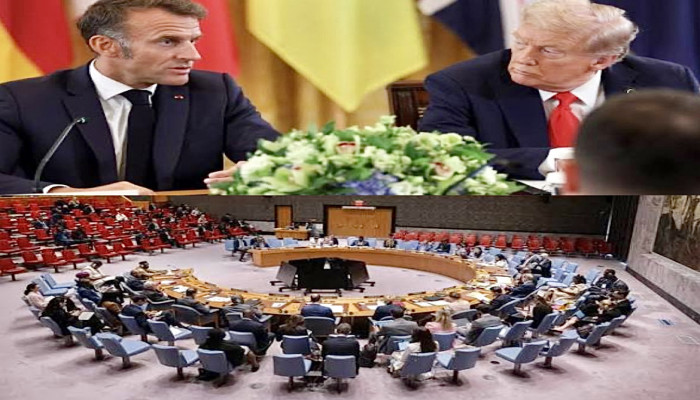
Tensions between the United States and France escalated at the United Nations after a dispute over the extension of U.N. human rights chief Volker Turk's term. The disagreement led the U.S. delegation to walk out during France's remarks at a United Nations Security Council meeting on Ukraine. The incident marked a rare public clash between two long-time allies and reflected growing differences over human rights issues at the global body.
The diplomatic row started after France criticised the United States for voting against a proposal to extend Volker Turk's term as the U.N. High Commissioner for Human Rights for another four years. The proposal went before the U.N. General Assembly and received strong support from most member states. France expressed its criticism on X, formerly known as Twitter, and compared the United States with Russia, North Korea and several other countries that also voted against the resolution.
The French comments triggered a strong response from Washington. U.S. Ambassador to the United Nations Mike Waltz accused France of supporting a human rights chief who, according to him, unfairly targets democratic countries while ignoring authoritarian governments. Waltz said France was backing a rights chief who criticises democratic nations like the U.S. and Israel while "cosying up to the world's worst oppressors." He did not provide further details to support the claim.
The disagreement intensified during a United Nations Security Council meeting focused on Russia's war in Ukraine. Speaking at the session, Dan Negrea, an alternate U.S. representative to the United Nations, announced that the American delegation had walked out while France delivered its remarks. He said the United States would continue taking the same step until France "renounces their condescending and disrespectful rhetoric." Negrea strongly criticised France's remarks and described them as "politicised drivel" and "disingenuous grandstanding."
The vote that sparked the dispute took place at the U.N. General Assembly on Friday. Member states voted on a proposal to extend Volker Turk's term as the U.N. human rights chief for another four years. The proposal came from U.N. Secretary-General Antonio Guterres and received overwhelming backing from the Assembly.
The resolution passed with 144 countries voting in favour. Ten countries voted against the extension, while 13 countries abstained. The United States joined Russia, Israel and several other nations in opposing the measure. Washington also warned that it could reassess its funding and future engagement with the United Nations over the issue.
Volker Turk has often spoken out on major international conflicts and human rights concerns. He has strongly criticised Russia's military actions in Ukraine and raised concerns about Israel's conduct during the war in Gaza. He has also called for investigations into deaths that occurred in U.S. immigration custody. His positions have attracted criticism from several governments, including those that opposed his second term.
The dispute over Turk's reappointment highlights broader tensions between the administration of U.S. President Donald Trump and the United Nations. Over recent years, Washington has reduced financial support for several U.N. agencies and withdrawn from numerous U.N. bodies. These decisions have widened differences between the United States and the international organisation on several global issues.
Human rights groups have argued that the office of the U.N. High Commissioner for Human Rights remains essential at a time when authoritarian governments are gaining greater influence around the world. They believe the role is critical for monitoring human rights violations and holding governments accountable through international mechanisms.
The United Nations has remained cautious while responding to the latest diplomatic dispute. Deputy U.N. spokesperson Farhan Haq declined to comment directly on the U.S. walkout during the Security Council meeting. However, he said the United Nations expects all member states to respect decisions adopted through the General Assembly.
The latest confrontation has exposed growing differences between two close allies inside the United Nations. It has also drawn attention to wider disagreements over the role of international institutions, human rights oversight and the future direction of global cooperation. While the General Assembly has approved Volker Turk's second term with overwhelming support, the disagreement between Washington and Paris has added another layer of tension to ongoing debates within the United Nations.



 Loading...please wait
Comments