



US expresses willingness to join India’s nuclear energy sector after liability law change
- In Reports
- 06:14 PM, Dec 23, 2025
- Myind Staff
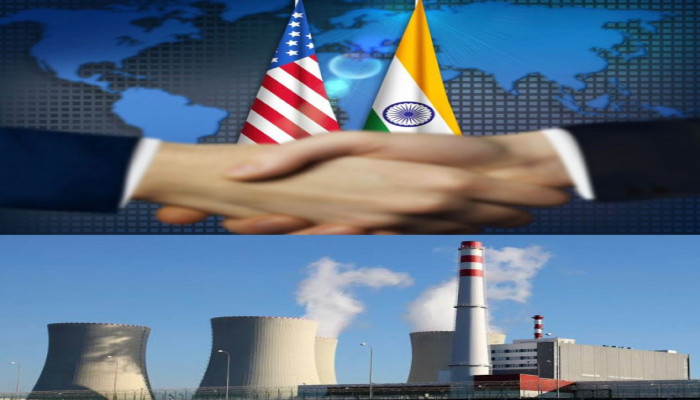
The United States has expressed its readiness to participate in India’s nuclear energy sector shortly after the Indian Parliament passed a major law that changes the country’s nuclear liability framework and opens the sector to private investment. The move marks a significant shift in India’s nuclear policy, which for decades was controlled solely by the government and restricted by strict liability rules.
The US government signalled its interest publicly through an official statement posted by the US Embassy on the social media platform X on Monday. “The United States stands ready to undertake joint innovation and R&D in the energy sector,” the embassy said, indicating Washington’s willingness to work closely with India following the recent legal changes.
Last week, the Indian Parliament approved legislation that ended the long-standing state monopoly over nuclear power generation. Along with allowing private companies to enter the sector, the law introduced sweeping changes to India’s nuclear liability provisions. These provisions had earlier discouraged foreign companies and investors from participating in nuclear projects in the country.
For years, India’s nuclear energy sector struggled to attract large investments due to concerns over liability in case of accidents. A controversial law introduced in 2010 made suppliers liable for damages due to nuclear accidents. This provision exposed equipment suppliers and technology providers to financial risks, leading many international companies to stay away from the Indian market. As a result, the expansion of India’s nuclear energy sector remained slow.
The newly passed law addresses these concerns directly. Under the revised framework, suppliers are now entirely spared from nuclear liability. The responsibility has been shifted mainly to the operators, while the overall liability has been capped. The cap on liability is linked to the size of the reactor, providing clarity and predictability for companies involved in nuclear projects.
In addition, the new law allows the government to create a special fund to cover claims that exceed the set liability limits. This step is aimed at offering further protection and reassurance to investors and operators, reducing financial uncertainty and encouraging participation from both domestic and foreign players.
According to a Bloomberg News report published last week, the changes are expected to attract investments worth around $214 billion into India’s nuclear energy sector. The report also noted that proposals from major Indian business groups, including the Adani Group, are currently under consideration as part of this investment push.
The timing of the US response is significant, as it comes days after the Indian Parliament approved the reforms. The renewed interest from the United States also reflects the broader history of nuclear cooperation between the two countries.
In 2008, India and the US signed a landmark nuclear deal that ended a decades-long global freeze on atomic supplies to India. The agreement gave India legal access to nuclear materials, fuel, and advanced technology from the international market, helping the country plan an expansion of its nuclear power programme.
However, despite the breakthrough agreement, progress on the ground remained limited due to the liability law introduced two years later. The 2010 law allowed operators to seek compensation from suppliers in case of an accident, a provision that many foreign companies found unacceptable. This issue remained a major sticking point in India’s nuclear partnerships for years.
With the latest legal reforms, those long-standing barriers appear to have been removed. By limiting liability and easing conditions for operators, the government has created a more investor-friendly environment. This has renewed global interest in India’s nuclear sector, with the US now publicly stating its willingness to engage.
The government believes that fresh investment will help revive the underperforming nuclear energy industry. Nuclear power is seen as an important part of India’s long-term energy plans, especially as the country looks to meet rising electricity demand while diversifying its energy sources.
The renewed push in nuclear energy is also linked to Prime Minister Narendra Modi’s broader development vision. Increased investment in the sector is expected to support the goal of transforming India into a developed nation by the year 2047.
With Parliament clearing the way for private participation and easing liability concerns, India’s nuclear energy sector is entering a new phase. The US response suggests that international cooperation and investment could play a key role in shaping the future of nuclear power generation in the country.



 Loading...please wait
Comments