



US deploys ‘Warthogs’ hints possible ground offensive in Iran
- In Reports
- 05:39 PM, Apr 04, 2026
- Myind Staff
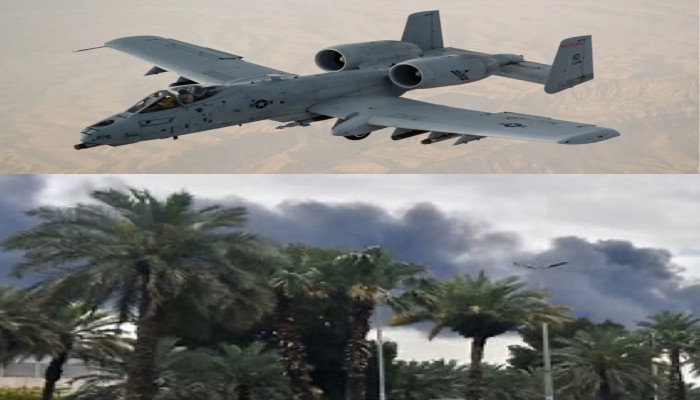
The evolving military posture of the United States toward Iran is showing a growing disconnect between its public messaging and actions on the ground. While President Donald Trump continues to speak about negotiations and expresses hope for a quick end to the conflict, his warnings to Iran remain aggressive. He has stated that the US could bomb Iran "back to stone age" if it refuses to comply with demands, particularly regarding the Strait of Hormuz. This dual approach—talking peace while preparing for escalation—has made the situation more complex and uncertain.
At the same time, developments in the region suggest that the US may be preparing for something beyond just an air campaign. Military deployments, training exercises, and strategic planning are pointing toward a broader operational framework. These activities indicate that the US is not only maintaining pressure from the air but also quietly setting up conditions that could support ground operations if required. This widening gap between what is being said publicly and what is being prepared militarily is becoming more noticeable.
One of the most significant signs of this shift is the deployment of A-10 attack aircraft, commonly known as ‘Warthogs’. These aircraft are specifically designed for close air support, which means they are used to assist ground troops during combat. Their primary role is not long-range bombing but providing direct support in battlefield situations. Because of this, their presence in the region is being seen as a strong indication that ground engagement is being considered. Unlike fighter jets that are used in air dominance or precision strikes, A-10s are closely tied to operations involving troops on the ground.
The Warthog’s design and function make it especially suited for low-altitude missions where it can target enemy positions while coordinating with forces below. Its deployment suggests preparation for scenarios where US or allied troops might be involved in direct combat. This has raised questions among analysts about whether the US is planning for a deeper level of involvement in the conflict with Iran.
Alongside the deployment of these aircraft, there have been reports of increased coordination and logistical planning. Military exercises in the region have also taken on a tone that aligns more with preparing for sustained operations rather than short-term strikes. These exercises are not just about readiness but about ensuring that forces can operate effectively in a more complex and extended conflict environment.
The contradiction becomes sharper when viewed in the context of diplomatic messaging. On one hand, the US leadership is presenting the situation as one that can still be resolved through talks. On the other hand, the scale and nature of military preparations suggest that contingency plans for escalation are being actively developed. This creates uncertainty not only for Iran but also for other countries in the region, as they try to interpret the true intentions behind US actions.
Another critical aspect of the situation is the Strait of Hormuz, which remains central to the tensions. This strategic waterway is vital for global oil transport, and any disruption there could have significant economic consequences worldwide. The US has been clear about its stance on keeping the strait open, and this has become a key point of pressure in its dealings with Iran. However, ensuring this objective could require more than just naval or air power, further adding to speculation about possible ground involvement.
The presence of the A-10 Warthogs, combined with other military signals, is therefore being interpreted as part of a larger pattern. It reflects a shift from a limited engagement approach to one that keeps the option of ground operations open. While it does not confirm that such an invasion is imminent, it clearly shows that the groundwork for it is being considered.
As the situation continues to develop, the contrast between diplomatic language and military readiness will remain a key factor in understanding US strategy. The decisions made in the coming days will determine whether the current trajectory leads to de-escalation or a deeper conflict. For now, the signals coming from the region suggest that the possibility of a broader military engagement cannot be ruled out.



 Loading...please wait
Comments