




US Court drops criminal charges against Gautam Adani, Sagar Adani and Vneet Jaain
- In Reports
- 01:13 PM, Aug 11, 2026
- Myind Staff
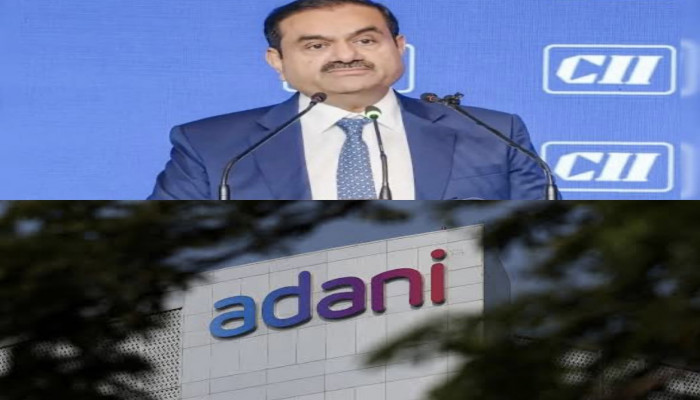
A US court on Monday dismissed all criminal charges against Gautam Adani, Sagar Adani and their associate Vneet Jaain, bringing an end to the criminal proceedings against the three. Judge Nicholas Garaufis of the United States District Court for the Eastern District of New York dismissed the securities and wire fraud charges against the Adanis with prejudice. This means the charges cannot be brought again. However, the judge raised concerns over what he described as “irregularities” in the decision by the Trump administration’s Justice Department to stop pursuing the case.
The court also finalised a separate settlement between Gautam and Sagar Adani and the US Securities and Exchange Commission. Under the settlement, the Adanis will pay $18 million to the US government. The settlement does not require them to admit guilt. The judge, however, reserved his decision on bribery and obstruction of justice charges against other defendants in the wider case.
The legal case dates back to November 2024, when the US Justice Department unsealed an indictment against the Adani group and its associates. The indictment alleged that the group was involved in a $265 million bribery scheme linked to contracts for solar energy projects with Indian government entities. The Adanis were also accused of misleading US and international investors about the group’s anti-corruption efforts.
Other associates of the Adanis faced allegations of trying to obstruct investigations by US authorities. They were accused of destroying evidence connected to the case. Separately, the US Securities and Exchange Commission filed civil securities fraud charges against Gautam and Sagar Adani over the same allegations.
The case continued through a lengthy legal battle before the US Department of Justice informed the court in May that it would no longer pursue legal action against Gautam Adani and his associates. In a filing made in July, United States Principal Associate Deputy Attorney General Trent McCotter said the charges against the Adani group should not have been filed in the first place.
McCotter argued that the case largely concerned matters in India and another foreign jurisdiction. He said pursuing it diverted resources from domestic issues in the US. The decision attracted considerable attention and controversy. Media reports suggested that the Adani group’s proposal to invest $10 billion in the US may have played a role in the Justice Department’s decision.
Judge Garaufis took the unusual step of asking the Justice Department to explain its reasons for seeking dismissal of the indictment. He described the department’s motion as “terse, bland and conclusory”. The judge also ordered Gautam Adani to submit a sworn affidavit addressing whether he knew of any quid pro quo offered by anyone in exchange for the US government ending the legal proceedings against him.
In his affidavit, Adani said he was not aware of any such quid pro quo. He also said his lawyers had suggested that his publicly announced plan to invest $10 billion in the US could potentially form part of a resolution to the legal case. Adani, however, said the Department of Justice had made it clear that any promises of investment in the US would not affect its decision on whether to continue the criminal proceedings. His statement was consistent with comments made by McCotter.
The matter finally culminated in Judge Garaufis dismissing the criminal charges against Gautam and Sagar Adani on Monday. The judge said the court was satisfied, based on information provided by the Justice Department, that the Adanis’ $10 billion investment proposal was a “non-consideration” in the department’s decision to end the case.
Despite allowing the dismissal, Garaufis criticised the way the US government handled the matter. He raised several concerns over the decision to drop charges against all defendants. The judge specifically criticised McCotter’s role in the process.
“As noted throughout this opinion, the irregularities in the decision to dismiss the Indictment are concerning. On the current record, McCotter appears to have eschewed the professional opinions of innumerable officials from various federal offices and replaced them with his singular judgment. The fact that McCotter came to this decision largely in collaboration with defence counsel, and seemingly without input from the FBI and SEC agents who investigated the alleged misconduct, or the attorneys from the Department, SEC, and US Attorney's Office who brought the case, appears to be highly unusual,” reads the judgement.
The judgement further noted that McCotter was the sole decision maker in the move to dismiss the charges. It also highlighted his admission that current or former US government attorneys could disagree with the decision to end the case.
The Adani group also faced a separate US regulatory matter. In May, Adani Enterprises Limited agreed to pay $275 million to settle with the US Treasury’s Office of Foreign Assets Control over apparent violations of US sanctions on Iran. The settlement was separate from the criminal case involving Gautam and Sagar Adani.



 Loading...please wait
Comments