




US, China build ‘hunter’ satellites as space warfare moves closer to reality
- In Reports
- 06:20 PM, Sep 02, 2026
- Myind Staff
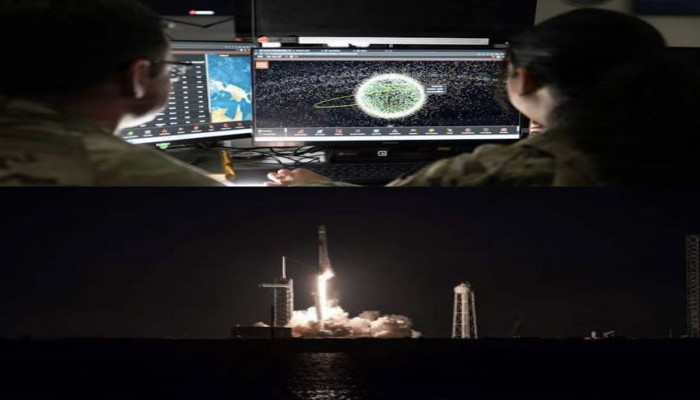
In June, a secretive Chinese unmanned spaceplane released a small satellite hundreds of miles above Earth. The satellite moved in an orbital region packed with commercial and military spacecraft. It then moved around another Chinese satellite before heading back toward the spaceplane, according to US space-tracking company LeoLabs. The mission remains largely unknown. The activity, however, highlights the growing focus on military operations in space.
China and the United States are developing increasingly advanced systems as both countries prepare for the possibility of a conflict that could extend beyond Earth. The US military also operates a secretive unmanned spaceplane that resembles a small shuttle. Both programs show how military space operations are changing rapidly, according to a Reuters review of documents, space-tracking data and interviews with current and former military officials.
Chinese researchers working with the military are designing satellites to pursue and capture other spacecraft. They are also developing systems that could provide fuel supply for such satellites during missions. The United States and Britain have also carried out their first joint military operation in space near a suspected Chinese spy satellite, according to commercial space-tracking data.
"The Chinese are rapidly developing capabilities," including ground- and space-based weapons designed to interfere with or destroy targets, U.S. Space Force's Chief of Space Operations General Chance Saltzman said in July. The threat from China is "substantial," added Saltzman, who is retiring.
Satellites have become a key part of modern warfare. The wars in Ukraine and the Middle East have shown their importance. Military forces depend on satellites for communications, navigation and intelligence. Satellites traditionally stayed in fixed orbits after launch. Militaries are now developing systems that can move, approach other spacecraft and potentially attack them.
Such attacks could involve jamming signals, using lasers to disrupt sensors or physically capturing another spacecraft. Everett Dolman, a former professor at the U.S. Air Force's Air War College, said disruption of the US space capabilities would "cripple our massive military in the terrestrial sphere," affecting everything from surveillance to missile defence. He said spaceplanes could be seen by opponents as potential "space fighters" due to their ability to move, deploy satellites and carry cargo.
The competition is growing as Earth's orbit becomes increasingly crowded. SpaceX operates about 11,000 Starlink satellites and plans larger AI-enabled data centres in space. China is developing competing satellite networks. US President Donald Trump's Golden Dome missile defence program also includes plans for space-based interceptors.
The United States is improving its own orbital capabilities. In a joint US-British operation in September 2025, US space forces in Colorado directed a US military satellite to move close to a British satellite. At the time, China's Shiyan 12-01 satellite passed about 83 kilometres below them, according to space intelligence company Slingshot Aerospace.
Three space experts with military backgrounds told Reuters that the operation appeared to send a message to Beijing. Andrew Turner, a retired senior British air force officer who now works as a space consultant, said it was "almost certainly a strategic signal to China" to demonstrate allied unity, capability and a warning to not interfere with the UK satellite.
The US and Britain publicly announced the operation. It was the first known military space operation between two members of the Five Eyes intelligence alliance. They did not reveal the operation's proximity to the Chinese spacecraft. Much of the activity in space remains classified due to its intelligence value.
US Space Command said the mission showed its ability to work with allies in space. Britain's defence ministry said space is becoming more important to military operations. It added that the UK and its partners were conducting advanced orbital operations to protect national and military interests. Neither side commented on the operation's proximity to the Chinese satellite.
Lieutenant General Douglas Schiess, who is set to become the US Space Force's next chief of space operations, was involved in the mission. He later said operating close to another spacecraft could help confirm whether an allied satellite was working properly or establish whether an adversary was "doing something it shouldn't." He did not say at the time whether another country's satellite had been nearby.
Britain later disclosed that the mission took place alongside a maritime deployment to the Indo-Pacific region. Then UK Space Command chief Major General Paul Tedman said in April that using space not only to support military operations on Earth but also to influence their outcome is "really, really important." Tedman has since retired.
China's foreign ministry said it did not know the details of the US-British operation. Beijing said it opposes the weaponisation of space and supports peaceful use of space. It also accused Washington of encouraging an arms race through the Golden Dome missile defence system and possible space-based weapons. China said it had no information about Shiyan 12-01 or the Chinese spaceplane. State news agency Xinhua has described Shiyan 12-01 as a spacecraft conducting space environment surveys. It has described the spaceplane as an experimental craft supporting peaceful space activities. The US Space Force says its own spaceplane is conducting tests and experiments.
US Space Command chief General Stephen Whiting has repeatedly warned that space will play a major role in future wars. He said adversaries are developing ways to block US access to important space systems and weaken American military capabilities. He expects enemy forces could target US space assets early in a conflict.
Whiting has called for a more active US military posture in space. He said the United States must protect its systems and remain ready to threaten or strike hostile assets when required. He has also called for orbital interceptors and other weapons. "We must be well-prepared for conflict in space. And if deterrence fails, we will fight and win," he told a conference in April.
Western officials have warned about several threats, including ground-based lasers, electronic jammers, cyberattacks and anti-satellite missiles. The US, China and Russia already operate manoeuvrable satellites, which can approach and inspect other spacecraft. These systems could potentially carry weapons such as lasers or projectiles. Western officials say China and Russia have demonstrated technologies that could threaten US and allied satellites.
The United States has also accused Russia of developing an anti-satellite system involving a satellite that could carry a nuclear weapon. Moscow has denied developing a nuclear anti-satellite weapon in space. Former UK Space Command chief Tedman said militaries now view satellites as "weapons systems" that need to manoeuvre and fight. He said the West is "working hard to retain our strategic advantage in space."
Some experts say attacking satellites from Earth remains easier than using one spacecraft to attack another. The US Space Force revealed one of its own capabilities in June. It announced an earth-based electromagnetic weapon developed by L3Harris Technologies that can disable or disrupt adversary satellites.
China, meanwhile, is expanding both its satellite fleet and the complexity of its missions. Chinese satellites have demonstrated what US officials describe as orbital "dogfighting," with several spacecraft moving together in close formation. Chinese spacecraft have also shown the ability to capture a dead satellite and shift it into another orbit.
Last year, China likely attempted to refuel a satellite in orbit, according to a US Space Force official. Such technology could significantly extend a satellite's operational life. Satellites normally depend on the fuel they carry at launch. The ability to refuel them could change the balance between spacecraft that pursue other satellites and those being pursued.
Chinese institutions are continuing to develop these technologies. Patent documents show that the maker of some of China's most advanced military aircraft obtained technology that allows satellites to calculate fuel-efficient movements while pursuing another spacecraft. A technology-transfer notice from the National University of Defence Technology described a mature system capable of managing hundreds of satellites at the same time for defensive and operational purposes.
Researchers at another major Chinese university with close military links are also developing pursuit satellites. Patent documents describe concepts involving several spacecraft using nets to capture targets. The institutions and China's People's Liberation Army did not respond to requests for comment. Such technologies could have civilian uses as well. China's official military newspaper, PLA Daily, said in a 2022 editorial that controlling space was essential for protecting national security, gaining the strategic initiative and achieving victory in war.



 Loading...please wait
Comments