




US cancels joint amphibious drill with South Korea as Iran War strains availability of forces
- In Reports
- 07:25 PM, Aug 24, 2026
- Myind Staff
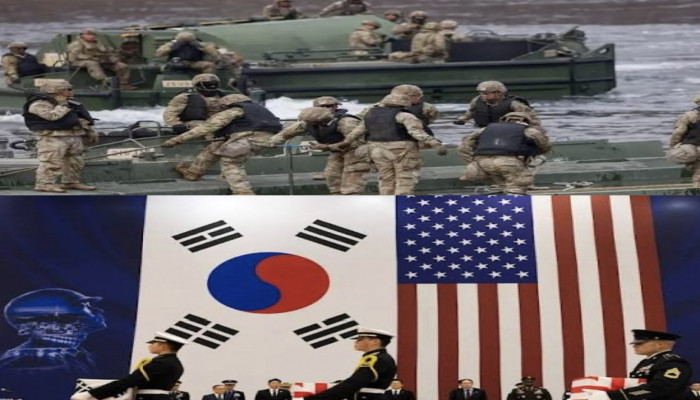
The United States has cancelled a major joint amphibious exercise with South Korea as the war with Iran puts pressure on the availability of US forces. The decision has raised concerns over Washington’s ability to maintain its military commitments in both West Asia and the Indo-Pacific.
The cancellation comes just days after the US also scaled back another major military exercise with Seoul. South Korea said on Monday that the biennial Ssangyong exercise, planned for next month, had been called off after the US Marine Corps informed Seoul that it faced limits on deploying forces due to the situation in West Asia. The exercise normally brings together warships, aircraft and ground forces for amphibious landings and other joint operations.
South Korean Marine Corps spokesman Han Seung-jeon said the US had notified Seoul in June about restrictions on its ability to deploy forces for this year's Ssangyong exercise. Seoul and Washington are still discussing whether the amphibious drill can be held at a later date. The Pentagon had not immediately commented on South Korea's announcement.
The move comes as the US military continues to face growing demands from the Iran war. Pentagon casualty data shows that 756 US service members have been wounded in action since the conflict began, while 18 have been killed. This brings the combined number of US military deaths and injuries to 774.
The Pentagon recently added 50 wounded personnel to its database. The latest figures highlight the human and operational costs of the conflict. They also show the growing pressure on US military resources as Washington continues its operations in West Asia.
The cancellation has raised wider questions about the US military’s ability to manage commitments across different regions. A prolonged demand for troops and equipment in West Asia could affect Washington’s ability to maintain the same level of military presence and readiness in the Indo-Pacific.
The Ssangyong decision follows another major change to joint US-South Korea military activities. President Donald Trump substantially reduced the annual Ulchi Freedom Shield exercise with Seoul. The drill was originally scheduled to run for 11 days but ended after only five days.
Trump argued that the exercises were expensive and sent an "inappropriate and hostile" message to North Korea. The decision also comes as Trump seeks to revive engagement with North Korean leader Kim Jong Un. The US president recently said it was important for Washington to maintain a relationship with Kim.
Trump also claimed that North Korea now possesses 57 nuclear weapons. South Korea has given a higher estimate, saying Pyongyang has between 80 and 120 nuclear weapons. The differing assessments underline the security concerns surrounding North Korea’s nuclear programme.
For South Korea, the cancellation of Ssangyong is significant not only due to the loss of one military exercise but also due to the wider changes in joint defence activities with the US. Seoul was reportedly caught off guard by the decision to scale back Ulchi Freedom Shield.
South Korean Foreign Minister Cho Hyun described the reduction as a mutual arrangement. However, he acknowledged that Seoul had not been informed beforehand of Trump's intention to reduce the exercise. The developments have added to concerns over how closely the two allies will coordinate future military activities.
Japan and Taiwan are also closely watching the changes. Both rely heavily on US security commitments in the Indo-Pacific. Any continued reduction in US military exercises or deployments could raise concerns among its Asian allies about Washington’s ability to respond to security challenges in more than one region at the same time.
The latest developments therefore highlight a growing challenge for the US military. Washington must continue meeting its demands in West Asia while also maintaining its long-standing defence commitments in the Indo-Pacific. The cancellation of Ssangyong, along with the reduction of Ulchi Freedom Shield, has put renewed focus on how the US will balance these competing military priorities.



 Loading...please wait
Comments