




US can keep naval blockade of Iranian ports indefinitely, says Hegseth
- In Reports
- 01:32 PM, Aug 14, 2026
- Myind Staff
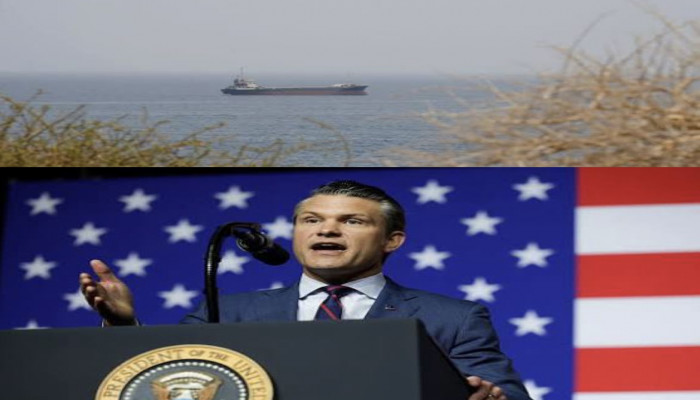
The United States can maintain its naval blockade of Iranian ports indefinitely, US Defence Secretary Pete Hegseth said on August 13. He said the US military has enough naval assets to keep the blockade in place by rotating ships in and out of the region as needed. His comments indicate that Washington is prepared to maintain economic and military pressure on Tehran for as long as required.
Hegseth’s remarks also suggest that he is advising US President Donald Trump that the military can continue supporting the pressure campaign while negotiations over ending the conflict remain stalled. The war began in February, and talks have so far failed to produce an agreement.
“Indefinitely the United States Navy can maintain a blockade like that because we’ll rotate ships in and out, as we have, and we’ll continue to,” Hegseth told reporters. He made the remarks in Panama after speaking to the crew of the USS Gridley, a guided-missile destroyer that had previously served in the Middle East.
Trump said on August 12 that the US had taken control of the Strait of Hormuz. The strategic waterway is a major route for global energy supplies. Trump wrote on his Truth Social platform, “The U.S.A. has total control over the Strait of Hormuz. I THINK WE WILL KEEP IT! Our Naval Blockade is being called, by everyone, “A WALL OF STEEL,” and there is nothing Iran can do about it,”
The conflict began with US and Israeli strikes on Iran on February 28. Tehran then effectively shut the Strait of Hormuz. Before the conflict, around one-fifth of the world’s oil and liquefied natural gas shipments passed through the waterway. The closure has since created major concerns for global energy markets and shipping.
The US later imposed a naval blockade on Iranian shipping and ports. Washington has said it will continue to protect freedom of navigation for vessels travelling to and from ports outside Iran. The US has also expanded its military presence in the region since the war began.
Tens of thousands of American troops have been sent to the Middle East. More than 20 US warships are also operating in the region. Since the blockade began, US forces have redirected more than 55 commercial vessels that attempted to cross it. The military has disabled three ships and boarded two others during these operations.
Earlier this week, a US Navy MH-60 helicopter fired two Hellfire missiles at the engine room of a Panama-flagged vessel. The military said the ship had ignored warnings from US forces before the strike.
The blockade comes after months of US attacks on Iran. American strikes have targeted Iran’s leadership and damaged large parts of its military capabilities. Iran’s Navy has also suffered major losses. Despite these attacks, Tehran has retained its ability to exert control over the Strait of Hormuz.
Iran has continued to respond with missile and drone attacks against US allies in the region. Tehran has also targeted commercial vessels using the strait without its permission. The continued attacks have kept the vital shipping route at the centre of the conflict.
Trump has repeatedly shifted between threats of further escalation and claims that a peace agreement could be close. So far, he has avoided some of the most aggressive military options. These include sending US ground troops into Iran, seizing strategic islands and attacking desalination plants.
The conflict is also creating growing political pressure on Trump at home. The war remains unpopular among many Americans ahead of the November midterm elections. High fuel prices have become a major concern in rural areas that have traditionally supported Trump. The pressure to end the war is therefore rising even as Washington signals that it can sustain the naval blockade for an indefinite period.



 Loading...please wait
Comments