



US approves $8.6 billion arms deals for Middle East allies, citing emergency
- In Reports
- 05:42 PM, May 02, 2026
- Myind Staff
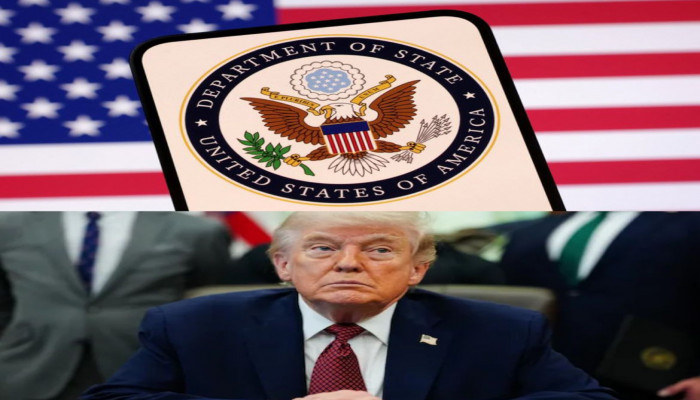
The administration led by Donald Trump has approved arms transfers worth more than $8.6 billion to key Middle East countries, including Israel, the United Arab Emirates, Kuwait, and Qatar. The decision was taken by bypassing the usual congressional review process, with officials citing an emergency situation. The approved deals include a wide range of military equipment, from air defence missiles to advanced laser guidance systems.
The United States Department of State announced the approvals on Friday. This comes at a time when the conflict involving the US and Israel with Iran has entered its ninth week. While a fragile truce is currently in place, there has been no agreement on ending the conflict. The ongoing tensions have shaped the urgency behind these military decisions.
Israel is set to receive a major package under the deal. The US has authorised the sale of 10,000 Advanced Precision Kill Weapon System-II all-up rounds along with related equipment. The total value of this package stands at $992.4 million. These weapons will be manufactured by BAE Systems. This move reinforces the continued military support that the US is extending to Israel during the ongoing conflict.
Qatar has also secured multiple deals under this approval. The US has cleared the sale of 10,000 Advanced Precision Kill Weapon System-II all-up-rounds advanced systems, valued at $992.4 million. BAE Systems will be the principal contractor for this deal as well. In addition, Qatar has purchased 200 Patriot Advanced Capability-2 Guidance Enhanced Missile-Tactical interceptors and 300 PAC-3 Missile Segment Enhancement interceptors. These systems, along with related equipment, are valued at $4.01 billion. The main contractors for these advanced missile systems include Lockheed Martin and RTX Corporation.
The United Arab Emirates is also part of this set of approvals. The US has authorised the sale of 1,500 guidance sections of the Advanced Precision Kill Weapon System-II. These are single-variant, air-to-air systems and are valued at $147.6 million. The deal reflects continued defence cooperation between the US and the UAE amid rising regional tensions.
Kuwait has been approved for a much larger defence package. The US has sanctioned a deal worth $2.5 billion for the purchase of Integrated Battle Command Systems and related equipment. The principal contractors involved in this deal include Northrop Grumman, RTX Corporation, and Lockheed Martin. According to reports by Reuters, this package adds to the broader effort to strengthen regional defence capabilities.
US Secretary of State Marco Rubio has defended the decision to fast-track these arms sales. He stated that an “emergency exists that requires the immediate sale” of these weapons. His remarks underline the urgency that the administration has attached to the situation in the Middle East.
Under normal circumstances, such arms deals are subject to a congressional review period. During this time, details such as the quantity of weapons and pricing are finalised through negotiations between the buyer and the supplier. However, in this case, the State Department has said that bypassing this process is justified as the expedited transfers are “in the national security interests of the United States.”
The broader geopolitical context has also influenced these decisions. The US and Israel launched military strikes in Iran on February 28, which led to retaliatory actions by Tehran. These counterattacks targeted several countries in the Middle East, including the UAE, Qatar, and Kuwait. The ongoing situation has increased the need for strengthening defence systems among US allies in the region.
At the same time, developments in Europe point to growing tensions between the US and its NATO partners. The Trump administration recently announced plans to reduce the US troop presence in Europe following a disagreement with German leader Friedrich Merz. The dispute arose after Merz questioned US strategy in the Middle East.
Germany’s Defence Minister Boris Pistorius responded to the decision, saying it was not unexpected. He noted that Trump had already issued threats after the disagreement. Pistorius also stressed the need for Europe to take greater responsibility for its own security. He said, “We Europeans must take on more responsibility for our own security,” following Washington’s move.
The approval of these arms deals reflects the US administration’s focus on supporting its allies in a volatile region while also navigating shifting alliances globally. The decision to bypass Congress highlights the urgency that officials have attached to the situation, even as diplomatic efforts to stabilise the region remain uncertain.



 Loading...please wait
Comments