



US approves $11.1 billion largest ever, arms package to Taiwan
- In Reports
- 12:16 PM, Dec 18, 2025
- Myind Staff
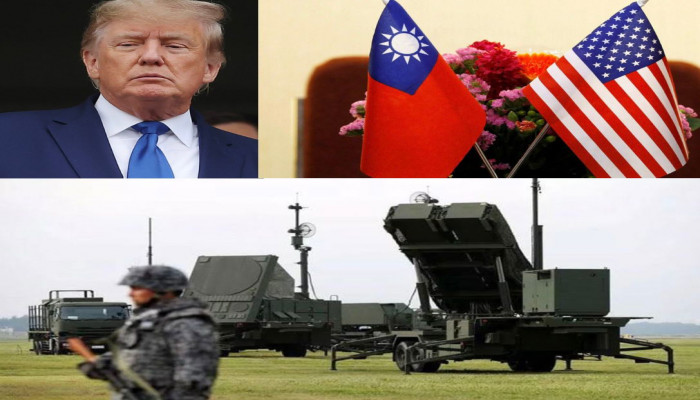
US approves $11.1 billion largest ever arms package to Taiwan
The United States has approved a massive $11.1 billion arms package for Taiwan, marking the largest-ever U.S. weapons sale to the self-ruled island. The decision comes at a time when Taiwan is facing growing military pressure from China, which claims the island as its own territory, a claim firmly rejected by Taipei.
This is the second arms sale to Taiwan approved under U.S. President Donald Trump’s current administration. The move underscores Washington’s continued support for Taiwan’s defence at a time when Beijing has increased both military activity and diplomatic pressure around the island.
According to Taiwan’s defence ministry, the proposed package includes eight major items. These cover advanced weapons such as HIMARS rocket systems, howitzers, Javelin anti-tank missiles, Altius loitering munition drones, as well as spare parts and support for other military equipment. The ministry said the sale is now at the Congressional notification stage, during which the U.S. Congress can block or modify the deal, although support for Taiwan remains strong across party lines.
In a statement, Taiwan’s defence ministry said, “The United States continues to assist Taiwan in maintaining sufficient self-defence capabilities and in rapidly building strong deterrent power and leveraging asymmetric warfare advantages, which form the foundation for maintaining regional peace and stability.”
The Pentagon, in a series of announcements detailing the arms sale, said the deal serves U.S. national, economic and security interests. It added that the weapons would help Taiwan modernise its armed forces and maintain a “credible defensive capability” in the face of increasing threats.
With encouragement from Washington, Taiwan has been reshaping its military strategy to focus on “asymmetric warfare”. This approach relies on smaller, more mobile, and often less expensive weapons that can still deliver strong and precise strikes. Systems such as drones and mobile missile launchers are seen as key tools in this strategy, especially against a much larger opponent.
Taiwan’s presidential office welcomed the decision. Spokesperson Karen Kuo said the island would continue strengthening its defence and resilience. “Our country will continue to promote defence reforms, strengthen whole-of-society defence resilience, demonstrate our determination to defend ourselves, and safeguard peace through strength,” she said, while also thanking the United States for its support.
Last month, Taiwan President Lai Ching-te announced a $40 billion supplementary defence budget covering the period from 2026 to 2033. At the time, he said there was “no room for compromise on national security,” signalling Taiwan’s determination to boost its defence capabilities amid growing regional uncertainty.
China’s foreign ministry did not immediately respond to requests for comment on the latest arms sale. However, Beijing has consistently opposed U.S. arms sales to Taiwan, calling them a violation of China’s sovereignty and a threat to regional stability.
Rupert Hammond-Chambers, president of the U.S.-Taiwan Business Council, said the weapons included in the package could play a crucial role if Taiwan faced an invasion. Referring to HIMARS rocket systems, which have been widely used by Ukraine in its war against Russia, he said such weapons could be highly effective. “This bundle of congressional notifications, a record in U.S. security assistance for Taiwan, is a response to the threat from China and the demand from Trump that partners and allies do more to secure their own defence,” he said. The announcement came shortly after Taiwan’s Foreign Minister Lin Chia-lung made an unannounced visit to the Washington area last week, where he met U.S. officials, according to two sources familiar with the matter who spoke on condition of anonymity.
Although the United States officially recognises Beijing and not Taipei, it maintains strong unofficial ties with Taiwan and is the island’s most important arms supplier. Under U.S. law, Washington is required to provide Taiwan with the means to defend itself. These arms sales, however, remain a major source of tension in U.S.-China relations.
There have been concerns in the region about the future of U.S. support for Taiwan, especially given President Trump’s reputation for deal-making and his planned visit to Chinese President Xi Jinping next year. However, U.S. officials told Reuters earlier this year that the administration planned to significantly increase weapons sales to Taiwan, even beyond levels seen during Trump’s first term, as part of efforts to deter China.
The U.S. national security strategy released earlier this month reinforced this stance, stating that Washington aims to deter any conflict over Taiwan by “preserving military overmatch” against China in the region. The strategy also highlighted Taiwan’s strategic importance due to its location, which divides Northeast and Southeast Asia into two distinct military theatres.
China continues to view Taiwan as its territory, but Taipei strongly rejects that claim, insisting on its right to determine its own future.



 Loading...please wait
Comments