




US accuses Cuban spies of infiltrating the top levels of Trump administration
- In Reports
- 02:01 PM, Jul 21, 2026
- Myind Staff
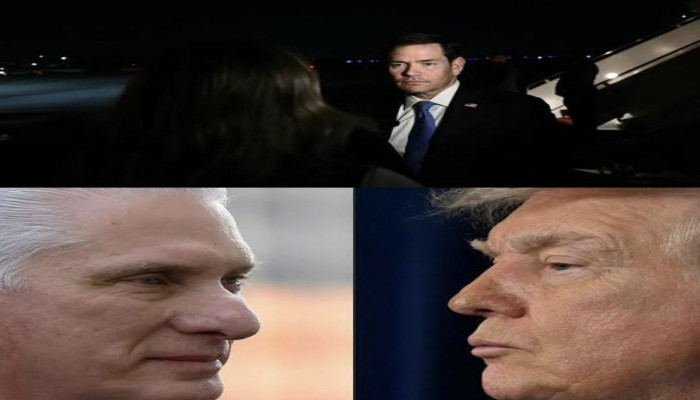
The United States has accused Cuba of placing spies at the highest levels of the US government and supporting left-wing extremist activities in the country. The allegations appear in a new report released by the US State Department on Monday. Titled "Cuba: The Capital of 21st Century Communism," the report claims Cuba has expanded its intelligence network inside the United States and has built long-term links with American activists. The report arrives as President Donald Trump continues his campaign to increase pressure on Cuba and end communist rule on the island.
The document does not present much new evidence. However, it marks a major escalation in Washington's rhetoric against Havana. The Trump administration has already taken several steps to tighten pressure on Cuba. Over the past few months, the United States has effectively imposed an oil embargo on the island. It has also announced sanctions against major state-run Cuban companies. In another move, US authorities indicted former Cuban president Raul Castro.
The report comes at a politically important time. Ahead of the US elections in November, President Trump and other Republican leaders have stepped up their criticism of left-wing politics. They have used Cold War-era language to describe left-wing political groups and have presented communism as a growing threat to the United States.
According to the State Department, Cuba has spent decades building influence inside the United States. The report alleges that Cuba "has infiltrated the highest reaches of the US government, recruited and cultivated generations of American activists (and) backed an unprecedented wave of left-wing terrorism on American soil." The report argues that Havana developed these networks over many years to increase its influence inside the country.
The latest accusations add to the long history of espionage between the United States and Cuba. Intelligence operations have remained a major issue between both countries since the Cold War. Over the years, the United States has arrested several people accused of spying for Cuba.
One of the most well-known cases involved the "Cuban Five." US authorities convicted the group in the 1990s after accusing them of infiltrating civil society organisations in Florida. Another major case involved Ana Montes, who worked in a senior position at the Defence Intelligence Agency. She later admitted to spying for Cuba while serving inside the US intelligence system.
More recently, former State Department intelligence analyst Walter Kendall Myers pleaded guilty to spying for Cuba. Former US ambassador to Bolivia Victor Manuel Rocha also admitted guilt in a separate espionage case linked to the Cuban government. These cases have often appeared in discussions about Cuban intelligence activities inside the United States.
Espionage has not been limited to one side. During the Cold War, the US Central Intelligence Agency worked with Cuban exiles in several operations against the Cuban government. Fabian Escalante, the former head of Cuban intelligence, once estimated that the CIA and Cuban exile groups attempted to assassinate former Cuban president Fidel Castro more than 600 times. That claim has remained one of the most widely discussed aspects of the long conflict between the two countries.
Cuba strongly rejected the latest accusations. Cuban Foreign Minister Bruno Rodriguez dismissed the State Department report soon after its release. In a post on X, he called it "the latest fallacy from the US State Department."
Rodriguez also accused US Secretary of State Marco Rubio of using the report to justify Washington's policies against Cuba. He said it was part of Rubio's effort to create a “pretext for sustaining a cruel and criminal economic war that punishes every Cuban family, as well as his aspiration to launch a military attack on Cuba, for which he is desperately seeking the support of US citizens.”
The State Department report also claims Cuba has built relationships with left-wing groups across the world and inside the United States. It alleges that the Cuban government has encouraged anti-American sentiment through these connections. According to the report, Cuba has tried to promote "overriding resentment and fundamental hatred of the United States and the broader West."
The report goes further by claiming Cuba has influenced "a disproportionate share of America's most famous and influential extremist movements," in an effort to "turn America against itself." The report, however, does not provide detailed evidence to support these claims.
The latest report reflects another sharp decline in relations between Washington and Havana. The relationship had briefly improved in 2015 under then-President Barack Obama. His administration restored diplomatic ties with Cuba after more than five decades of hostility. Obama hoped that greater engagement would improve relations between the two countries.
President Trump reversed that approach after taking office in 2017. He restored a tougher policy toward Cuba during his first term. After returning to the White House in 2025, Trump placed Cuba back on the US list of state sponsors of terrorism on his first day in office.
Tensions increased further earlier this year after the US military overthrew Venezuelan President Nicolas Maduro. Maduro had remained one of Cuba's closest allies and supplied subsidised energy to the island for years. After his removal, the United States effectively imposed an oil embargo on Cuba. The restrictions have contributed to repeated nationwide power blackouts across the country.
President Trump has repeatedly suggested that Cuba could become the next target of Washington's pressure campaign. In June, he said the United States would be "taking over" the Caribbean island, located about 90 miles (145 kilometres) from Florida, “almost immediately.”
The new State Department report, along with the administration's recent actions, signals that US policy toward Cuba will remain firmly confrontational. Havana has rejected the accusations and continues to argue that Washington is using political claims to justify stronger economic and diplomatic pressure. The exchange has pushed relations between the two countries to one of their lowest points in recent years.



 Loading...please wait
Comments