




UPI in the Era of Agentic Payments
- In Economics
- 05:19 PM, Oct 21, 2026
- Siddhesh Prabhugaonkar
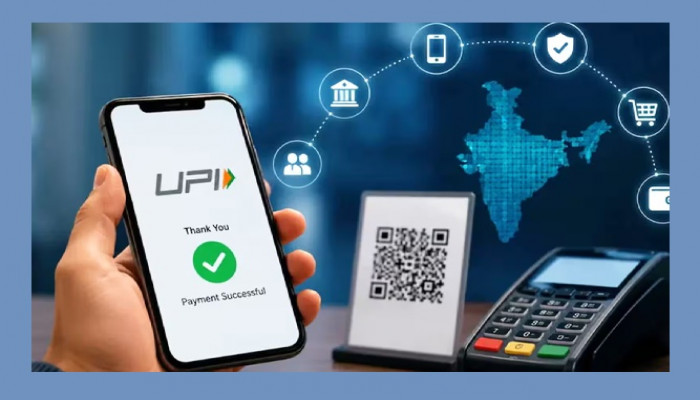
UPI (Unified Payment Interface) is a groundbreaking innovation from India. It is a real-time payment protocol that enables billions of transactions for India’s massive population using merely a smartphone and a bank account. It is not only immensely popular but has also inspired similar technologies elsewhere, such as Brazil’s PIX and the USA’s FedNow. UPI regularly breaks its own records for maximum transactions per month, which currently stand at 20 billion per month.
UPI is not just a financial innovation success story; it is also the world's most successful technology for financial inclusion. It has enabled 100s of millions of Indians who otherwise may not have access to make digital payments seamlessly.
UPI’s success is not limited to India. Other countries have launched similar standards and they are also interoperable in some cases, such as Singapore’s PayNow and India’s UPI. As agentic commerce becomes more popular, payment methods that can operate in harmony with agentic AI interfaces are going to be increasingly more important. Traditional payment methods like credit cards are already adapting to this change. Both VISA and Mastercard have released their own SDKs for agentic commerce. Stablecoins are also popular in this context. This article, however, explores challenges and opportunities surrounding UPI for agentic commerce.
What is Agentic Commerce?
Agentic commerce is e-commerce driven by agentic AI, which can autonomously buy and sell items without the direct involvement of human beings. E-commerce traditionally relied heavily on humans for critical decision-making and, more specifically, payment-related decisions. This was because the traditional algorithms were not designed to deal with uncertainty and dynamic environments. However, modern AI is getting better and is at a stage where AI can suggest products to buy, and humans can trust it enough to let AI buy them automatically.
Additionally, there is also a change in how users access information and shopping ideas. In the past, they relied on visiting different websites of merchants that showcased the products. Now it might be in an AI chat window.
What are Agentic Payments?
The unique nature of agentic commerce means there is no website where the user is expected to make the payment. Here, an AI algorithm can act on behalf of a user to make purchase decisions and also make payments. To do this, AI needs to have access to the user's payment methods such as credit cards and authorise charges on the user's behalf. Additionally, the entire process needs to have sufficient protection so that the AI does not overspend or get tricked into making payments the user might not have authorised.
This is an evolving technology where many major players such as PayPal, Mastercard, Visa etc. have provided their own SDKs to AI developers and Google has created its Agentic Payment Protocol (AP2), an open protocol to manage agentic payments with credit cards and stablecoins.
UPI with Agentic Payments
One of the core features of the UPI payment system is that it relies on the user's smartphone and a bank account-linked SIM card. The real-time nature of payments also means the payments are a one-step process that cannot be cancelled once completed. Eventually, UPI also introduced UPI AutoPay and UPI Circle. Autopay is a mandate system where a merchant can charge the bank account for recurring payments. UPI Circle allows users to delegate access to other users (typically children or elderly family members) who can pay from their smartphone without having access to the bank account. Specialised constraints can be placed on such payments.
UPI Circle, even if meant for other human users, has potential to also play a big role in agentic payments. Providing constrained access to specific AI Agents on a user’s behalf who can make full (payment that goes through immediately) or partial (where the account owner must approve the payment)
AP2, which is emerging as a widely adopted industry standard for agentic payments, has UPI support on its roadmap even though it is not supported yet. AP2 uses a system of cryptographically signed Mandates (Intent, Cart, and Payment Mandates). These mandates provide the "trust layer" that allows an AI agent to prove it has your permission to initiate a UPI transaction. For UPI, the digital wallet will serve as the credential provider and the wallet will ultimately handle the final payment authorisation through the push payment model. The push payment model is where the user initiates the payment, which is different from the pull model where the merchant requests the payment.
Razorpay, one of India’s major payment companies, also has unveiled its own agentic payment solution in partnership with the National Payments Corporation of India (NPCI), an Indian body that oversees the development of UPI, and ChatGPT. This solution uses UPI Circle and UPI Reserve Pay features to enable conversational AI agents to manage payments on behalf of human users through a human-in-the-loop system.
Conclusion
McKinsey estimates that global agentic commerce payments could reach up to $5T by 2030. India is a country growing economically and demographically and would be an important part of any technological progress. UPI, being India’s foundational payments infrastructure, has enough potential to benefit from agentic payments. Its UPI Circle infra already provides basic building blocks to achieve this and industry-leading protocols like AP2 are on its roadmap. Though the lack of credit card-like tokenisation and facilitation would certainly impact its potential, its wider reach and near ubiquity in India would mean it will overcome those shortcomings nonetheless.



 Loading...please wait
Comments