




UNESCO warns Pakistan: Restore Taxila sites or risk losing World Heritage Status
- In Reports
- 07:34 PM, Jul 02, 2026
- Myind Staff
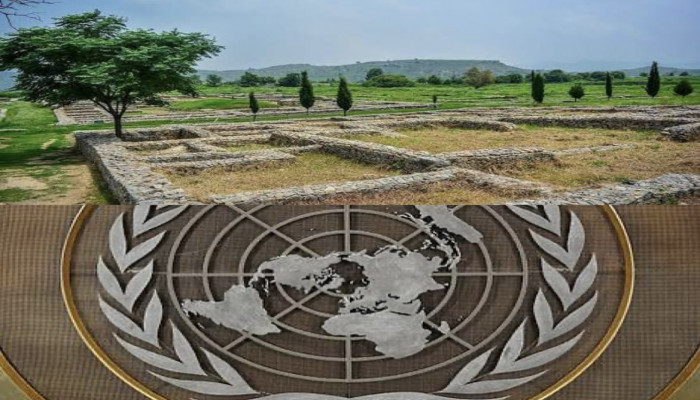
The United Nations Educational, Scientific and Cultural Organisation (UNESCO) has asked Pakistan to reverse recent changes made at two historical sites in Taxila, a UNESCO World Heritage Site. The agency said the work at Mohra Moradu and Sirkap has undermined the integrity of the monuments. It warned that if Pakistan does not address the issue, UNESCO may place Taxila on its World Heritage in Danger List. The agency also cautioned that it could remove Taxila from the World Heritage List if the concerns remain unresolved.
According to a report by Dawn, UNESCO raised the issue during a recent meeting with senior Pakistani government officials. Sources said the agency clearly stated that it would not hesitate to remove the site's World Heritage status. It referred to a World Heritage Site in Germany that UNESCO had previously removed from its list after similar concerns over changes made to the property.
The issue came to UNESCO's attention in March when a visitor sent photographs and information to Pakistan's Permanent Delegate to UNESCO in Paris. The visitor highlighted ongoing work by the Punjab archaeology department at the two historical sites. The information suggested that the recent work could affect the authenticity and integrity of the monuments.
The visitor reported that workers had replaced some original walls with new construction. The report also claimed that they had increased the height of several existing walls. These changes raised concerns about the preservation of the original character of the archaeological site.
After reviewing the information, UNESCO warned that these "unnecessary interventions" had compromised the authenticity and integrity of Mohra Moradu and Sirkap. The agency said such actions could lead to Taxila being placed on the "danger list" if the issues were not addressed.
Photographs of the sites appeared to support these concerns. According to the Dawn report, fresh masonry had replaced parts of ancient walls. Workers had also reconstructed sections to make the walls taller. The report noted that the difference between the old and new materials was easy to identify. The original stones were irregular in shape and size, while the modern construction material looked polished and had a uniform appearance.
Last month, UNESCO carried out a joint technical visit to the Taxila Museum along with the Department of Archaeology and Museums (DOAM) and the Ministry of National Heritage and Cultural Division. During the visit, UNESCO requested detailed documents related to the conservation and restoration work at Mohra Moradu and Sirkap. An official confirmed that the agency had asked for records connected to the work carried out at both sites.
Punjab Archaeology Department Director General Malik Zaheer Abbas rejected the claim that the department had reconstructed the historical structures. He said that calling the work at Sirkap and Mohra Moradu, reconstruction was incorrect.
“The interventions being undertaken are conservation measures based on internationally accepted conservation principles, with the primary objective of stabilising vulnerable archaeological remains, preventing further deterioration, and preserving the authenticity and integrity of these World Heritage properties,” he said.
He further clarified that the department had focused only on preserving the archaeological remains and protecting them from further damage.
“At present, there is no question of ‘reversing reconstruction’ because the works are conservation interventions, not reconstruction,” the official added.
The disagreement now centres on whether the work carried out at the two sites qualifies as conservation or reconstruction. UNESCO maintains that the recent interventions have affected the authenticity and integrity of the monuments. The Punjab Archaeology department, however, insists that the work follows internationally accepted conservation practices and aims only to protect the historical structures. UNESCO has made it clear that Pakistan must address its concerns if it wants to avoid the possibility of Taxila being placed on the World Heritage in Danger List or losing its World Heritage status altogether.



 Loading...please wait
Comments