




Uncertainty over talks in Pakistan: No official confirmation of arrival of US and Iran delegation
- In Reports
- 08:11 PM, Apr 10, 2026
- Myind Staff
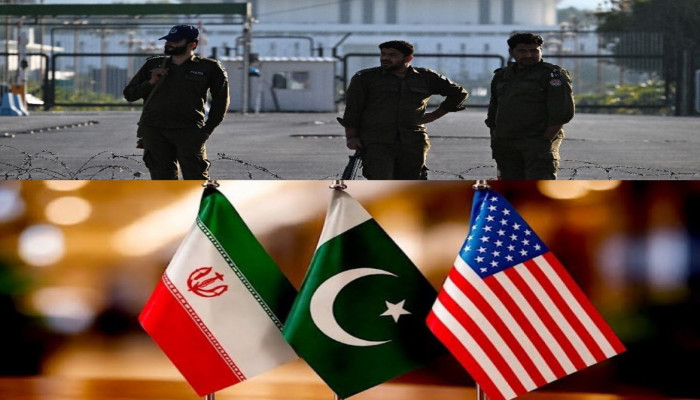
A sense of uncertainty surrounded the planned talks between the United States and Iran in Pakistan on Friday, as there was no confirmation on the arrival of delegations. Both sides have accused each other of failing to properly follow a fragile ceasefire agreement. The lack of clarity has raised concerns about whether the high-stakes discussions will proceed as scheduled.
US President Donald Trump has expressed dissatisfaction with Iran’s actions regarding the Strait of Hormuz. The strategic waterway was supposed to reopen under the ceasefire deal, but limited movement of vessels has continued. At the same time, Iran has strongly reacted to Israeli strikes in Lebanon, arguing that those actions also fall under the ceasefire agreement. Washington, however, does not agree with this interpretation.
Despite the tensions, Pakistan has continued preparations for the talks. Officials say the discussions are expected to address critical issues such as Iran’s nuclear enrichment programme and ensuring free trade through the Strait of Hormuz. These topics are seen as essential for regional stability and global economic security.
Iran has indicated that its participation in the talks may depend on developments in Lebanon. “The holding of talks to end the war is dependent on the US adhering to its ceasefire commitments on all fronts, especially in Lebanon,” said Esmaeil Baqaei, Iran's foreign ministry spokesman. Iranian authorities have also stated that the Israeli attacks have made the planned talks in Pakistan “meaningless”.
However, Iran’s Revolutionary Guards appeared to signal support for the ceasefire. According to the state broadcaster, they stated they had “not launched anything at any country”. This suggests that while political tensions remain high, there is still some commitment to avoiding further escalation.
Tensions were further fuelled by a series of social media posts by Trump. He criticised Iran for doing a “very poor job” in allowing oil shipments through the Strait of Hormuz and accused Tehran of violating ceasefire terms. The strait is a key global route, with around one-fifth of the world’s oil and large amounts of natural gas and fertiliser passing through it during normal conditions. Since the ceasefire began, only a small number of ships have used the route.
The ceasefire, which has lasted for two weeks, was intended to create space for negotiations to end the ongoing conflict. The war has already caused thousands of deaths and disrupted the global economy. However, fears remain that the truce could collapse at any time.
Adding to the confusion, Iran’s ambassador to Pakistan deleted a social media post that had earlier mentioned the arrival of an Iranian delegation. This move has raised doubts about whether Iran will attend the talks at all. Meanwhile, the United States is expected to proceed, with Vice President JD Vance set to lead the delegation on Saturday. He will be joined by special envoy Steve Witkoff and Jared Kushner, Trump’s son-in-law.
Pakistan’s role as a mediator has also come under scrutiny. Defence Minister Khawaja Asif criticised Israel’s actions in Lebanon, calling the country a “cancerous state” and “a curse for humanity” in a social media post that was later deleted. Israel strongly condemned the remarks, stating, “This is not a statement that can be tolerated from any government, especially not from one that claims to be a neutral arbiter for peace.”
Pakistan does not officially recognise Israel, which could complicate its position as a neutral mediator. The country has maintained that the ceasefire agreement should include Lebanon, a stance that differs from Washington’s view.
Meanwhile, violence has continued in the region. Air raid sirens were heard in Tel Aviv and other parts of Israel early Friday. Hezbollah claimed responsibility for drone and rocket attacks targeting Israeli forces and areas in northern Israel. These developments indicate that the ceasefire remains highly unstable.
Earlier in the week, Israel carried out major airstrikes in Lebanon, killing more than 300 people. These were the heaviest attacks since Hezbollah joined the broader conflict. Following the strikes, Trump said Israel was “scaling back” its operations. He also mentioned that Prime Minister Benjamin Netanyahu had assured him that future attacks would be more “low-key”.
International pressure is growing to prevent further escalation. A Western diplomat said there is ongoing “pressure from European states, Gulf states and Egypt on Israel to prevent renewed Israeli airstrikes on Beirut after 'Black Wednesday'”. Despite warnings, the Israeli army had not carried out additional strikes in southern Beirut as of Friday morning.
The United States has clarified that the situation in Lebanon will be handled separately. A State Department official said, “We can confirm that the Department will host a meeting next week to discuss ongoing ceasefire negotiations with Israel and Lebanon.” Neither Israel nor Lebanon has publicly confirmed these talks.
At the same time, Netanyahu has instructed his ministers to seek direct dialogue with Lebanon, focusing on disarming Hezbollah. However, a Lebanese government official stated that Beirut would require a ceasefire before entering any negotiations with Israel.
The situation remains tense and unpredictable. With ongoing violence, political disagreements, and uncertainty over participation, the success of the planned talks in Pakistan remains in doubt.



 Loading...please wait
Comments