




Unauthorised religious structures to be demolished: Arunachal CM Pema Khandu
- In Reports
- 05:43 PM, Jan 08, 2026
- Myind Staff
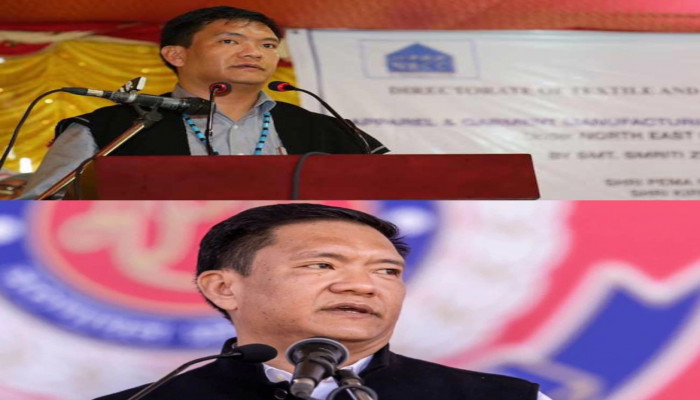
Arunachal Pradesh Chief Minister Pema Khandu has announced that the state government has directed district administrations to identify and remove all unauthorised religious structures in the Itanagar Capital Region. The decision comes in the wake of protests by several indigenous youth organisations, who have raised concerns over illegal immigration and the construction of religious structures without proper approval.
The Chief Minister said that deputy commissioners have been instructed to take strict action against all illegal constructions, including mosques and prayer structures that have allegedly been built without required permissions. He clarified that the action will not target any particular community but will apply to all unauthorised structures that violate existing laws and regulations.
The issue gained attention after indigenous youth groups claimed that illegal immigrants were erecting religious structures without land allotment, building permissions, or official registration. According to these groups, such constructions pose a threat to tribal land, local culture, and demographic balance in the state capital region, which includes Itanagar and Naharlagun.
Chief Minister Khandu emphasised that Arunachal Pradesh is protected by the Inner Line Permit (ILP) system under the Bengal Eastern Frontier Regulation (BEFR), 1873. He stated that the ILP framework exists to regulate the entry of non-residents and to protect the land, culture, and rights of indigenous communities living in the state.
Addressing concerns over weak monitoring in the past, the Chief Minister said the government has taken steps to strengthen the system. “Earlier, the ILP system could not be properly monitored. We have now migrated to a digital platform. After cabinet approval, new rules will come into force,” Khandu said.
He further added that the digitised ILP system will help the government track entries more effectively and curb illegal immigration. Under the proposed framework, employers bringing labourers from outside Arunachal Pradesh will be required to inform the government in advance. This measure is aimed at ensuring proper verification and preventing the entry of undocumented workers.
Khandu also stated that the Bengal Eastern Frontier Regulation would be further amended to make the rules more stringent. He assured that the government remains committed to strengthening border controls and ILP enforcement, and that all actions would be taken strictly within the legal framework.
Recently, controversy has surrounded the existence of several mosques and prayer structures in and around the Itanagar Capital Region. Youth organisations allege that these structures were constructed without mandatory approvals. Following these allegations, authorities have reportedly stopped activities at some locations until documents are verified, while other sites continue to remain under scrutiny.
The Arunachal Pradesh Indigenous Youth Organisation, Indigenous Youth Force of Arunachal, and the All Naharlagun Youth Organisation have been leading protests against illegal immigration and unauthorised religious constructions. In December, these organisations enforced a 12-hour bandh in the state capital to press their demands.
Their demands include the removal of the allegedly illegally constructed Capital Jama Masjid at Naharlagun, action against unauthorised settlements, a ban on weekly markets that are allegedly run by undocumented settlers, and stricter checking at entry gates. According to the groups, stronger internal monitoring is essential to safeguard tribal land and maintain the demographic balance of the region.
Meanwhile, police officials have stated that ILP enforcement drives and verification checks are being intensified across the capital region to close existing loopholes. They clarified that any action against religious structures will be carried out only after due legal verification, ensuring that the process follows established laws and procedures.
The state government has reiterated that its actions are aimed at protecting indigenous interests while ensuring that law enforcement remains fair, transparent, and lawful.



 Loading...please wait
Comments