




UN Report flags JeM’s role in India attacks, warns of Al-Qaeda and Uyghur militants operating in Afghanistan
- In Reports
- 08:31 PM, Feb 13, 2026
- Myind Staff
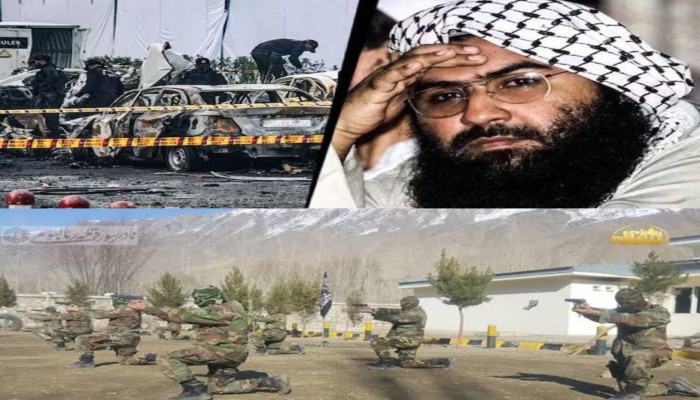
A recent United Nations report has raised serious concerns about the continued threat posed by terrorist organisations in South Asia and Afghanistan. The report links the Pakistan-based militant group Jaish-e-Mohammed (JeM) to major terror attacks in India and also confirms the ongoing presence of Al-Qaeda-linked groups and Uyghur militants in Afghanistan, despite repeated denials by the Taliban authorities.
The findings are part of the latest submission by the United Nations Analytical Support and Sanctions Monitoring Team to the UN Security Council. The report highlights how terrorist groups, even when under pressure, continue to adapt, reorganise and pose long-term risks to regional and international security.
According to the UN monitoring team, Jaish-e-Mohammed has been linked to several deadly attacks in India. One Member State informed the UN that JeM had claimed responsibility for a series of assaults, including the 9 November 2025 blast at the historic Red Fort in Delhi. The explosion reportedly killed 15 people and targeted one of India’s most symbolic and high-security landmarks.
The report also refers to the 22 April 2025 terror attack in Pahalgam, Jammu and Kashmir, which left more than two dozen people dead. The monitoring team noted that JeM was connected to this attack as well, underlining the group’s continued focus on India, particularly the Jammu and Kashmir region.
The Red Fort, which is a UNESCO World Heritage Site and a symbol of Indian sovereignty, has long been considered a high-value target. The UN report emphasised that the alleged link between JeM and the Red Fort blast makes the incident especially significant from a regional security perspective.
In its submission, the monitoring team stated that JeM “had claimed responsibility for a series of attacks” and was connected to both the Red Fort explosion and the Pahalgam attack. These findings reinforce longstanding concerns about the group’s operational intent and capabilities.
One of the most notable revelations in the report is JeM’s creation of a women-only wing. The monitoring team said that on 8 October, JeM leader Masood Azhar formally announced the establishment of a women’s unit named Jamaat ul-Muminat. This organisation is not currently listed as a terrorist group by the UN.
However, according to the report, the women-only wing is “explicitly intended to support terrorist activities.” UN analysts warned that this move signals a shift in JeM’s recruitment and operational strategy. By involving women, the group may be attempting to expand its support base, strengthen logistical networks and avoid detection by security agencies.
The monitoring team observed that this development reflects a broader pattern among extremist organisations. Such groups are increasingly seeking new ways to survive and remain relevant by widening participation and adapting to counter-terrorism measures.
Jaish-e-Mohammed was founded in 2000 and has a long history of attacks, mainly targeting India. The group has been blamed for several high-profile assaults on both civilians and security forces, particularly in Jammu and Kashmir.
JeM is designated by the United Nations as an entity associated with Al-Qaeda. Its leader, Masood Azhar, has been under UN sanctions for years. These sanctions include asset freezes, travel bans and an arms embargo.
Despite this, the monitoring team pointed out that there are differing views among UN Member States regarding JeM’s current status. While some governments continue to see the group as active and dangerous, another Member State reportedly described JeM as defunct.
The report noted that such contrasting assessments highlight gaps in intelligence-sharing and enforcement. These differences, the monitoring team said, complicate counter-terrorism cooperation in South Asia and make it harder to address the threat in a coordinated manner.
The UN report also mentioned that three individuals allegedly linked to JeM were involved in another attack in Pahalgam, Jammu and Kashmir. These individuals were killed in July during security operations, showing that counter-terrorism actions against militant networks in the region are ongoing.
Overall, the monitoring team warned that even when terrorist organisations appear weakened or fragmented, they often retain the ability to reorganise and carry out high-impact attacks. The report stressed that adaptability remains a key strength of such groups.
In a separate but related assessment, the UN report addressed the security situation in Afghanistan. It confirmed that international terrorist groups continue to operate across the country, contradicting repeated claims by the Taliban that no foreign militants are present on Afghan soil.
According to the Sixteenth Report of the UN Analytical Support and Sanctions Monitoring Team, submitted under Security Council resolution 2763 (2024), Al-Qaeda remains active in Afghanistan through its affiliate, Al-Qaeda in the Indian Subcontinent (AQIS).
The report identified Osama Mahmood as the “Emir” or leader of AQIS, with Yahya Ghori serving as his deputy in Kabul. It stated that AQIS media operations are based in Herat province in western Afghanistan.
The monitoring team noted that AQIS continues to operate in southeastern Afghan provinces, particularly in areas where the Haqqani Network holds strong influence. The group is also described as a key provider of training, advisory assistance and logistical support to other armed groups, especially the Tehrik-e-Taliban Pakistan (TTP).
The UN report directly challenged Taliban claims that Afghanistan does not host foreign terrorist organisations. The monitoring team stated, “The ruling authorities effectively deny the presence or activity of any terrorist groups on Afghan soil. This claim is not credible.”
The report cited ongoing attacks by TTP fighters operating from Afghan territory as evidence of a permissive environment for extremist groups. These attacks have strained relations between Afghanistan and Pakistan and have raised concerns about regional stability.
In addition to Al-Qaeda-linked groups, the report highlighted the presence of Uyghur militant organisations in Afghanistan. These include the Eastern Turkistan Islamic Movement (ETIM) and the Turkistan Islamic Party (TIP).
According to the monitoring team, these groups are able to move freely within Afghanistan. One UN Member State reported that some Uyghur militants had even received identity documents from Taliban authorities.
The report noted that these groups are increasingly concentrated in Badakhshan province in northeastern Afghanistan. Their growing presence there has raised alarms among UN analysts about the potential for cross-border militancy and broader regional implications.
Taken together, the findings paint a picture of a persistent and evolving terrorist threat across Central and South Asia. The monitoring team warned that extremist organisations continue to exploit instability, permissive environments and cross-border networks to sustain their activities.
Despite sustained counter-terrorism efforts by various countries, the UN report stressed that groups such as JeM, AQIS and others remain adaptable. Whether through new recruitment models, symbolic high-impact attacks or strategic alliances, these organisations continue to pose serious risks.



 Loading...please wait
Comments