




UN pauses ship escort operation after an attack on cargo vessel near Oman
- In Reports
- 12:48 PM, Jun 26, 2026
- Myind Staff
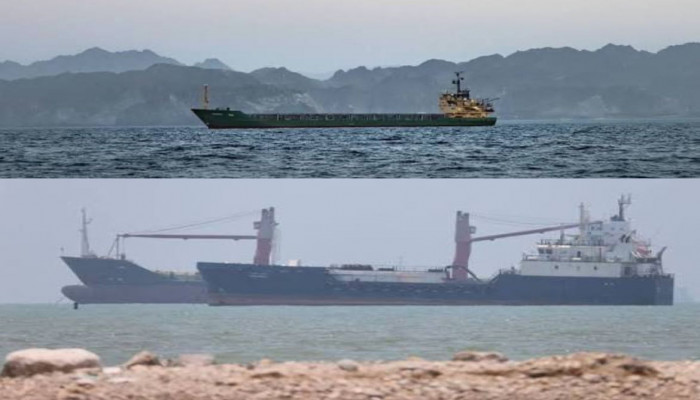
The United Nations' International Maritime Organisation (IMO) has temporarily stopped its mission to escort ships through the Strait of Hormuz after a cargo vessel reported an attack near Oman on Thursday. The incident has raised fresh concerns over the stability of the preliminary agreement aimed at ending the Iran War and restoring safe passage through one of the world's busiest shipping routes.
The cargo ship reported that a projectile struck it near the coast of Oman, according to the British Navy's United Kingdom Maritime Trade Operations (UKMTO). The attack came only hours after Iran warned commercial vessels not to use sea routes that it had not approved. Two US officials told Reuters that Iran had fired at the vessel. Iran's Persian Gulf Strait Authority, which Tehran created to manage requests for ships passing through the strait, stated that ships using routes outside its approved corridors would not receive protection.
“Consequences arising from passage through unauthorised routes shall be the responsibility of the owner, operator, and vessel commander,” the Iranian authority said.
Four sources identified the vessel as the Singapore-flagged Ever Lovely. A security source said a drone most likely targeted the ship. The United States government did not immediately comment on the incident.
Earlier this month, US President Donald Trump warned Iran that the United States could resume military strikes if Tehran failed to follow the agreement designed to end the conflict and reopen the Strait of Hormuz. Trump said the US would "probably go back to bombing the country again" if Iran did not honour the deal.
The IMO had started an operation to help hundreds of stranded ships and thousands of seafarers leave the Strait of Hormuz. Many vessels had remained trapped there for months after the conflict began in late February. Following Thursday's incident, the IMO decided to halt the operation while it reviewed safety conditions.
IMO decided “to temporarily pause its implementation in order to reconfirm that the necessary safety guarantees continue to be in place for the ships on our evacuation list and all those in the region,” IMO Secretary General Arsenio Dominguez said in a statement.
The IMO also clarified that the ship involved in the suspected attack was not part of its evacuation program.
The organisation had launched the voluntary evacuation initiative on Tuesday. It allowed ships and their crews to leave the Gulf through two designated routes. One route passed through Iranian waters, while the other used Omani waters. The IMO said the United States provided oversight for the operation.
News of the reported attack pushed benchmark oil prices up by around 2 per cent. Market analysts said the incident renewed concerns about how long Gulf oil exports might take to return to normal. The Strait of Hormuz plays a critical role in global energy trade. Before the conflict, it handled nearly one-fifth of the world's daily oil and liquefied natural gas shipments.
Before reports of the attack surfaced, US Secretary of State Marco Rubio completed a tour of Gulf countries to reassure regional partners about the temporary agreement. While speaking to reporters, Rubio warned that any threat to shipping in the strait would create serious consequences.
“Then we’re going to have a problem.”
Iran hinted that it intends to maintain control over the strategic waterway. On Thursday, Iran's Revolutionary Guards (IRGC) stated that ships could travel safely through the Strait of Hormuz only if they followed routes approved by Iran. It added that it would act against vessels that ignored these instructions.
British maritime security company Ambrey also reported that Iran's Revolutionary Guards (IRGC) ordered two Panama-flagged ships to change their course on Thursday. The report highlighted Iran's continued efforts to monitor and direct maritime traffic through the region.
Despite the security concerns, US Energy Secretary Chris Wright said shipping activity through the Strait of Hormuz had almost returned to levels seen before the United States and Israel launched military strikes against Iran on February 28. He said at least 20 million barrels of oil had passed through the waterway during the previous 24 hours.
Shipping data supported signs of recovery in oil exports. Crude shipments through the Strait of Hormuz reached their highest level this week since the conflict began in February. South Korea's Oceans Ministry also confirmed that eight more South Korean vessels had successfully exited the strait.
Iran gained effective control of the Strait of Hormuz during the conflict. Its actions disrupted global oil shipments, created uncertainty in energy markets, and affected the broader world economy. The latest attack has once again highlighted the fragile security situation in the region.
The ongoing conflict has also become a political challenge for President Trump ahead of the November midterm elections, which will decide control of the US Congress. A Reuters/Ipsos poll showed that only one in four Americans believes the war was worth its cost.
At the same time, disagreements continue over several parts of the preliminary ceasefire framework. Critics in the United States and abroad have questioned the agreement as conflicting accounts continue to emerge. The two sides still disagree on financial incentives for Iran, nuclear inspections, future control of the Strait of Hormuz, and Israel's parallel military campaign in Lebanon.
Iran's top negotiator, Mohammad Baqer Qalibaf, also rejected a key US claim related to the agreement. He said the American statement that Iran would use its unfrozen assets to purchase US agricultural products was false.
The preliminary agreement gives both sides 60 days to continue negotiations. During this period, they will work on unresolved issues, including Iran's nuclear program and other major areas of disagreement that remain central to the broader peace process.



 Loading...please wait
Comments