




UN, China warn Pakistan over terror spillover from Afghanistan
- In Reports
- 06:41 PM, Feb 01, 2026
- Myind Staff
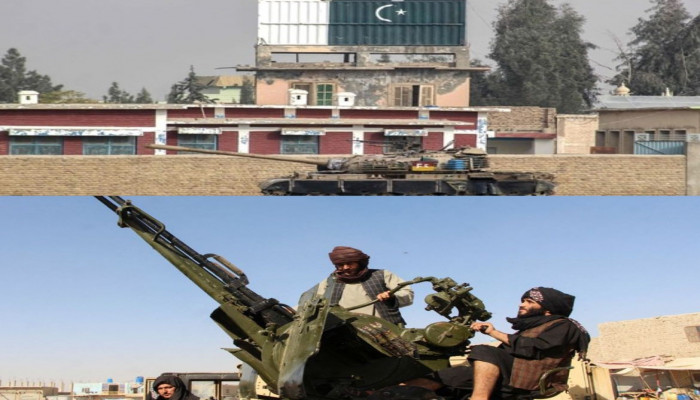
China and the United Nations this week issued serious warnings to Pakistan about the growing spillover of terrorist threats from Afghanistan, and the impact of militant violence on the country, according to the report published by ANI.
Addressing a high-level briefing on the Counter-Terrorism Early Warning Network for Central Asia on Friday, Chinese Ambassador to the United Nations Sun Lei highlighted that although the Central Asia region remains broadly stable, it continues to be affected by terrorism crossing borders.
“Currently, the Central Asia region remains generally stable, yet is still deeply affected by the spillover effect of terrorist threats,” the Chinese envoy said during the briefing.
Ambassador Sun Lei also called for stronger cooperation between Pakistan and Afghanistan to address the problem. He said that both countries must work together to make sure Afghanistan does not become a refuge for militant groups again.
“We need to strengthen engagement and cooperation with Afghanistan to prevent it from once again becoming a safe haven for terrorist organisations, and to jointly prevent and address the return of foreign terrorist fighters,” he added.
A day earlier, United Nations Secretary-General Antonio Guterres issued a warning in New York, raising similar concerns about threats coming from Afghanistan.
Guterres said the UN is committed to four key objectives in Afghanistan, but also expressed frustration with the Taliban’s lack of progress on issues such as inclusivity, human rights, and regional stability.
He stressed the need for Afghan institutions to be inclusive and represent all ethnic groups. “We need to make sure that Afghan institutions are truly inclusive, that all ethnic groups are represented and that all sectors of society are represented,” Guterres said.
The UN chief described this inclusivity as “a basic condition for the consolidation of peace” in Afghanistan.
Guterres also criticised how women’s rights are being handled under the current regime. He said that restrictions limiting women’s ability to work are deeply concerning, and he voiced disappointment that female UN staff could work in the field but not at the organisation’s headquarters.
“[UN Undersecretary General] Rosemary DiCarlo managed to guarantee the possibility for our female staff to work in the field, but not in our headquarters, and we are very frustrated by that,” he said, calling the situation “unacceptable.”
Turning to security concerns, Guterres stressed the danger posed by groups operating from Afghan territory. He said the UN is especially worried about the Pakistani Taliban (Tehreek-e-Taliban Pakistan) and the possibility that they may be receiving support.
“Another aspect is the need to make sure that no terrorist organisations can operate from Afghanistan into other countries. We are particularly concerned about what has happened with the Pakistani Taliban [Tehreek-e-Taliban Pakistan] and the support they might receive,” said the UN Secretary-General.
The warnings from international officials came as Khyber Pakhtunkhwa Chief Minister Sohail Afridi commented on accusations regarding Afghan soil being used for attacks against Pakistan.
Afridi said that allegations about Afghan territory being used for violence against Pakistan are serious and must be supported by strong evidence from the federal government.
“Other countries also share borders with Afghanistan, but they have made no such complaints. If there is a claim that Afghan soil is being used against Pakistan, evidence must be presented. It is the government’s responsibility to do so,” Afridi said at a meeting, referring to the issue.
The Chief Minister also expressed concern about the ongoing deportations of Afghan migrants from Pakistan. He said that many Afghans who entered Pakistan legally and are working or contributing to the economy are being treated harshly.
“Those who came legally, who are working and have created employment opportunities for others, are being forcefully and violently expelled. There is a discriminatory approach here between ‘good’ and ‘bad’ Afghans, while policy should be uniform and consistent,” Afridi added.
Political analysts quoted in the report warned that repeated accusations against Afghanistan have harmed ties between Islamabad and Kabul and emphasized the need for dialogue to reduce tensions. emphasised
Dawood Shiraz, one of the analysts, said that Afghanistan maintains peaceful relations with several neighbouring countries without similar issues. “We have connections with Tajikistan, Uzbekistan, Turkmenistan, Iran, Pakistan, and even China yet we have no issues with any neighbouring country… The real issue lies in the lack of negotiations,” Shiraz said.
Another analyst, Fareedullah Zazai, dismissed claims against Afghanistan, saying that the narrative of Afghan soil being used against Pakistan or that Afghanistan’s government has an anti-Pakistan stance is baseless and driven by political motives.
Officials of the Islamic Emirate of Afghanistan have repeatedly rejected Pakistan’s claims. They have stated that Afghan soil will not be used to threaten or attack any country, according to the report.



 Loading...please wait
Comments