




UN backs Ghana’s push to label slavery the ‘gravest crime,’ sparks global debate on reparations
- In Reports
- 01:37 PM, Mar 26, 2026
- Myind Staff
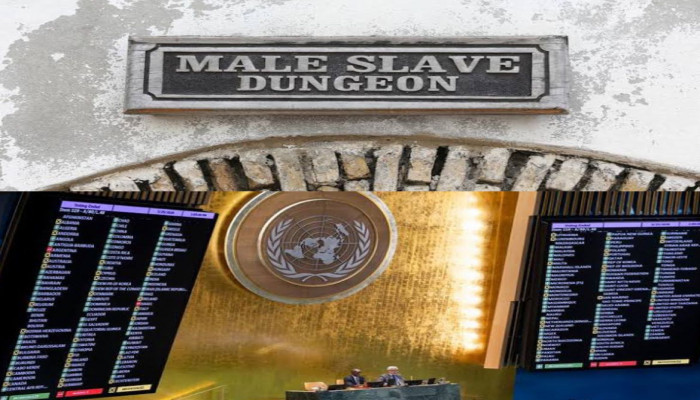
The United Nations General Assembly has adopted a resolution proposed by Ghana that recognises transatlantic slavery as the “gravest crime against humanity” and calls for reparations. The move marks a significant moment in global discussions on historical justice, even as it faced resistance from the United States and several European nations.
Ghana argued that the resolution was necessary because the legacy of slavery continues to shape inequalities today. Between the 15th and 19th centuries, at least 12.5 million Africans were forcibly taken from their homes and sold into slavery. The long-term consequences of this system, including racial disparities and economic imbalances, are still visible across societies. Supporters of the resolution believe acknowledging the severity of slavery is a step toward addressing these ongoing impacts.
The adoption of the resolution is being seen as a landmark development within the United Nations. “This marks the first vote on the floor of the U.N.,” Hansford said. “I cannot overemphasise how large a step that is.” This statement reflects the importance many advocates attach to the decision, viewing it as a breakthrough in gaining formal international recognition of slavery’s historical weight.
The resolution calls on member states to begin meaningful discussions on reparations. It highlights several possible actions, including formal apologies, financial compensation, the return of stolen cultural artefacts, and guarantees to prevent such injustices from happening again. These measures are intended to promote accountability and healing for communities affected by slavery.
United Nations Secretary-General Antonio Guterres also addressed the issue, urging countries to take stronger action. He said that “far bolder action” was required from more states to confront historical injustices. Despite this, progress has been uneven. The Netherlands remains the only European country to have issued a formal apology for its involvement in slavery, showing the limited response so far from former colonial powers.
The resolution is part of a broader effort by African nations to seek justice for past wrongs. The African Union has been working to create a “unified vision” among its 55 member states regarding reparations. This collective approach aims to strengthen Africa’s voice in global discussions and push for a more structured framework to address historical injustices.
However, the resolution has also faced criticism and opposition. The United States and the European Union raised concerns about its implications. They argued that describing slavery as the “gravest” crime could create a hierarchy among crimes against humanity, suggesting that some atrocities are more serious than others. This concern reflects a broader debate about how historical crimes should be compared and addressed under international law.
There were also legal objections from European representatives. Gabriella Michaelidou, speaking on behalf of the EU, said the bloc would have supported a resolution that recognised the scale of slavery but had “legal and factual” concerns. These included the issue of applying modern international law to events that occurred centuries ago, which some argue could set a complicated precedent.
From the United States, representative Dan Negrea criticised the resolution more strongly. He said his country objected to the “cynical usage of historical wrongs as a leverage point ... to reallocate modern resources to people and nations who are distantly related to the historical victims.” This highlights a key argument among critics, who believe current generations should not be held financially responsible for actions of the past.
Despite this opposition, support for reparations has been growing globally. Historian Babatunde Mesewaku, speaking from Badagry in Nigeria, a town that was once a major slave port, described slavery as the most severe crime against humanity. He pointed to its duration of over 500 years and the massive human toll, including those who died during the Middle Passage. According to him, the system led to deep destruction and long-term stagnation in Africa and other affected regions.
At the same time, Ghana has faced criticism for its position on justice. Some have questioned its advocacy on the global stage while it pushes for stricter anti-LGBT laws domestically. This has added another layer to the debate, with critics arguing that calls for justice should be consistent across all areas.
African and Caribbean nations are now pushing for the creation of a special United Nations reparations tribunal. Leaders believe the newly adopted resolution could help build momentum toward establishing a formal system to address claims. Ablakwa emphasised the enduring relevance of history, stating, “History does not disappear when ignored, truth does not weaken when delayed, crime does not rot... and justice does not expire with time.”
The resolution represents both progress and division. It opens the door for deeper discussions on reparations while also exposing differing views on responsibility and justice. As global conversations continue, the issue of how to address the legacy of slavery remains complex and deeply significant.



 Loading...please wait
Comments