




UN backs Africa-led push for fairer world maps, with 164 countries voting in favour
- In Reports
- 05:01 PM, Sep 05, 2026
- Myind Staff
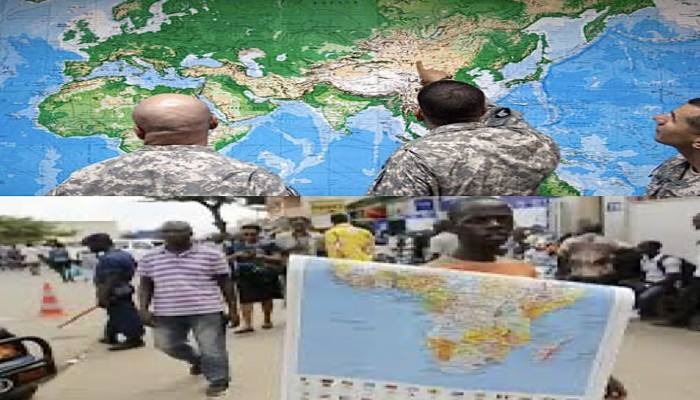
The United Nations General Assembly has backed an African Union-led effort to change how the world is represented on maps. The resolution, titled “Correct the Map”, calls for more accurate and equitable global maps, with a particular focus on Africa. It received 164 votes in favour. One country voted against it, while six countries abstained.
Togo introduced the resolution on behalf of the African Group at the United Nations. The African Union welcomed the adoption and termed it an important step in ensuring maps represent Africa according to its actual geographical size. The Permanent Observer Mission of the African Union to the UN also congratulated Togo and the African Group after the vote.
“Congratulations to the delegation of Togo on the adoption this morning by the #UNGA of resolution A/80/L.104, 'Correct the Map', an @_AfricanUnion initiative promoting more accurate and equitable global cartographic representation, particularly of Africa,” the mission said in a post on X.
African Union Commission Chairperson Mahmoud Ali Youssouf also welcomed the resolution. He praised Togo for leading the initiative and highlighted the unity shown by African countries in pushing for wider international support. In a communiqué, Youssouf congratulated Togo and President Faure Essozimna Gnassingbé for championing the resolution and helping secure support at the international level.
“The adoption of this resolution marks an important step forward,” Youssouf said.
The resolution states that the Mercator projection was developed in the 16th century for navigation and which is extensively used in educational, media, digital and official records, is not an accurate representation of the actual size of different regions. The African Union Commission has argued that this results in a distorted representation of the size of Africa.
The Mercator projection enlarges areas closer to the North and South Poles. Countries and regions near the Equator appear smaller in comparison. This has led to Africa appearing much smaller on many commonly used world maps than its actual land area.
“For centuries, the Mercator projection distorted global geography, shrinking Africa to the size of Greenland when our continent is actually 14 times larger,” the AU Commission said in a separate post on X.
The African Union’s campaign is not limited to changing the appearance of maps. It aims to encourage the wider use of representations that reflect what it describes as “objective and scientifically established realities”. The bloc wants international institutions, schools, publishers and digital platforms to gradually adopt maps that present the actual relative size of continents and countries.
The African Union Commission has also supported the use of equal-area map projections. One example is the Equal Earth projection, which preserves the relative size of land areas more accurately. The AU has called for such maps to be used in classrooms, media organisations and international institutions.
Equal-area projections provide a more accurate comparison of the size of countries and continents. However, they may not offer the same navigation benefits as the Mercator projection. The Mercator system was designed to make navigation easier by preserving certain directions and angles, rather than accurately showing the size of land areas.
The African Union said the adoption of the UN resolution will create awareness of how maps shape perceptions of geography. It also plans to continue working with Togo, its member states and other partners to support the implementation of the initiative.
The AU Commission called on international institutions, education systems, publishers and digital platforms to gradually adopt cartographic representations that accurately reflect the actual area of countries and continents.
It also backed the use of equal-area maps, including the Equal Earth projection, in classrooms, media and international institutions.
“Africa must be represented as it truly is: in its true dimensions and in its rightful place in the world,” Youssouf said.



 Loading...please wait
Comments