




Ukraine destroys air defences protecting Putin's Rs 13,000 crore property
- In Reports
- 02:33 PM, Aug 13, 2026
- Myind Staff
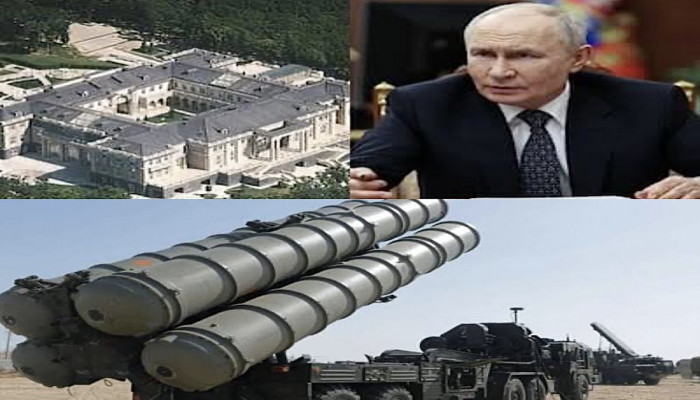
Ukraine has struck a Russian S-400 air-defence system deployed near Russian President Vladimir Putin’s lavish residence on the Black Sea coast. The system was positioned about 12 miles from Putin’s sprawling property near Gelendzhik in southern Russia. The S-400 “Triumph” is designed to intercept aircraft, drones and cruise missiles. The strike highlights Ukraine’s growing ability to target Russian military assets deep inside the country.
Major Robert Brovdi, commander of Ukraine’s unmanned systems forces, said the S-400 launcher remained damaged after the drone attack. According to Brovdi, the launcher was left "ablaze and sputtering for three hours", the Telegraph reported. The system was reportedly part of a larger security network set up to protect Putin’s residence and the surrounding area.
The security arrangement around the property includes electronic warfare equipment and mobile fire teams. The residence is also surrounded by a 27-square-mile “buffer zone”. A permanent no-fly zone is maintained over the area. Despite these measures, Ukrainian drones managed to reach the S-400 system and damage it.
Brovdi claimed the air-defence launcher had also been used for attacks against Ukrainian cities. He said the system had launched six missiles at Ukrainian targets on August 8. Russia has increasingly used air-defence systems such as the S-400 for strikes against Ukraine. The move comes as Moscow faces shortages of Patriot interceptors, which play a key role in defending against ballistic missile attacks.
The damaged launcher was located close to the widely known as “Putin’s Palace”. The huge Italianate-style complex has been at the centre of controversy for years. Its alleged cost has been estimated at up to Rs 12,000 crore. An investigation by the Anti-Corruption Foundation, led by late Russian opposition leader Alexei Navalny, detailed the estate in 2021. Navalny died in a Siberian prison in 2024.
Reports about the property have described an unusually luxurious complex. It has allegedly featured a casino, vineyard, spa, ice rink and theatre. The estate has also reportedly included a pole-dancing room, hookah lounge, an “aquatic disco” and a room designed for miniature railway trains. A chapel was reportedly added to the property in 2023.
Putin is believed to visit the Black Sea residence only occasionally. The growing threat of Ukrainian long-range drone attacks has reportedly made the location more difficult to secure. Instead, Putin is thought to prefer his heavily protected dacha near Lake Valdai, located about 185 miles east of Moscow.
The latest strike followed another Ukrainian drone attack in the same region last week. Drone fragments reportedly fell on a beach during that attack and killed seven people. Ukraine has also continued targeting Russian air-defence systems in other areas. On Monday, Ukrainian military intelligence said its drones had destroyed two Russian S-400 launchers and hit an antenna used to control Orion medium-altitude drones in occupied Crimea.
Kyiv estimated that the damage caused by the operation could reach tens of millions of dollars. The attacks form part of Ukraine’s wider campaign against Russian military and energy infrastructure. Ukrainian forces have increasingly relied on long-range drones to strike targets inside Russia. Moscow is facing growing difficulties in protecting its territory from these attacks.
More than 450 Ukrainian drones reportedly entered Russian airspace overnight on Monday. The attacks targeted an oil refinery in Tatarstan. At least 13 people were killed, making it one of the deadliest single attacks on Russian territory since the war began. Drone debris was also reported in Tyumen, a region in Siberia.
Kyiv hopes its expanding drone campaign will increase the cost of Russia’s war and put greater pressure on the Kremlin to negotiate. Ukraine has sought a frontline freeze and a ceasefire as part of its push for negotiations. Moscow has rejected Kyiv’s current demands.
Russian Deputy Foreign Minister Mikhail Galuzin dismissed Ukraine’s demand for a frontline freeze and ceasefire on Monday. He said, "No 'freeze' is possible without addressing the root causes of this crisis". The continued attacks and Moscow’s refusal to accept a freeze show that the conflict remains far from a negotiated halt.



 Loading...please wait
Comments