




UK to ban under-16s from social media platforms
- In Reports
- 07:09 PM, Jun 15, 2026
- Myind Staff
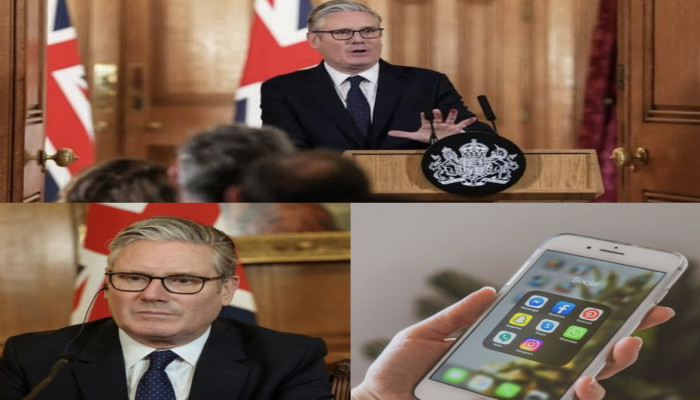
The United Kingdom is set to introduce a ban preventing children under the age of 16 from using a range of social media platforms. Prime Minister Keir Starmer announced the decision on Monday, describing it as “a big moment for our country.” The move is aimed at protecting young people from harmful online content and reducing excessive screen time.
Starmer said the government is prepared to take a firm stand against technology companies if they oppose the plan. He stressed that the well-being of children would remain the government's top priority. According to him, he is “not prepared to compromise on the safety and happiness of our children.”
The decision places the UK among a growing number of countries introducing stricter rules for children's online activities. Nations such as Australia, Canada, Brazil and Indonesia have either passed legislation or announced measures that place age-based restrictions on social media access. Several other countries, including France, Spain, Denmark, Thailand and South Korea, are also considering or developing similar policies.
Speaking about the issue, Starmer said, “How we keep kids safe online is one of the biggest debates of our time. This is a choice about whose side we’re on: families across the country, or a status quo that isn’t working."
While announcing the plan, Starmer did not specify which social media platforms would fall under the restrictions. However, he confirmed that the measures are expected to come into effect early next year. The Prime Minister had already hinted at the proposal on Sunday, calling it a “world-leading” step to protect children online. He suggested that the UK's approach could be even stricter than Australia's social media ban for children under the age of 16.
According to a report by The Sunday Times, the government is also considering additional digital safety measures. These may include restrictions on chatbots, controls on certain features available in gaming applications and a curfew intended to prevent older teenagers from spending late-night hours scrolling online.
The newspaper reported that the under-16 ban could apply to several major platforms. These include TikTok, Instagram, Facebook, X, YouTube, Snapchat, Threads, Twitch, Kick and Reddit. The government has not yet officially confirmed the final list of apps that will be covered.
The decision follows a public consultation process that received around 116,000 responses. Parents, children and representatives from the technology industry participated in the exercise. The government said the response was one of the largest it has ever received. In fact, the number of submissions was second only to the consultation on marriage equality held in 2012.
Culture Secretary Lisa Nandy said the majority of people who responded supported a social media ban for children under 16. She noted that support came not only from parents but also from young people themselves. However, she also emphasised that such a ban should be accompanied by other protective measures.
Speaking to the BBC on Sunday, Nandy said, “I don’t think banning social media on its own is the silver bullet solution, but I do think Australia has shown very clearly that it has a significant role to play.”
The proposal could also create further tensions between the UK and the United States. The US has previously expressed concerns about regulations affecting online platforms. According to a statement issued by the US Embassy in London, American officials believe such regulations should remain narrowly focused and should not interfere with free speech protections. The statement also raised concerns that additional regulations could place greater burdens on US-based technology companies.
Not everyone agrees that banning social media is the best solution. Jon Crowcroft, a communications systems professor at the University of Cambridge, argued that the policy could have unintended consequences. While acknowledging that supporters of social media restrictions have good intentions, he suggested that the approach may not achieve the desired results.
Crowcroft warned that limiting access to major platforms could push some children toward less regulated and potentially more harmful websites. He also questioned whether enforcing such restrictions on personal devices would be practical.
“There is a real risk this will drive some users to worse sites and policing devices is close to impossible technically,” Crowcroft said. “Policing platforms is far easier if only regulators would bother.”
The debate highlights the growing challenge governments face in balancing online freedom with child safety. As concerns about the impact of social media on young people continue to rise, the UK is preparing to introduce one of its most significant digital safety measures yet. The coming months are expected to reveal further details about how the restrictions will be implemented and enforced.



 Loading...please wait
Comments