




UK set to ban goods trade from Israeli settlements in West Bank
- In Reports
- 07:07 PM, Sep 08, 2026
- Myind Staff
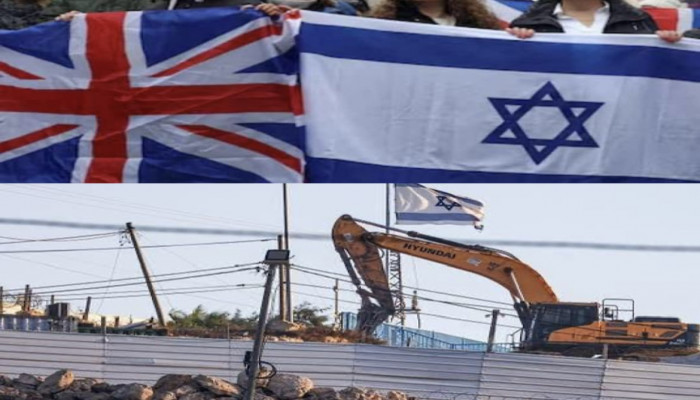
Britain is set to announce a ban on trade in goods produced in Israeli settlements in the occupied West Bank. A senior government minister confirmed the move on Tuesday. The decision forms part of the UK’s wider efforts to support a two-state solution between Israel and the Palestinians.
The announcement comes around six weeks after Ed Miliband took charge as Britain’s foreign minister. Miliband indicated last week that he was reviewing and seeking to reset Britain’s policy towards Israel. He is expected to address Parliament later on Tuesday and outline the government’s position on Israel and new trading restrictions.
The move also follows a conversation between Britain’s new Prime Minister Andy Burnham and US President Donald Trump on Monday. Burnham, who took office in July, stressed "the importance of a two-State solution" during the discussion. The reference is being viewed as linked to Britain’s planned restrictions on goods from Israeli settlements.
Miliband has recently raised concerns over Israel’s settlement activity in the West Bank. He specifically criticised the proposed E1 settlement project. He said the project would extend across land that Palestinians seek for a future state. According to Miliband, such expansion could put the two-state solution at greater risk.
The British government has not yet provided full details of how the proposed trade ban will work. Pensions Minister Pat McFadden declined to explain the exact scope or implementation of the restrictions when asked about them. Instead, he pointed to the foreign secretary’s planned statement in Parliament.
"The foreign secretary will make a statement to Parliament later today," McFadden told Times Radio.
McFadden also highlighted the growing concern over settlement expansion in the West Bank. He said the situation has become more urgent in recent weeks and months as Israel has expanded its settlement activity.
"The reason that danger has become more urgent is because of expanded settlement activity in recent weeks and months."
The West Bank remains at the centre of the long-running Israeli-Palestinian conflict. The United Nations and most governments, including Britain, consider Israeli settlements in the territory illegal under international law. They also regard the West Bank as territory under Israeli military occupation.
Israel rejects that position. It argues that the West Bank is disputed territory rather than occupied territory. Israel also maintains that Jewish people have a historical right to the land.
The proposed British trade restrictions therefore come amid growing international concern over settlement expansion and its possible impact on efforts to establish an independent Palestinian state. Britain has increasingly highlighted the need to protect the possibility of a two-state solution.
The Israeli prime minister’s office and Israel’s foreign ministry had not immediately responded to requests for comment on Britain’s planned move. Further details on the products covered by the ban and how the restrictions will be enforced are expected when Miliband addresses the House of Commons.
Britain’s decision marks a significant shift in its approach to goods produced in Israeli settlements. The government has linked the measure to its broader position on the future of the West Bank and the prospects for a negotiated two-state solution. The announcement is expected to provide more clarity on how Britain plans to respond to continued settlement expansion while maintaining its wider policy towards Israel and the Palestinian territories.



 Loading...please wait
Comments