




UK seals trade agreement worth $5 billion with GCC amid regional instability
- In Reports
- 06:30 PM, May 21, 2026
- Myind Staff
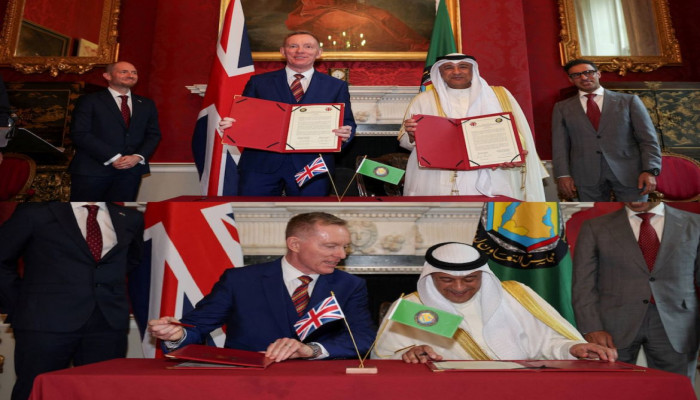
On Wednesday, Britain announced a major trade agreement with the Gulf Cooperation Council (GCC), a move expected to strengthen economic ties with key allies in the Middle East at a time of growing regional instability after the Iran war. The British government said the deal could add around $5 billion annually to the UK economy in the long run and provide greater certainty to exporters and businesses operating in the region.
The agreement has been signed with the GCC bloc, which includes Bahrain, Kuwait, Oman, Qatar, Saudi Arabia and the United Arab Emirates. The development comes months after U.S.-Israeli strikes on Iran in February triggered retaliatory attacks by Tehran across the region. The conflict created pressure on energy supplies and disrupted food supply chains, raising concerns among governments and businesses worldwide.
British Trade Minister Peter Kyle described the deal as an important step during a period of uncertainty. “At a time of increased instability, today's announcement sends a clear signal of confidence - giving UK exporters the certainty they need to plan ahead,” he said.
According to the British government, the agreement is expected to be worth around £3.7 billion, or nearly $4.96 billion, every year in the long term. This is significantly higher than earlier estimates, which had projected gains of around £1.6 billion annually. Officials said the final agreement included broader trade liberalisation measures and stronger commitments in the services sector than initially expected, leading to the revised figures.
A major feature of the deal is the reduction of tariffs on British goods entering GCC countries. The agreement will remove 93% of GCC tariffs on UK products. The British government said this would eliminate tariffs worth around £580 million by the tenth year of the agreement. Nearly two-thirds of these tariff cuts will come into effect immediately once the deal is implemented.
Several British industries are expected to benefit from the agreement. These include the automobile, aerospace, electronics, food and beverage sectors. Products such as cereals, cheddar cheese, butter and chocolate will become tariff-free in GCC markets, potentially boosting British exports across the Gulf region.
Britain has also agreed to reduce tariffs on imports from GCC countries. However, officials noted that the Gulf region’s biggest exports to Britain, including oil and gas, were already exempt from tariffs before the deal.
The agreement also focuses heavily on the services sector. Britain said the pact secures current levels of market access in GCC countries, allowing British businesses to expand operations without worrying about new trade restrictions in the future. At the same time, GCC countries are expected to benefit through greater opportunities to grow their own service industries under the agreement.
GCC Secretary-General Jasem Mohamed Albudaiwi welcomed the agreement and said it would create meaningful economic opportunities for businesses and citizens across all participating countries. Following the signing, he said the deal had a framework designed to achieve “tangible and measurable” economic benefits for businesses, investors and citizens of the seven signatory countries.
According to a statement released by the GCC, the agreement covers multiple sectors beyond goods and services. These include financial services, telecommunications, digital trade and investment protection. Officials from both sides believe the wider scope of the deal will help deepen long-term economic cooperation between Britain and Gulf nations.
The British government also clarified that the agreement does not weaken the country’s environmental protections or data privacy standards. Officials stressed that existing regulations in these areas would remain unchanged under the trade pact.
However, the absence of any provisions related to human rights has drawn criticism from campaigners and trade activists in Britain. Some groups had earlier urged the government to include enforceable human rights protections while negotiating with Gulf nations.
Reacting to the final agreement, Tom Wills, director of the Trade Justice Movement, criticised the government’s approach. “By failing to negotiate any enforceable human rights protections within the deal, the UK has taken a moral step backwards,” he said.
Another controversial element of the agreement is the inclusion of an Investor-State Dispute Settlement mechanism, commonly known as ISDS. The deal includes an investment protection chapter that extends treaty protections to three GCC countries that previously did not have such arrangements with Britain. Critics argue that the ISDS system allows foreign investors to sue governments over policy decisions that may affect their investments.
Wills also raised concerns over this provision, saying it could give Gulf investors the ability to challenge decisions taken by the British government. Despite criticism from activists, both Britain and the GCC have defended the agreement as a major economic milestone that could strengthen trade and investment ties during a period of global uncertainty.



 Loading...please wait
Comments