



UK refuses US request to use RAF base for possible Iran strikes
- In Reports
- 05:30 PM, Feb 20, 2026
- Myind Staff
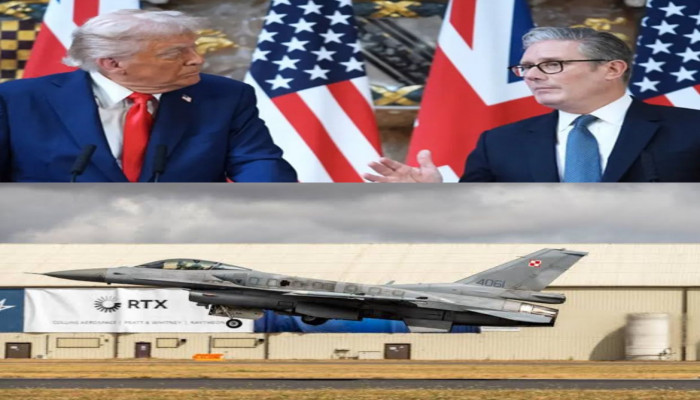
The United Kingdom has refused a request from the United States to use British air bases for possible military strikes against Iran. According to reports, the UK government declined to allow American long-range bombing operations from RAF Fairford near Swindon in Gloucestershire. The decision comes at a time when the United States has increased its military presence in the Middle East and is preparing contingency plans for possible action against Iran.
The British government reportedly decided not to authorise the use of RAF Fairford because it believes that taking part in pre-emptive attacks on Iran could breach international law. Officials are concerned that allowing such operations from British soil could make the UK legally responsible if the strikes are later considered unlawful. Under international law principles adopted into UK policy after 2001, a country can share responsibility if it knowingly supports an ally in carrying out military action that violates legal standards.
Washington has been building up forces in the region, raising fears of a possible military conflict with Iran. However, the UK has chosen to take a cautious approach. British reluctance to support a pre-emptive strike reflects a long-standing position within the government to avoid direct involvement in offensive military operations unless there is a clear legal basis.
The decision is expected to add to tensions between the UK and the US. Relations between the two close allies are already under strain over Britain’s proposed deal to hand over the Chagos Islands, a British Indian Ocean Territory, to Mauritius. The agreement would involve Britain transferring sovereignty of the islands while leasing back the military base on Diego Garcia for 99 years at a reported cost of £35 billion.
The United States has expressed opposition to this deal because Diego Garcia is considered a key military base. It plays an important role in launching long-range operations over the Middle East and the Indo-Pacific region. American officials see continued access to the base as vital for strategic and security purposes.
US President Donald Trump has openly criticised the UK’s stance on both the Iran issue and the Chagos Islands deal. Posting on Truth Social, Trump warned that the United States might need access to Diego Garcia and RAF Fairford “in order to eradicate a potential attack by a highly unstable and dangerous Regime.” His comments were clearly directed at Iran.
Trump has also urged Britain not to proceed with handing over the Chagos Islands. In strong words, he wrote, “DO NOT GIVE AWAY DIEGO GARCIA!” He has previously described the agreement as a “big mistake” and warned that giving up control could weaken Western military strength in a sensitive region.
Under existing treaties, if the United States were to launch strikes from Diego Garcia, Britain would only need to be informed. However, using RAF bases on British territory would require explicit approval from the UK government. In this case, that approval has not been granted.
Britain has taken a similar approach in the past. During earlier US strikes on Iranian targets, the UK declined direct participation. Instead, it limited its involvement to defensive measures aimed at protecting British assets and regional allies. This shows that the current decision follows a consistent pattern of caution when it comes to offensive military action.
The UK government’s position highlights its focus on legal responsibility and international law. Officials believe that supporting pre-emptive strikes without clear legal justification could expose Britain to criticism and possible legal consequences. As tensions rise in the Middle East, London appears determined to avoid becoming directly involved in a new conflict.
The situation reflects growing differences between the US and the UK over how to handle security challenges involving Iran. While Washington is preparing military options, Britain is emphasising legal limits and careful consideration. At the same time, the disagreement over the future of the Chagos Islands adds another layer of tension to the relationship.
With military forces gathering near Iran and strong statements coming from Washington, the issue remains sensitive. The UK’s refusal to allow the use of RAF Fairford shows that even close allies can differ on matters of war, law, and strategy.



 Loading...please wait
Comments