



UK government launches BBC review following Trump’s $10 billion lawsuit
- In Reports
- 07:26 PM, Dec 17, 2025
- Myind Staff
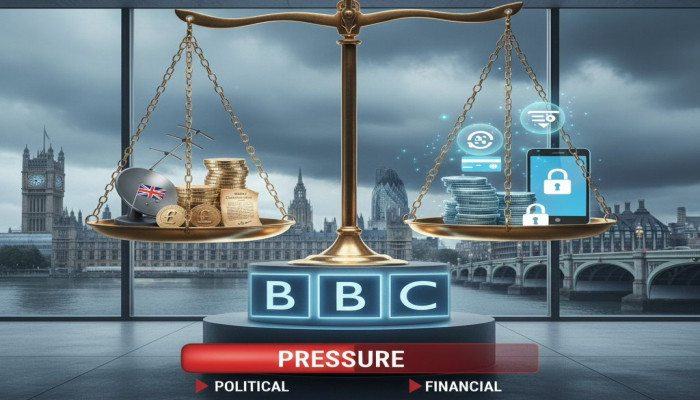
The British government is considering significant changes to the way the British Broadcasting Corporation (BBC) is funded, including the possibility of allowing advertising or introducing subscription-based services, marking a potential departure from the broadcaster’s long-standing licence fee model.
The proposals come at a time when the century-old public broadcaster is facing growing political scrutiny, financial challenges, and legal pressure, including a high-profile lawsuit filed by U.S. President Donald Trump.
The BBC is currently funded mainly through a universal licence fee, which requires any household that watches live television in the UK to pay an annual charge. The fee currently stands at £174.50 ($234) per year. However, the number of people paying the licence fee has been declining, prompting the government to explore alternative ways to ensure the broadcaster’s long-term financial stability.
The licence fee has long been a subject of national debate. Over the years, politicians from across the political spectrum have criticised the BBC, accusing it of bias, while others have defended it as an essential public service. Against this backdrop, the government has begun reviewing the BBC’s funding system to determine whether it remains suitable in an evolving media landscape.
On Tuesday, Culture Secretary Lisa Nandy formally launched a review of the BBC’s charter, which sets out the broadcaster’s mission, governance, and funding structure. The review aims to “future-proof” the BBC and ensure it can continue to serve audiences in the years ahead.
Despite ongoing controversy, the BBC continues to enjoy broad public support in the UK. However, the government has acknowledged that changes may be necessary to maintain its relevance and financial sustainability.
One of the options being considered by the government is allowing the BBC to generate more commercial revenue. This could include introducing advertising on its online platforms or other services, a move that would mark a significant shift from the BBC’s traditional commercial-free model. The absence of advertising has long been one of the BBC’s defining features and a key reason it is seen as distinct from commercial broadcasters. Allowing adverts could therefore end one of the corporation’s most recognisable characteristics.
However, the government has also noted that introducing BBC advertising could have unintended consequences for other broadcasters. In particular, it could negatively impact ITV, Britain’s largest free-to-air commercial television network, by taking a share of an already shrinking advertising market.
Another proposal outlined in the government’s consultation paper involves creating a hybrid funding model. Under this approach, certain types of content, such as news, current affairs, factual programming, and children’s television, would continue to be funded by the licence fee and remain universally available to the public. At the same time, more commercially attractive content, including drama, could be placed behind a subscription paywall, allowing the BBC to raise additional revenue without fully abandoning public funding.
This model would represent a compromise between maintaining the BBC’s public service role and adapting to commercial realities in a competitive media environment.
Speaking about the review, Culture Secretary Lisa Nandy said the BBC must continue to play a central role in British society while adapting to changing conditions. She stated, “The BBC must reflect Britain, be an engine for economic growth and be funded in a sustainable and fair way.”
Nandy also emphasised the importance of preserving the broadcaster’s independence and credibility, adding, “The BBC must remain fiercely independent, accountable and be able to command public trust.”
BBC Director General Tim Davie, who has resigned over the complaint linked to Donald Trump’s lawsuit but has not yet left his position, said the broadcaster was open to reforms.
Responding to the government’s proposals, Davie said, “At the BBC, we want change, so we can continue to deliver for the UK for generations to come.” His remarks suggest that the BBC is willing to engage with the government’s review process and consider adjustments that would allow it to remain viable in the long term. The BBC’s challenges have been compounded by a major legal case filed by Donald Trump in the United States.
According to a filing in a Miami federal court on Monday, Trump has sued the BBC for up to $10 billion in damages. The lawsuit relates to edited clips of a speech, which Trump claims defamed him. The BBC has acknowledged the issue and has already apologised to Trump, but is defending the lawsuit. The legal action has added further pressure on the broadcaster during an already turbulent period.
The BBC has long presented itself as a global beacon of neutrality and truth, with a significant international audience. Its World Service radio, in particular, has played a major role in delivering news to audiences around the world. However, the broadcaster’s reputation has increasingly come under scrutiny, both at home and abroad, as political criticism and legal challenges intensify.
As the government’s review of the BBC charter moves forward, the future of the broadcaster’s funding model remains uncertain. Introducing advertising or subscriptions would represent one of the most significant changes in the BBC’s history. For now, officials say no final decisions have been made. The consultation process will continue, with the government weighing the need to protect the BBC’s public service mission while ensuring it remains financially sustainable in a rapidly changing media environment.



 Loading...please wait
Comments