




UAE signals readiness to join Iran war, help US to reopen Strait of Hormuz
- In Reports
- 01:08 PM, Apr 01, 2026
- Myind Staff
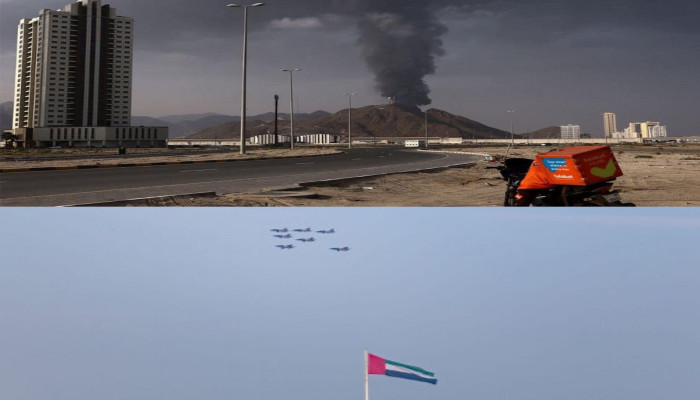
The United Arab Emirates is reportedly preparing to take a direct role in the ongoing US-Iran conflict, with plans to support the United States and its allies in reopening the Strait of Hormuz by force. According to a recent report citing Arab officials, the Gulf nation is actively exploring options to participate militarily. If this step is taken, the UAE would become the first Persian Gulf country to formally join the conflict on the battlefield. This development comes at a time when tensions in the region are rising due to continued Iranian attacks on the UAE and other Gulf states, which are seen as retaliation for US and Israeli strikes on Iranian territory.
The shift in the UAE’s stance also follows strong remarks made by US President Donald Trump, who criticised allied nations for not contributing enough to the war effort. He urged them to take more responsibility, stating that they should “go get your own oil” and suggesting that protecting the Strait of Hormuz should not fall solely on the United States. In response, the UAE appears to be aligning itself more closely with Washington’s expectations by considering a stronger role in securing the strategic waterway.
Reports indicate that the UAE is pushing for a United Nations Security Council resolution that would authorise action against Iran. The Wall Street Journal, quoting Emirati officials, noted that the country is also encouraging the formation of a broader international coalition. This coalition would ideally include military powers from Europe and Asia, aimed at ensuring safe passage through the Strait of Hormuz. The UAE believes that countries which are currently hesitant may be more willing to participate if such action receives formal approval from the United Nations.
However, there are concerns that Russia and China could block the proposed resolution in the Security Council. Despite this possibility, Gulf officials have suggested that the UAE is prepared to support military operations even without UN approval. This support could involve activities such as clearing naval mines and assisting in maintaining safe shipping routes through the strait.
In addition to these efforts, the UAE has reportedly proposed that the United States take control of certain islands located within the Strait of Hormuz. One such island is Abu Musa, which has been under Iranian control for nearly fifty years but is claimed by the UAE. This proposal reflects a more aggressive and strategic approach by the Emirates in dealing with the current crisis.
The UAE’s foreign ministry has also issued a statement referencing international concern over the situation. It pointed to a United Nations resolution condemning Iran’s strikes on Emirati cities, as well as a separate resolution by the International Maritime Organisation criticising the closure of the Strait of Hormuz. The ministry stated that there is “broad global consensus that freedom of navigation in the Strait of Hormuz must be preserved.” This highlights the UAE’s attempt to frame its actions as part of a wider international agreement on maintaining open sea routes.
This assertive position marks a significant change in the UAE’s strategy. Before the conflict escalated, the country had been working to mediate tensions between the United States and Iran. Diplomatic efforts included hosting Iranian national security official Ali Larijani in Abu Dhabi. However, Larijani was later killed in an airstrike, which further escalated the situation and reduced chances for dialogue.
Now, the UAE appears to be shifting from diplomacy to direct involvement. It is increasingly supporting Trump’s call for allies to share the burden of the conflict, particularly in securing the Strait of Hormuz. Other Gulf countries, including Saudi Arabia, are also reportedly changing their stance. While they have not yet committed military forces, they are said to support continued pressure on Iran’s leadership until it is weakened or removed.
Bahrain has openly backed the proposed UN resolution and is expected to support the initiative during an upcoming vote. The country’s close ties with the United States, including hosting the US Navy’s Fifth Fleet, make its position significant in the region.
Experts believe that if the UAE joins the conflict, it would send a strong signal of Arab support for the US-led effort. Bilal Saab, a fellow at Chatham House and former Pentagon adviser, noted that such a move would expand military options against Iran and strengthen operations aimed at reopening the strait.
The UAE’s geographic and military advantages also make it a valuable partner in any such mission. It hosts key facilities such as military bases and the deep-water port at Jebel Ali, which is strategically located near the entrance of the Strait of Hormuz. These assets could be used to support operations like escorting commercial tankers or securing contested areas.
In terms of military capability, the UAE maintains a well-equipped air force that includes US-supplied F-16 fighter jets. These aircraft have previously been used in joint operations with US forces in Iraq during the fight against the Islamic State. The country also operates surveillance drones and possesses a stockpile of US-made bombs and short-range missiles. These resources could help support ongoing operations and address shortages faced by US and Israeli forces in the region.
Overall, the UAE’s evolving role reflects a broader shift in regional dynamics. What began as a diplomatic effort to ease tensions has now turned into a potential military alignment. As the situation develops, the UAE’s next steps could have significant implications for the conflict and for global energy security.



 Loading...please wait
Comments