




UAE restricts funding for students planning to study in UK over Muslim Brotherhood concerns
- In Reports
- 05:59 PM, Jan 09, 2026
- Myind Staff
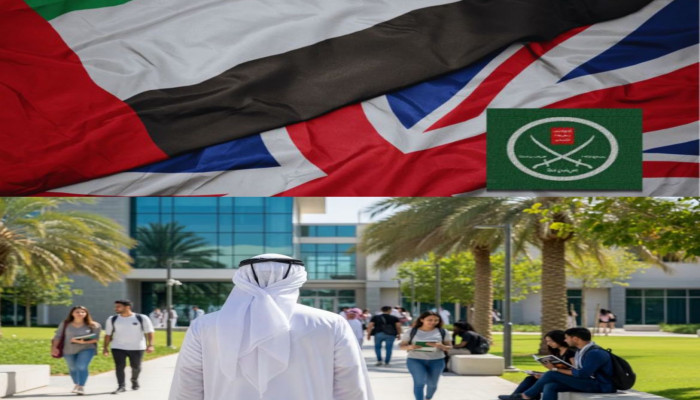
The United Arab Emirates (UAE) has placed restrictions on government funding for its citizens who want to study at universities in the United Kingdom (UK). The move reflects growing tensions between the two countries and is linked to concerns raised by the UAE over the issue of Islamist radicalisation and the UK’s position on the Muslim Brotherhood, according to a report by the Financial Times.
Abu Dhabi has recently removed British universities from its approved list of international institutions that are eligible for state-funded scholarships. This decision directly affects Emirati students who depend on government support to pursue higher education abroad. The step marks another challenge in the relationship between the UAE and the UK, which have traditionally been close allies.
In June last year, the UAE’s Ministry of Higher Education released a revised list of foreign universities whose degrees would be officially recognised and whose students would qualify for state scholarships. These reforms were introduced to ensure that government funding was directed only to institutions considered among the world’s top universities.
The list includes universities from countries such as the United States, Australia, France, and Israel. However, no universities from the UK were included. According to sources quoted in the report, the exclusion of British institutions was intentional and not an administrative mistake.
When questioned by UK officials about the absence of British universities, UAE officials made it clear that it was not an error. A source quoted in the report said the omission was not an “oversight”.
Sources cited by the Financial Times said that the UAE’s decision is rooted in its concerns about the risk of Islamist radicalisation at British universities. One source directly explained the UAE’s position, saying, “[The UAE] don’t want their kids to be radicalised on campus.”
Official data from the UK government supports the context of these concerns. During the 2023–24 academic year, 70 students studying at UK universities were reported for possible referral to the government’s Prevent DE radicalisation programme due to signs of “Islamist radicalisation”. This figure was nearly double the number reported in the previous academic year. These reports came from a higher education population of nearly three million students across the UK. Although the number of reported cases is small compared to the total student population, the UAE views the issue as serious enough to justify restricting scholarship funding.
The UK has traditionally been a popular destination for Emirati students, many of whom receive generous state-funded scholarships to study abroad. However, funding for new students going to the UK had already been reduced even before the official list was published in June.
Students who were already enrolled at UK universities have continued to receive financial support, but new applicants have been affected. In the year ending September 2025, only 213 Emirati students were granted study visas for the UK. This marked a 27 per cent drop compared to the previous year and a 55 per cent decline from 2022.
In addition to cutting scholarship funding, the UAE has also announced that it will not recognise degrees from institutions that are not on its approved list. This decision further reduces the value of UK university qualifications for Emirati students.
The funding decision is also closely tied to long-running disagreements between the UAE and the UK over the Muslim Brotherhood. The UAE has taken a strong stance against Islamist movements both within the country and abroad. Under President Sheikh Mohammed bin Zayed al-Nahyan, Abu Dhabi has repeatedly questioned why the UK has not banned the Muslim Brotherhood.
A review conducted by the UK government in 2015 concluded that the Muslim Brotherhood had not been linked to terrorist activity in or against Britain. Despite this, the issue remains politically sensitive. Prime Minister Keir Starmer’s government said last year that the matter continues to be under “close review”.
Nigel Farage, the leader of the Reform UK party, has stated that he would ban the Muslim Brotherhood if he becomes prime minister. According to a recent Financial Times report, the UAE government funded Farage’s visit to the country last year.
The scholarship restriction comes amid several other disputes between the two nations. These include disagreements over an Abu Dhabi-backed attempt to buy The Daily Telegraph, allegations regarding UAE involvement in Sudan—which the UAE has denied—and a legal case involving Manchester City football club, which is owned by Emirati interests.
Despite these tensions, UK universities continue to expand their presence in the UAE. Several British institutions operate campuses in Dubai, including the University of Manchester and Heriot-Watt University, highlighting the complex and evolving nature of the relationship between the two countries.



 Loading...please wait
Comments