




UAE publicly rejects Netanyahu’s claim of secret wartime meeting during Iran conflict
- In Reports
- 01:35 PM, May 14, 2026
- Myind Staff
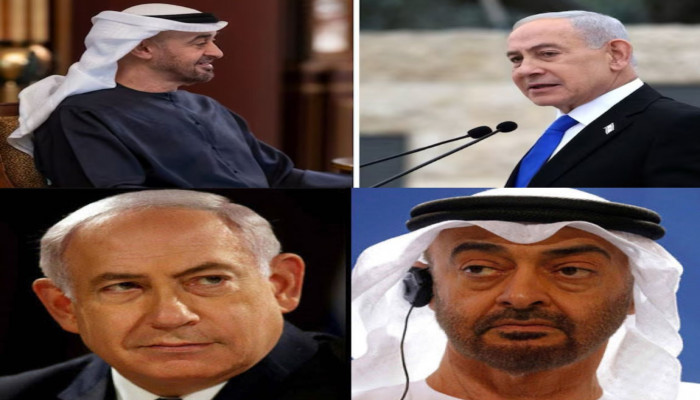
The United Arab Emirates has strongly denied Israeli Prime Minister Benjamin Netanyahu’s claim that he secretly visited the country during the recent Iran war for high-level talks with UAE President Sheikh Mohammed bin Zayed Al Nahyan. The disagreement has exposed a rare public contradiction between the two countries, which have steadily expanded ties since signing the Abraham Accords in 2020.
Netanyahu’s office said on Wednesday that the Israeli Prime Minister held a confidential meeting with Sheikh Mohammed bin Zayed, also known as MBZ, in the Emirati city of Al Ain on March 26 during the peak of the conflict in West Asia. According to the statement, the meeting lasted several hours and focused on regional security coordination and military cooperation during the war involving Israel, Iran, and the United States.
The Israeli government described the visit as a major diplomatic development at a time when tensions across the Gulf region were extremely high. Netanyahu’s office said, “In the midst of Operation Roaring Lion, Prime Minister Benjamin Netanyahu secretly visited the United Arab Emirates, where he met with UAE President Sheikh Mohamed bin Zayed. This visit has led to a historic breakthrough in relations between Israel and the UAE.”
However, the UAE quickly rejected the Israeli claims. In an official statement, the UAE foreign ministry denied that Netanyahu had travelled to the Emirates or that any Israeli military delegation had been received in the country during the conflict.
“The United Arab Emirates denies reports circulating regarding an alleged visit by Israeli Prime Minister Benjamin Netanyahu to the UAE, or receiving any Israeli military delegation in the country,” the ministry said.
The UAE also stressed that its relationship with Israel is handled openly under the Abraham Accords framework and not through hidden diplomatic arrangements. Abu Dhabi made it clear that any official visit involving foreign leaders would be publicly announced through proper channels.
“Any claims regarding unannounced visits or undisclosed arrangements are entirely unfounded unless officially announced by the relevant authorities in the UAE,” the statement said.
The conflicting statements from Israel and the UAE emerged amid reports of increasing security coordination between the two countries during the Iran conflict. The confrontation had triggered missile and drone attacks across several parts of the Gulf region, raising fears of a wider regional escalation.
According to Reuters, which cited a source familiar with the matter, Mossad chief Dedi Barnea travelled to the UAE at least twice during the conflict. The visits were reportedly linked to military coordination between Israel and the Emirates during the war period. The Wall Street Journal had earlier carried a report about Barnea’s visits as well.
Further reports about military cooperation surfaced this week when US Ambassador to Israel Mike Huckabee revealed that Israel had deployed an Iron Dome air defence battery to the UAE during the war with Iran. Israeli military personnel were also reportedly sent along with the defence system. Huckabee said the deployment happened after a request from the UAE leadership during the early stage of the conflict.
The move marked the first overseas deployment of Israel’s Iron Dome system, which is considered one of the country’s most advanced air defence technologies. Reports said the deployment followed a direct call between UAE President Sheikh Mohammed bin Zayed and Netanyahu as tensions with Iran intensified.
During the conflict, Iran launched retaliatory missile and drone attacks against several Gulf countries following joint US-Israeli military action. Some reports stated that civilian infrastructure and energy facilities in the UAE and other Gulf states were among the targets of Iranian strikes.
The UAE and Israel have significantly expanded economic, diplomatic, and security relations since normalising ties under the Abraham Accords in 2020. Trade between the two countries has grown rapidly, and both sides have increasingly worked together in areas such as technology, defence, tourism, and investment.
At the same time, the UAE has tried to maintain a careful public position regarding Israel’s military operations in the region. Abu Dhabi has often avoided openly associating itself with Israeli military campaigns, especially during periods of heightened anger in the Arab world over the Gaza conflict and broader regional tensions involving Iran.
The latest disagreement over Netanyahu’s alleged secret visit highlights the sensitive balance the UAE is attempting to maintain. While security and strategic cooperation between the two countries appear to have deepened behind the scenes, the Emirati leadership has continued to publicly distance itself from controversial aspects of Israel’s regional military actions.
The public denial by the UAE also reflects domestic and regional sensitivities surrounding the ongoing conflicts in West Asia. Open support for Israeli military operations remains a politically delicate issue across much of the Arab world, particularly during periods of war involving Gaza and Iran.
Despite the sharp contradiction between the Israeli and Emirati accounts, reports of military coordination and intelligence cooperation between the two sides continue to point towards a growing strategic partnership shaped by shared security concerns in the region.



 Loading...please wait
Comments