




UAE leaves OPEC, raising questions over oil supply and price stability
- In Reports
- 12:10 PM, Apr 29, 2026
- Myind Staff
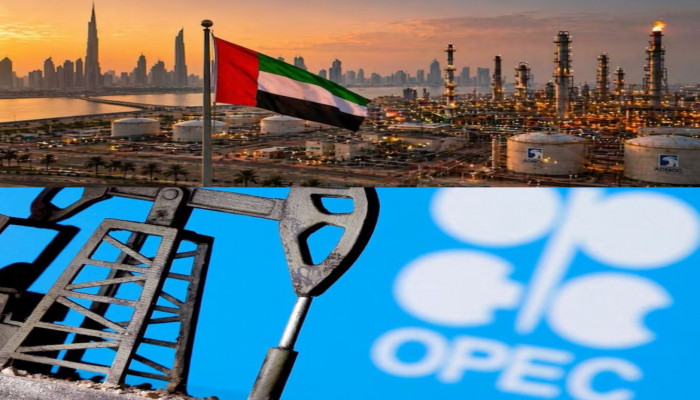
The United Arab Emirates has decided to exit the Organisation of the Petroleum Exporting Countries and the broader OPEC+ alliance from May 1. This move could reshape global oil markets at a time when supply is already under pressure due to ongoing conflict in West Asia. The decision comes when oil prices remain high, reflecting continued uncertainty in the market.
As of 8 am, Brent crude was trading at $110.74 per barrel, while WTI crude stood at $99.13. These elevated prices have heightened concerns of supply disruptions, especially those linked to tensions near the Strait of Hormuz. This route is crucial, as nearly a fifth of the world’s oil and LNG supply passes through it, making any disruption highly significant for global markets.
The Organisation of the Petroleum Exporting Countries was formed in 1960 by countries including Iran, Iraq, Kuwait, Saudi Arabia and Venezuela. Its main goal has been to coordinate oil production policies among member nations. This helps stabilise global oil prices and ensures a steady supply. Over time, the group expanded and now includes major producers such as the UAE, Nigeria, Angola and Algeria. The OPEC+ alliance later included non-members like Russia to jointly manage output and influence markets.
The UAE’s exit is significant because it is one of the largest producers in the group. It contributes around 12 per cent of OPEC’s total output. This makes it a key pillar of the alliance. Its departure weakens the group and affects its ability to manage supply and prices. It also creates a challenge for Saudi Arabia, which is seen as the leading force within OPEC.
For years, OPEC has used production quotas to control supply. Member countries agreed to limit output to keep prices stable. With the UAE stepping out, one of the most important producers will no longer follow these limits. This reduces the group’s control over global supply and weakens its structure.
The UAE has said that its decision is based on long-term energy strategy and market conditions. The country wants more freedom in deciding how much oil it produces. Energy Minister Suhail Al Mazrouei explained that the move will allow greater flexibility in production decisions. He also made it clear that the decision was taken independently and not discussed with other members, including Saudi Arabia. "This is a policy decision after a careful look at current and future policies related to the level of production," he said.
This move reflects a long-standing issue within OPEC. The UAE has been increasing its production capacity and investing heavily in its oil sector. However, OPEC’s production cuts have limited how much oil it can produce and export. With a capacity of about 4.85 million barrels per day and plans to increase it to 5 million barrels per day by 2027, the country has found these restrictions difficult to justify.
The timing of the decision is important. Global oil markets are already under strain due to the ongoing conflict involving Iran. Disruptions in shipping routes, especially near the Strait of Hormuz, have affected supply since late February. This has pushed prices higher and created a tight market. In such conditions, any move by a major producer becomes more impactful.
In the short term, the UAE’s exit is not expected to have a major impact on supply. This is because disruptions in shipping routes are still limiting how much oil can move through the region. Even if the UAE increases production, it may not be able to export significantly higher volumes immediately. However, this situation could change once supply routes stabilise.
Without OPEC quotas, the UAE will have the freedom to increase production based on its capacity and market demand. Over time, this could add more oil to the global supply. According to estimates, the Abu Dhabi National Oil Company (ADNOC) could raise output to over 4.5 million barrels per day. This is higher than the OPEC+ quota of around 3.4 million barrels per day for May 2026.
Any increase in production is expected to be gradual. It is likely to happen over 12 to 18 months, depending on demand and market conditions. The immediate concern is not the short-term supply, but the long-term impact on OPEC. The UAE’s exit may weaken the group’s ability to enforce production discipline among its members.
If other countries start focusing more on their own production goals rather than agreed limits, OPEC’s influence could decline. This may lead to weaker coordination and increased volatility in oil markets. There is also a possibility that other members could follow a similar path, especially those with growing capacity and low production costs.
In the short term, oil prices are expected to remain influenced more by geopolitical tensions than by this decision. With Brent crude still above $110 per barrel, the market is reacting mainly to supply disruptions. However, in the long run, if the UAE increases output and OPEC’s control weakens, more oil could enter the market. This may put downward pressure on prices, depending on global demand.
At the same time, weaker coordination among producers could lead to sharper price fluctuations. The market may lose a key mechanism that has helped maintain stability in the past. This could result in more unpredictable price movements.
For India, which depends heavily on oil imports, the development brings both challenges and opportunities. In the short term, high oil prices remain a concern due to ongoing tensions. This could increase inflation and raise the country’s import bill. However, in the long term, if global supply improves due to higher production, it may help bring prices down and reduce cost pressures.
The UAE’s decision also reflects a broader shift in global energy markets. Large oil producers are increasingly focusing on maximising output and revenue instead of following group limits. The UAE has planned major investments, including a $150 billion programme through 2030, to expand its role in global supply.
While the immediate impact of this decision may be limited, it signals a possible turning point for OPEC and the global oil market. The coming months will show whether this remains an isolated move or becomes part of a larger shift in how oil-producing countries operate.



 Loading...please wait
Comments