




UAE eyes BrahMos, Akashteer as India emerges as key defence partner
- In Reports
- 07:52 PM, Jun 22, 2026
- Myind Staff
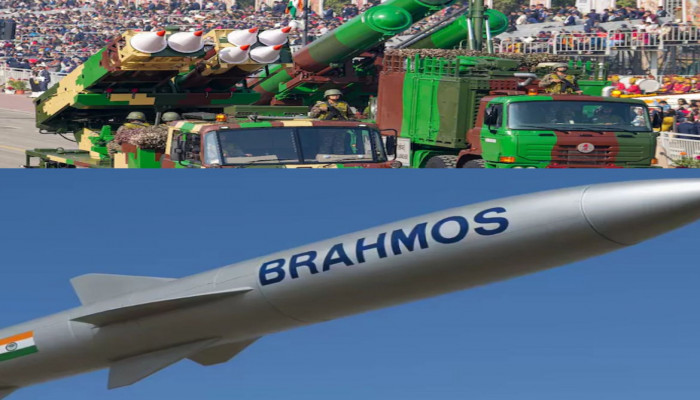
India and the United Arab Emirates (UAE) are holding discussions on the possible sale of some of India’s leading defence systems, including the BrahMos supersonic cruise missile and the Akashteer air defence system. Sources said the talks are currently at an early stage but are moving forward quickly as the UAE looks to strengthen its military capabilities following the recent conflict in the Middle East.
According to sources, the discussions include the export of Akashteer, India’s fully automated air defence command-and-control system developed by Bharat Electronics Ltd in partnership with the Indian Army. Another source familiar with the talks said the UAE has also shown interest in several other Indian defence platforms.
"The UAE has shown interest in a number of our weapon systems, including BrahMos and Akashteer. The talks between India and the UAE are at initial stages and are progressing fast," a source said.
Neither the Indian government nor the UAE administration has officially commented on the development.
The UAE has been reviewing its defence procurement plans after facing missile and drone threats during the recent conflict involving Iran, Israel and the United States. The country is also focused on improving the security of the Strait of Hormuz, a strategically important route through which a large share of its energy exports passes.
The interest in Indian defence systems reflects the UAE’s broader effort to diversify its defence suppliers while improving its ability to respond to modern aerial threats. Earlier this year, the UAE signed a memorandum of understanding with South Korea to expand defence cooperation. Agreements under this partnership are expected to exceed USD 35 billion (Rs 3.3 lakh crore).
Experts believe that relying on a wider range of defence suppliers gives the UAE greater strategic flexibility. They also note that stronger defence ties with India do not create tensions with the United States, as both India and the UAE maintain close relations with Washington.
The BrahMos missile is one of India’s most advanced weapons systems. Jointly developed by India and Russia, it is considered one of the fastest operational supersonic cruise missiles in the world. It can be launched from land, sea and air platforms and has an export range of around 290 kilometres.
Since BrahMos is jointly developed with Russia, any export deal with the UAE would require Moscow’s approval. However, a source told Reuters that Russian approval is unlikely to be a major obstacle because of the strong relationship between Russia and the UAE.
Akashteer is an integrated air defence system that automatically processes information from multiple sensors and weapon platforms. This allows faster detection, tracking and engagement of aerial threats. Defence experts say the system can strengthen existing missile defence networks by improving coordination between surveillance and response systems.
The UAE already operates advanced American defence equipment, including the THAAD and Patriot missile defence systems, along with the MGM-168 ATACMS ballistic missile, which has a range of up to 300 kilometres. Analysts believe Akashteer could improve coordination among these systems.
The defence discussions come at a time when India and the UAE are expanding cooperation across several sectors. In recent years, the two countries have signed agreements covering trade, energy, investment and defence manufacturing. They have also agreed to work together on the development of military hardware.
According to two government sources, the proposed defence sales are also linked to India’s broader goal of strengthening ties with the UAE. This comes as Saudi Arabia and Pakistan continue to deepen their own defence cooperation.
"The growing ties must also be understood against the backdrop of wider regional geopolitical dynamics, in particular the competition between Riyadh and Abu Dhabi for regional leadership. Expanded defence ties between India and the UAE essentially serve as a form of strategic signalling, allowing both countries to showcase the strength and depth of their partnerships," Pearl Pandya, an expert in armed conflict in South Asia, was quoted as saying by Reuters.
India’s defence exports have grown significantly in recent years as the government pushes domestic defence manufacturing. Official figures show that defence exports crossed USD 4 billion (Rs 37,868 crore) in the financial year ending March 2026. In comparison, exports stood at just USD 7.26 million (Rs 68 crore) in 2013-14.
Government sources told Reuters that Operation Sindoor in May last year increased global interest in Indian weapons systems. During the operation, India used the BrahMos missile in combat for the first time against Pakistan.
India has already signed agreements to export BrahMos missiles to Vietnam and Indonesia. Countries such as Thailand, South Africa, Brazil and Chile have also shown interest in the missile. The Philippines remains the first and only country to have received BrahMos under a deal signed in 2022.
According to data from the Stockholm International Peace Research Institute (SIPRI), the United States was the largest arms supplier to the Middle East between 2021 and 2025, accounting for 54 per cent of regional arms imports. Italy followed with 12 per cent, while France accounted for 11 per cent.
Despite its growing presence in the global arms market, India remains the world’s second-largest arms importer. SIPRI data shows that the country accounts for more than 8 per cent of global arms imports.



 Loading...please wait
Comments