



UAE drops Islamabad airport deal days after President’s India visit
- In Reports
- 12:56 PM, Jan 27, 2026
- Myind Staff
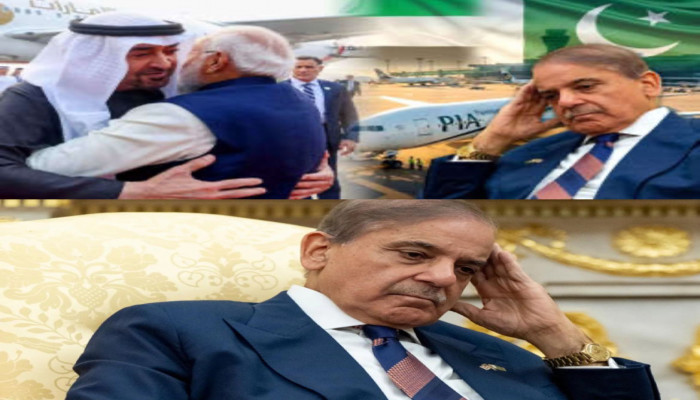
The United Arab Emirates (UAE) has reportedly terminated its agreement with Pakistan to manage and operate Islamabad International Airport. This decision came just days after the UAE President, Sheikh Mohamed bin Zayed Al Nahyan, visited New Delhi. According to reports, Abu Dhabi withdrew from the deal because it could not find a local partner to handle airport operations after its initial interest in the project.
A report by Pakistan’s daily Express Tribune stated that the plan was dropped after the UAE failed to identify a nominated local entity to whom airport operations could be outsourced. The report also mentioned that delays from the UAE side led to a deadlock between the two countries. Eventually, the UAE “lost interest” in continuing the process.
Sources cited in the report explained that Pakistan had asked the UAE for a clear response by sending a final call letter. In reply, the UAE said that it was still unable to confirm any nominated entity. As quoted in the report, “The Pakistani side had sought a clear response from the UAE by sending a final call letter. In response, the UAE conveyed that it was still unable to confirm any nominated entity.”
Although the breakdown of the deal was not directly linked to political reasons, it came at a time of tensions between Saudi Arabia and the UAE over alleged backing of rival groups in Yemen. Pakistan has been strengthening its defence ties with Saudi Arabia and trying to form what has been described as an “Islamic NATO” with Saudi Arabia and Turkey.
In September 2025, Saudi Arabia and Pakistan signed a defence agreement. Under this agreement, an attack on one country would be considered an aggression against both. Earlier, the UAE had been one of Pakistan’s major trading partners and an important source of remittances. Thousands of Pakistanis work in different sectors in the UAE, contributing significantly to Pakistan’s economy.
However, relations between Pakistan and the UAE have weakened in recent times. Reports suggest that the ties have cooled due to safety concerns, licensing controversies, and ageing infrastructure in Pakistan. These issues have affected cooperation between the two countries in various areas, including investment and infrastructure projects.
Meanwhile, UAE President Mohamed bin Zayed’s visit to India earlier this month marked an important moment in India–UAE relations. During his visit to New Delhi, he held delegation-level talks with Prime Minister Narendra Modi. Several agreements were signed between India and the UAE in sectors such as defence, space, energy, supercomputing, and food safety.
Prime Minister Modi and the UAE President also reviewed the overall relationship between the two countries. They agreed that the India–UAE Comprehensive Strategic Partnership has matured and is now moving into a more ambitious and multidimensional phase.
Foreign Secretary Vikram Misri highlighted the key areas of cooperation discussed during the visit. He said that agreements were signed in the areas of strategic defence partnership, joint initiatives on space infrastructure development and commercialisation, and the UAE’s participation in the development of a special investment region in Dholera, Gujarat.
The UAE’s decision to step back from the Islamabad airport deal, therefore, comes at a time of shifting regional relationships and changing diplomatic priorities. While the collapse of the agreement is officially attributed to technical and procedural issues, it also reflects the broader context of evolving ties among Pakistan, the UAE, Saudi Arabia, and India.



 Loading...please wait
Comments