




Two oil tankers arrive in India transiting Strait of Hormuz springing new hope
- In Reports
- 07:47 PM, Mar 12, 2026
- Myind Staff
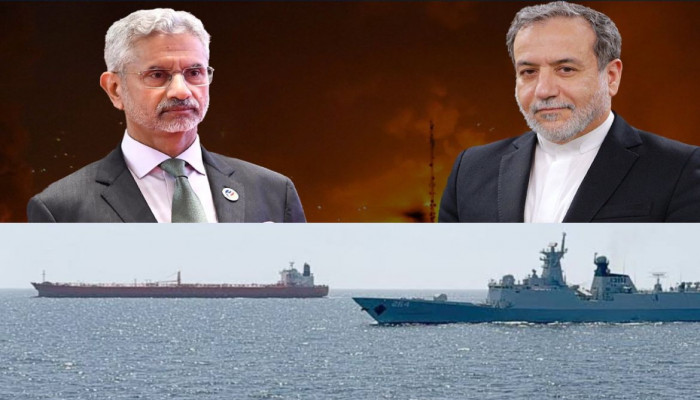
Two crude oil tankers carrying nearly 3 million barrels of oil from West Asia have reached India after passing through the tense waters of the Strait of Hormuz. Their arrival has brought some relief to India’s energy sector and raised hopes that more oil and liquefied petroleum gas (LPG) shipments stuck in the region may soon reach the country.
The movement of ships through the Strait of Hormuz has been heavily disrupted since the conflict in West Asia began on February 28. Shipping companies and insurers have been avoiding the route due to security risks. In this situation, the successful arrival of these tankers is being seen as an important development for India, which depends heavily on oil and gas supplies that pass through the strait.
According to shipping data and industry sources, one of the tankers, Shenlong, sailing under the Liberian flag, reached Mumbai port on Wednesday. The vessel was carrying around 1 million barrels of crude oil from Saudi Arabia.
Another tanker, which is an India-flagged very large crude carrier (VLCC), also arrived in Mumbai with approximately 2 million barrels of crude oil imported from Iraq. After arriving in Mumbai, the tanker is expected to move towards Paradip port in Odisha. A source familiar with the development confirmed the arrival but did not reveal the name of the vessel due to security concerns.
Sources say both ships likely crossed the Strait of Hormuz around five to six days before reaching India.
The Strait of Hormuz is a narrow but extremely important waterway located between Iran and Oman. It connects the Persian Gulf with the Gulf of Oman and the Arabian Sea. The route is considered one of the most important global energy chokepoints because a large share of the world’s oil and liquefied natural gas (LNG) trade passes through it.
Since the conflict in West Asia escalated, maritime traffic through the strait has almost come to a standstill. Reports suggested that Iran had been allowing only its own tankers, particularly those transporting oil to China, to pass through the route. Due to uncertainty and risk of attacks, many shipping companies and traders have avoided sending vessels through the area.
Industry experts say the arrival of the two tankers in India has generated optimism that other ships carrying India’s energy supplies, which are currently waiting in the Persian Gulf, may also manage to pass through the strait in the coming days.
Government sources said India has been in communication with Iran to ensure safe passage for vessels transporting energy supplies to the country. Several ships carrying crude oil and LPG are reportedly waiting on the western side of the Strait of Hormuz and are unable to cross due to drone and projectile attacks.
The issue of shipping safety and India’s energy security has also been discussed at the diplomatic level. According to officials, India’s External Affairs Minister S. Jaishankar has held multiple discussions with Iran’s Foreign Minister Abbas Araghchi in recent days.
There are also indications that the two tankers which reached India might have taken permission from Iran before crossing the Strait. However, there has been no official confirmation regarding this.
Vessel tracking data shows that both tankers switched off their Automatic Identification System (AIS) transponders before passing through the strait. This practice, often referred to as “going dark,” means that ships temporarily disable their tracking systems so their location cannot be publicly monitored. According to the data, the ships turned their AIS systems back on only after they had safely crossed the waterway.
The Strait of Hormuz normally handles about one-fifth of the world’s liquid petroleum consumption and a major share of global LNG trade. Any disruption in this route can have serious consequences for global energy supply and prices.
For India, the strait is especially important. In recent months, around 2.5 to 2.7 million barrels per day of India’s crude oil imports have passed through this route. This accounts for roughly half of the country’s total crude imports. On a long-term average, about 40 per cent of India’s oil imports come through the Strait of Hormuz.
Much of this oil is supplied by West Asian countries, including Iraq, Saudi Arabia, the United Arab Emirates and Kuwait. India does not currently purchase oil from Iran because of United States sanctions imposed on Tehran.
The ongoing conflict and Iran’s warning to ships not to pass through the strait have significantly affected maritime traffic. Iran has reportedly targeted several vessels moving through the waterway. Due to these risks, most shipping companies, insurers and traders are reluctant to operate in the region.
Despite the challenges, India is currently in a relatively comfortable position regarding crude oil supplies. The country has reserves of crude oil, petrol and diesel that can last for about eight weeks.
However, the situation with the LPG is worrying. Liquefied petroleum gas is widely used in Indian households for cooking, and the country depends heavily on imports to meet demand.
India imports around 60 per cent of its LPG requirement, and nearly 90 per cent of these imports normally pass through the Strait of Hormuz. Because of the disruption in the strait, more than half of India’s LPG supply from West Asia has effectively been blocked.
As a result, the government has started diverting available LPG supplies primarily for domestic household use. This has reduced the availability of LPG for commercial and industrial purposes. Experts say that if the LPG shipments currently stuck in the Persian Gulf manage to reach India soon, it could help ease the pressure on supplies within the country.
Meanwhile, reports have also emerged about possible assurances from Iran regarding the movement of Indian vessels. An Indian government source said Iran may allow India-flagged tankers to pass through the Strait of Hormuz safely.
The source, who spoke on condition of anonymity, said Iran had given these assurances after a telephone conversation between the foreign ministers of the two countries on March 10.
According to the source, two foreign-flagged vessels believed to be heading to India had already crossed the Strait recently. However, an Iranian source outside the country denied that any formal agreement had been reached regarding safe passage for Indian ships.
India’s Ministry of External Affairs and Iran’s embassy in New Delhi did not immediately respond to requests for clarification on this matter.
The Indian source also explained that the situation remains uncertain, and it is not clear how decisions or instructions are communicated within Iran’s administration.
After the conversation between the foreign ministers, Iran’s Foreign Ministry released a statement blaming the United States for the unstable security situation in the Persian Gulf. According to Iran, the actions of the US have created difficulties for commercial shipping in the region.
However, neither India nor Iran officially confirmed that any specific arrangement had been made to guarantee safe passage for Indian vessels.
On March 11, Indian authorities reported that 28 India-flagged ships were operating in areas on both sides of the Strait of Hormuz. These vessels had a total of 778 Indian sailors on board.
The Petroleum Ministry said that government authorities, ship management companies and recruitment agencies are working closely with Indian embassies and local officials to ensure the safety of Indian crew members and provide assistance when required.
In another development related to the conflict, India has provided shelter to 183 Iranian sailors who arrived on a vessel after fighting began between Iran, the United States and Israel.
New Delhi had allowed three Iranian ships that had earlier taken part in a naval exercise in the Bay of Bengal to dock at Indian ports. However, one of these ships was later destroyed by a US submarine in international waters, while another sought help from Sri Lanka.
Since the start of the conflict in late February, Iran has reportedly attacked at least 16 vessels passing through the Strait of Hormuz. Tehran has also warned that global oil prices could rise sharply, possibly reaching around 200 dollars per barrel, as the conflict continues.
The tensions have already affected commercial shipping in the region. On March 11, a Thai ship heading towards India’s western port of Kandla was attacked in the strait.
Following the incident, India strongly criticised attacks on civilian vessels. The Ministry of External Affairs said that targeting commercial shipping during an ongoing conflict is unacceptable and deeply concerning. The ministry also confirmed that some Indian citizens had lost their lives in such incidents.
The near shutdown of the Strait of Hormuz has forced India to look for alternative sources of crude oil. As the world’s third-largest consumer of oil, India has started increasing purchases from other suppliers, including Russia, in order to reduce the risk of supply disruptions.
While the situation remains uncertain, the arrival of the two oil tankers has provided a small but important sign that energy shipments to India may gradually resume despite the ongoing tensions in the region.



 Loading...please wait
Comments