




Two Centuries of Silence
- In Book Reviews
- 07:05 PM, Aug 16, 2026
- Ramaharitha Pusarla
Since the outbreak of the US-Iran war, President Trump has claimed that a deal is close to being signed over 40 times, and till now, a status quo ante hasn’t been reached. Neither has there been an agreement on Iran’s nuclear program, nor could the Trump administration restore the pre-war status of free and safe passage through the Strait of Hormuz. The war erupted on Feb 28th and the only recordable triumph Washington could register has been the assassination of the Supreme Leader Ayatollah Khamenini. While some analysts frame the Iran-US War as the biblical David versus Goliath given the power imbalance and asymmetry, all these notions appear so puerile as Iran, besides shattering the myth of American invincibility, is now indirectly dictating terms by weaponising its geography. The closure of the Strait of Hormuz and the concomitant disruption of supply chains have inflicted a massive economic shock on the Middle East, with countries incurring $3 trillion in losses.
Even under massive attacks and a naval blockade, Iran dug in and bolstered its defensive strategy. Instead of conceding, Iran initially even dominated the global narrative, creating an illusion of having the upper hand. After going full throttle with firepower, with Tehran resisting American pressure, Trump declared “Operation Economic Fury” to bring Iran to the table. Against all the odds, Iran’s ability to make a negotiated settlement on its own terms surprised the world. Iran’s unflinching tenacity despite decades of sanctions, beginning with US trade freezes after the US embassy hostage crisis in 1979, lifted in 1981 and then reimposed in 1987, eventually expanded into US multilateral sanctions from 2006. Over the past three decades, Iran has endured a sanctions regime for state-sponsored terrorism and its nuclear program. Instead of breaking down under external pressure, Iran is standing up to Washington as the domestic Iranian society, though unhappy with the government, is rallying behind it.
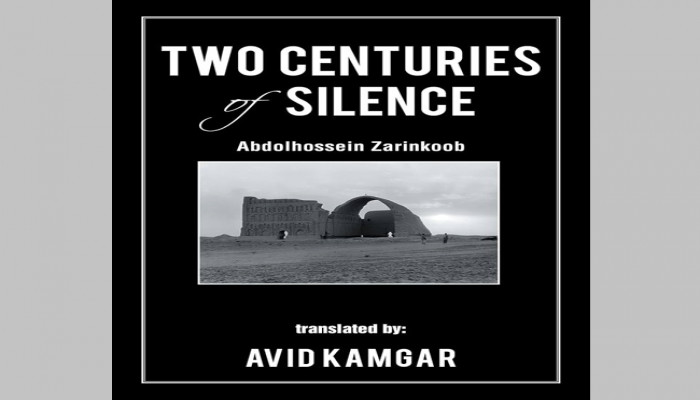
Iran’s resilience and defiance can be traced back to its civilisational journey, a history of revolution and a turbulent past. Depicting these struggles, the book “Two Decades of Silence”, written by Abdolhossein Zarrinkoub, an expert in Iranian literature and Persian culture, explores the chaotic shift of the Persian Empire in the first two centuries after the Arab attack. Originally written in Persian and published in 1957, the book was translated into English by Avid Kamgar. Written eight decades ago, the book is a testament to the innate tendency of Iranians to rebel and weaken an adversary through incessant and unrelenting battles.
Penned elegantly by Prof Zarrinkoub, the central theme of the book is to shed light on the two centuries since the fall of Nahavand in 642 CE, when the Sassanid Empire collapsed during the Arab conquest. This also marks the end of fourteen centuries of Iranian history. Iranians originally followed the ancient Zoroastrian faith. It coexisted with several faiths like Manichaeism, Mazdakism, Shamanism and Zandakeh. Brimming with cultural richness, philosophical debates, scientific works and intellectual activity, the Persian Empire had five major languages: Pahlavi, Dari, Khuzi, Soghdi, and Persian. Arab invasion cast a dark spell on the history and language of Iran. Prior to the arrival of Islam in Iran, the rhythmic poetry and tender songs echoed in the Sasanian palaces.
Arab Muslims launched direct attack on languages and dialects of Iran. Books were burnt. Mobeds and Hirbods (the higher-order Zoroastrian priests) who took care of the literary works were targetted. Use of native scripts like Pahlavi and Khwarezmian declined as local writers were murdered. Soon, the use of the Persian language declined and went silent.
Though Iranians accepted Islam, they were unwilling to learn Arabic. They used to recite the namaz verses in Soghdian Persian in a symbolic deep connect with their language. While this symbolised the Iranian defiance, Persian ceased to be the administrative language. With this, a brutal silence had enveloped Iran for two centuries when melodious poetry, minstrel singing and a nurturing literary environment faded, giving way to Arabic combat verses and laudatory elegies. Laid out in ten chapters, the book elegantly portrays the darkest phase in Iranian history. Targetting religious faith and language, Arabs have tried to exterminate the identity of Iranians.
The rise of the Arabs came at a time when the two powerful Empires- Roman and Byzantine were relatively weakened due to wars. The Sasanid Empire was also in the throes of deterioration, with rampant bigotry, falsehood and concomitant political and spiritual decline. The Sasanid rulers, given to pleasure-seeking, hardly focused on administration; the country was in ruins. In the days leading to Arab raids, the treasonous army and the greedy clergy also abandoned their duties and fled like rats on a sinking ship. The Empire was also on the verge of annihilation. It just needed one hard blow to crumble.
Arabs united under the flagship of the Prophet’s message of brotherhood and equality and steered by jihad, began plundering small provinces. The defeat of the Sasanid Empire, which at its height of glory spanned present-day Iran, Iraq, Syria, Palestine, Lebanon, Jordan, Israel, Egypt, Armenia, Georgia, Azerbaijan, Dagestan, Afghanistan and parts of Central Asia, at the hands of Muslim Arabs, drastically changed the political, cultural, linguistic and religious landscape of the region. The common man, burdened by the misgovernance of the Sasanid Empire, accepted the new religion without much resistance. However, the racial prejudice and mass slaughter suffered by the Iranians, especially at the hands of the Umayyad Caliphate, seeded deep-seated hatred towards Arabs. Hajjaj, the most brutal Umayyad ruler, destroyed fire temples and built mosques over them.
Over the two centuries, Iranians actively penetrated the administration of the Arab Caliphate and supported all kinds of rebellions against it. Aligning with riots, Iranians successfully overthrew the Umayyad Caliphate. The successor Abbasid Caliphate built the heartland of A Thousand and One Nights in Iraq, lying at the confluence of Arab and Persian civilisations, with the treasures plundered from Iranians. During this period, several non-Arab sects emerged to rekindle spiritual awareness and serve as founts of rebellion. Babak, Mazyar and Afshin led Iranian rebellions. The rebellions considerably weakened Arab influence.
The resistance of Iranians, particularly in Khorasan and Tabarestan, led to rise of two Iranian dynasties which resurrected Iran. The Taherian Iranian dynasty defeated Arabs and laid the foundation for Iranian independence. The two centuries from the fall of Nahavand in 642 CE to the death of Babak in 838CE have been a period of intense struggle.
The objective portrayal of the Iranian struggle to free itself from the yoke of Muslim Arabs makes this book a quintessential read for Iranians to fathom their civilisational struggle and resilience. This struggle hard-wired and shaped Iranian animosity towards the Arabs. This deep-seated historical, ethnic and ideological bitterness persists even now. The animosity has two dimensions to them- ethnicity and religion. Iranians considered themselves elitist and civilised and regarded Arab desert dwellers as uncouth, while Arabs rejected Iran’s Shia practices.
The passionate elucidation of Iranian struggles provides rare insights about the civilisational attributes of Iranians. Ancient civilisations across the world have been extremely resilient. Having weathered centuries of political upheavals and military campaigns, they have the historic memory of absorbing brutal shocks. What is particularly interesting about the Iranian struggle has been their relentless quest for autonomy. Caught unaware, having initially accepted Islam, Iran resolutely fought back to assert their identity. With little or no knowledge of administration, Arabs had to seek Iranian help to govern. Iranians who were the elitist cream of the Arab administration tactically controlled the Arab Caliphates. Admitting Iranian superiority, the Umayyad Caliphate said, “I am amazed by these Iranians. They ruled for a thousand years and even for an hour did not need our help; we have ruled no more than a century, but have not been able to do without them for an hour.” (p 87).
Analysing the historical endurance of countries, in this case Iran, is extremely important to assess how it can survive long fights. With the Iran-US war showing no signs of an end, policy makers, leaders and geopolitical analysts must look at the historical antecedents of the opponents to recalibrate their strategies.
This historical book, which is more inquiry-driven, offers a fact-oriented perspective. Avoiding exaggerated portrayal of Arab zealotry, the author, wary of punitive consequences of dissent, maintains a reflective tone. While its nuanced prose lends the book a distinctive scholarly quality, the detached narration of mass slaughter ultimately underscores the pressures of ideological conformity in Iran.
Printed Pages: 335
Publisher: Author House



 Loading...please wait
Comments