



Trump warns Iran, ‘time is running out’ as peace talks face roadblocks
- In Reports
- 08:10 PM, Mar 26, 2026
- Myind Staff
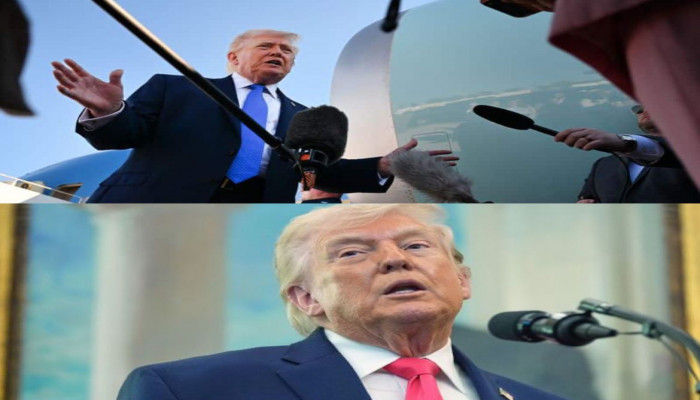
President Donald Trump has issued a strong warning to Iran amid efforts to reach a peace agreement in West Asia. In a recent social media statement, Trump urged Tehran to act quickly and agree to a deal before it is too late. His comments come at a time when diplomatic talks are ongoing but remain uncertain.
In his statement, Trump claimed that Iranian negotiators were “begging” for a deal. This remark contrasts with Iran’s public stance, where officials have said they are still reviewing the proposal presented by the United States. Trump stressed that time is limited and warned that failure to reach an agreement soon could result in serious consequences. His message adds pressure to an already tense negotiation process.
The situation is further complicated by mixed signals coming from both Washington and Tehran. While Trump has indicated that a deal could be close, reports suggest that Iran has rejected certain elements of a proposed 15-point ceasefire plan. This has created uncertainty about how close both sides actually are to reaching common ground.
According to officials familiar with the discussions, the US proposal includes several major conditions. These include relief from economic sanctions imposed on Iran, strict limits on its nuclear programme, and restrictions on its missile capabilities. Another key demand is the reopening of the Strait of Hormuz, which is a crucial route for global oil shipments. These points highlight the strategic and economic importance of the agreement for both sides.
Iran, however, has presented its own set of demands in response. It has called for an immediate end to targeted strikes on its officials and has asked for guarantees that no future military action will be taken against it. Iran has also demanded compensation for damages caused during the conflict. In addition, it sought formal recognition of its sovereignty over the Strait of Hormuz. These demands show that Iran is unwilling to compromise on issues it considers vital to its security and authority.
The gap between the demands of both countries reflects the complexity of the negotiations. Each side is holding firm on key issues, which makes reaching an agreement more difficult. The talks are not only about ending the current conflict but also about addressing long-standing tensions related to security, power, and regional influence.
Meanwhile, the ongoing conflict has taken a heavy toll on human lives and the regional economy. Reports indicate that more than 1,500 people have been killed in Iran, while nearly 1,100 have died in Lebanon. Casualties have also been reported in Israel and other affected areas. The violence has not been limited to civilians, as 13 US military personnel have also reportedly lost their lives.
The humanitarian impact has been severe, with millions of people displaced due to continuous airstrikes and missile attacks. Families have been forced to leave their homes, and many are struggling to access basic necessities. The economic impact is also significant, especially with disruptions linked to the Strait of Hormuz, which plays a vital role in global energy supply.
Despite ongoing diplomatic efforts, there is still no clear breakthrough. Tensions remain high, and both sides continue to stand by their demands. Experts believe that the coming days will be critical in deciding whether a peaceful resolution can be achieved or if the conflict will escalate further.



 Loading...please wait
Comments