




Trump suggests Syria take on Hezbollah, criticises Israel’s Lebanon Campaign
- In Reports
- 07:27 PM, Jun 16, 2026
- Myind Staff
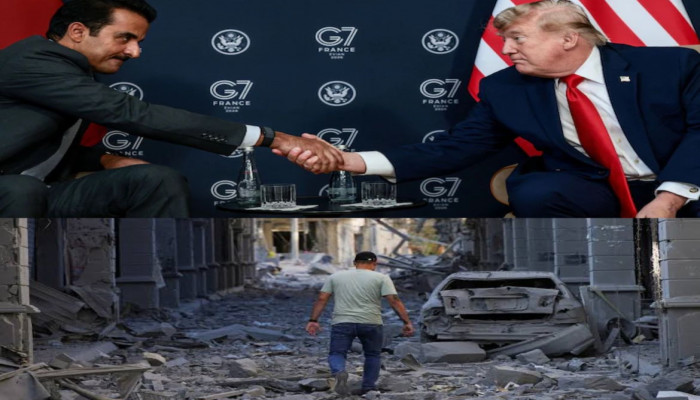
US President Donald Trump has sharply criticised Israel’s military campaign in Lebanon and suggested that Syria would be better suited to deal with Hezbollah. Speaking during a meeting with the Emir of Qatar on the sidelines of the G7 Summit in France, Trump expressed frustration over Israel’s actions and said the conflict was affecting broader efforts to bring stability to the region.
Trump argued that Israel's operations against the Iran-backed militant group had come close to undermining ongoing peace efforts with Iran. He said, "Israel can't do the job without killing everyone else, so Syria should do the job." The remark was seen as a direct criticism of Israel’s military strategy in Lebanon.
The US President is aware that Syria has long been an adversary of Israel. His comments came just a day after the United States and Iran agreed on a framework peace deal. According to Iran and Pakistan, the agreement also includes an end to military operations in Lebanon. Israel has opposed that part of the understanding.
Trump continued his criticism by revealing that he had expressed his concerns directly to Israel after its strike on Beirut on Sunday. Referring to the attack, he said he did not approve of it and added that "there would be no Israel" without the support of the United States. The latest Israeli strike in the Lebanese capital reportedly killed three people and injured six others.
His remarks were unusually direct, considering the close relationship between the United States and Israel. The comments have fuelled speculation of growing differences between Trump and Israeli Prime Minister Benjamin Netanyahu over the handling of the Lebanon conflict.
Explaining his concerns, Trump said, "Israel's fighting Hezbollah for too long, and too many people are being killed. And you don’t have to knock down an apartment house every time you are looking for somebody, because there are a lot of people in those apartment houses, and they are not all Hezbollah, that I can tell you."
Lebanese health officials have claimed that more than 3,200 people have been killed in Israeli strikes since March. Israel has maintained that its operations are focused on Hezbollah infrastructure and military targets. However, the fighting has led to the destruction of hundreds of homes and buildings across Lebanon.
Despite his criticism, Trump dismissed suggestions that his relationship with Netanyahu had deteriorated. He insisted that he still had a "great relationship" with the Israeli leader. At the same time, he stressed that Israel needed to act more responsibly in Lebanon and reduce civilian casualties.
Trump’s comments came shortly after the announcement of a framework agreement between Washington and Tehran aimed at reducing tensions in the region. The agreement includes the reopening of the Strait of Hormuz, one of the world’s most important energy routes. It also involves lifting the US blockade on Iran. A formal Memorandum of Understanding (MoU) is expected to be signed in Switzerland on Friday.
Israel has openly opposed parts of the agreement, particularly references to Lebanon. Israeli National Security Minister Itamar Ben Gvir responded strongly to the deal and stated that Trump’s agreement "does not bind us." He also pledged that Israel would continue its efforts to dismantle Hezbollah.
While discussing regional conflicts, Trump described the fighting in Lebanon as a secondary issue compared to concerns surrounding Iran. He said, "Iran's the big one, but we have that little pinprick out there that constantly rears its head, and that's Hezbollah."
Trump also highlighted his relationship with Syrian President Ahmed al-Sharaa. According to Trump, Sharaa is opposed to Hezbollah and could be more effective in dealing with the group. He said, "I suggested to Israel to let Syria take care of Hezbollah because I think they will do a better job of doing it."
The suggestion carries significance because Hezbollah played a major role in the Syrian civil war. The group sent thousands of fighters to support former Syrian President Bashar al-Assad. Hezbollah remained active in Syria until Assad’s government was overthrown by rebel forces led by Ahmed al-Sharaa in December 2024.
Turning to the agreement with Iran, Trump repeated his long-standing position that Tehran must never acquire nuclear weapons. He issued a stern warning and said, "all hell will rain down" on Iran if it attempted to develop a nuclear weapon.
He further stated, "The only thing that really matters to me is Iran will never have a nuclear weapon, and it says it loud and clear."
Iran has consistently maintained that its nuclear programme is intended for peaceful purposes. However, the country has not publicly agreed to abandon its stockpile of enriched uranium, which remains a key concern for Western powers.
Without providing many details, Trump indicated that negotiations with Iran were moving forward. He said the agreement was entering a "second stage." He also denied reports that Washington would provide financial assistance to Tehran under the arrangement.
Addressing speculation about a reconstruction package, Trump clarified that the United States was not investing any money in Iran. His statement came amid reports suggesting that Washington could offer a $300 billion reconstruction fund to help rebuild parts of the war-affected country.
Trump’s remarks have highlighted growing tensions over the Lebanon conflict and differences in approach among key regional players. His suggestion that Syria should take a larger role in handling Hezbollah, combined with his criticism of Israel’s military actions, marks one of his strongest public interventions on the issue so far.



 Loading...please wait
Comments