




Trump signs nearly $1 Trillion U.S. defence bill into law
- In Reports
- 01:19 PM, Dec 19, 2025
- Myind Staff
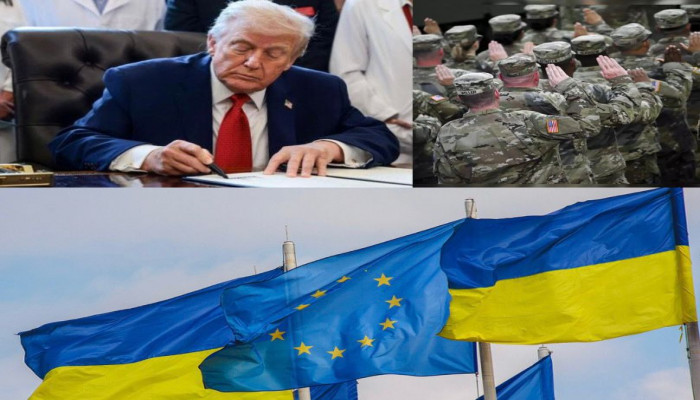
U.S. President Donald Trump on Thursday signed into law a massive defence policy bill that will shape America’s military spending and security priorities for the coming year. The legislation, known as the National Defence Authorisation Act (NDAA) for fiscal year 2026, authorises nearly $1 trillion in annual defence spending, even though it includes provisions that go against some of Trump’s long-held views on Europe and Ukraine.
The White House confirmed that Trump signed the bill into law, though the event was kept low-key. There was no public Oval Office ceremony, and no reporters were present at the signing.
The fiscal 2026 NDAA allows for a record $901 billion in military spending. This amount is about $8 billion more than what President Trump had initially requested. Despite his reservations about certain sections of the bill, Trump ultimately approved it, allowing the legislation to become law.
The NDAA is one of the most important annual pieces of legislation passed by the U.S. Congress. It sets the framework for national defence policy and military funding. The bill covers a wide range of issues, including how many ships, aircraft, and missile systems the military can buy, salary increases for service members, and how the United States plans to respond to global security challenges.
This year’s NDAA is the result of a compromise between lawmakers in the House of Representatives and the Senate. Both chambers had passed their own versions earlier, and the final bill combined elements from each before being approved by Congress earlier this month. Although Trump’s Republican Party currently holds majorities in both the House and the Senate, the bill includes several measures that do not fully align with Trump’s personal views, particularly when it comes to European security.
Trump has often expressed scepticism about the United States spending heavily on defending Europe. He has argued that European allies should contribute more to their own defence rather than relying on American military support. Trump’s latest National Security Strategy (NSS) was viewed by analysts as relatively friendly towards Russia and supportive of rethinking the U.S. relationship with Europe. Despite this, the NDAA includes multiple provisions aimed at strengthening security in Europe. One of the most notable measures is continued military assistance to Ukraine.
Under the fiscal 2026 NDAA, the United States will provide $800 million in support for Ukraine. This funding will be split evenly, with $400 million allocated in each of the next two years. The money will be provided through the Ukraine Security Assistance Initiative, a program that pays U.S. defence companies to supply weapons and equipment to Ukraine’s military.
This funding comes at a critical time, as Trump’s team is currently engaged in negotiations with both Ukraine and Russia in an effort to bring about an end to Russia’s invasion of Ukraine.
In addition to support for Ukraine, the defence law also strengthens commitments to NATO’s eastern members. The bill authorises the Baltic Security Initiative and includes $175 million to support the defence needs of Latvia, Lithuania, and Estonia. These countries are seen as strategically important due to their proximity to Russia.
The NDAA also places limits on the U.S. Department of Defence when it comes to troop levels in Europe. Specifically, it restricts the Pentagon’s ability to reduce the number of U.S. troops stationed in Europe below 76,000. Furthermore, the bill bars the U.S. European Commander from giving up the role of NATO Supreme Commander, a position traditionally held by an American military officer.
While these provisions represent a clear effort by Congress to maintain strong U.S. involvement in European defence, the White House said Trump supported the overall bill for other reasons.
In a statement, the White House said that Trump backed the NDAA because it “codifies into law aspects of many of his executive orders.” These include funding for the Golden Dome missile defence system, a key part of Trump’s defence vision, as well as measures to eliminate diversity, equity, and inclusion (DEI) programs within the Pentagon.
The NDAA has a long history in the United States. Members of Congress have passed a version of the defence authorisation bill every year for the past 65 years. However, that long streak nearly ended during Trump’s first term in office.
In December 2020, Trump vetoed the NDAA, objecting to several provisions. At the time, he opposed plans to rename military bases and facilities that were named after Confederate figures. He also disagreed with how the bill handled legal protections for technology companies, among other issues.
Despite Trump’s veto, Congress voted to override it in January 2021, just days before he left office. That override marked the only time during Trump’s first term that lawmakers successfully overturned one of his vetoes. This time, however, Trump chose to sign the defence bill into law, even though it includes policies that limit his flexibility on Europe and continue U.S. military aid to Ukraine. The passage of the fiscal 2026 NDAA ensures continued funding for the U.S. military and reinforces America’s defence commitments at a time of ongoing global tensions.
With the bill now law, the Pentagon can move forward with planning and spending for the coming year, while Congress retains a strong role in shaping U.S. defence policy both at home and abroad.



 Loading...please wait
Comments