



Trump sets final Tuesday deadline for Hormuz reopening, warns Iran of major strikes
- In Reports
- 12:28 PM, Apr 06, 2026
- Myind Staff
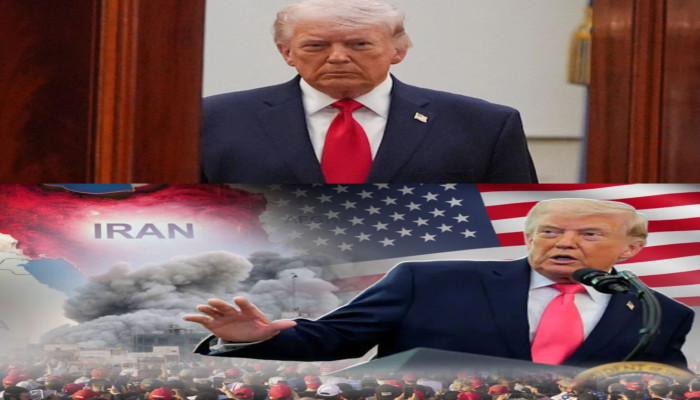
United States President Donald Trump has sharply escalated pressure on Iran by issuing a renewed ultimatum over the closure of the Strait of Hormuz. He warned that if Tehran does not reopen the key global shipping route by Tuesday evening, the United States could launch major strikes targeting Iran’s critical infrastructure. The warning marks a significant rise in tensions between the two countries, especially as the conflict continues to affect global energy supplies.
In a brief post on his Truth Social platform, Trump wrote, "Tuesday, 8:00 P.M. Eastern Time!" without offering further explanation. The post came after a series of shifting deadlines. Trump had earlier given Iran five days to act, then extended it by ten days, and finally added another 24-hour extension just hours before the previous deadline expired. The repeated extensions suggest ongoing uncertainty in negotiations but also underline Washington’s urgency in resolving the situation.
The Strait of Hormuz remains one of the world’s most critical maritime routes. Nearly one-fifth of global oil and gas supplies pass through this narrow waterway. Its closure is raising serious concerns about disruptions to international energy markets. The route has been largely shut since the United States and Israel launched a joint offensive against Iran about five weeks ago, further intensifying regional instability.
Trump’s rhetoric has become increasingly aggressive. In another post filled with strong language, he demanded that Iran reopen the Strait immediately. He warned of severe consequences if Tehran continues to block the route. "Tuesday will be Power Plant Day and Bridge Day, all rolled into one for Iran," Trump said on Truth Social, clearly indicating potential strikes on Iran’s energy and transport infrastructure. Critics have argued that such actions could violate international law, especially if civilian-linked facilities are targeted.
The United States has formally put Iran on notice, making it clear that failure to reopen the waterway could lead to large-scale military action. Trump has repeated this warning in several recent media interactions. He stressed that continued defiance by Iran would come at a high cost. "If they don't come through, if they want to keep it closed, they're going to lose every power plant and every other plant they have in the whole country," Trump said in a recent interview with The Wall Street Journal.
A day earlier, Trump had already issued a stern 48-hour warning. His message again emphasised urgency and the threat of force. "Remember when I gave Iran ten days to MAKE A DEAL or OPEN UP THE HORMUZ STRAIT. Time is running out - 48 hours before all Hell will rain down on them. Glory be to GOD! President DONALD J. TRUMP," he wrote on Truth Social. These statements reflect a hardening stance from Washington as diplomatic efforts appear to be faltering.
Iran has responded with strong warnings of its own. The country’s joint military command has stated that it will escalate attacks if the United States and Israel target similar sites within Iranian territory. According to Iranian state television, Tehran has made it clear that any strike on its infrastructure will be met with retaliation across the region. This raises concerns about a wider conflict involving multiple countries in West Asia.
Iran has already taken steps to demonstrate its position. It has reportedly targeted infrastructure in neighbouring Gulf Arab states. It has also threatened to disrupt another major shipping route, the Bab el-Mandeb Strait, which lies off the Arabian Peninsula. Such moves could further impact global trade and energy supplies, adding to the ongoing uncertainty.
The conflict has already seen both sides strike sites linked to civilian life. These include oil fields and desalination plants, which are crucial for providing drinking water in the region. The targeting of such facilities has drawn criticism from international observers. Iran’s mission to the United Nations has condemned Trump’s statements, calling them "clear evidence of intent to commit a war crime".
As the deadline approaches, tensions remain high. The situation continues to evolve rapidly, with both sides maintaining a firm stance. The outcome of this standoff could have serious consequences not only for the region but also for global energy security and international relations.



 Loading...please wait
Comments