




Trump rejects Russia-China role in Iran uranium plan, warns Oman
- In Reports
- 01:16 PM, May 28, 2026
- Myind Staff
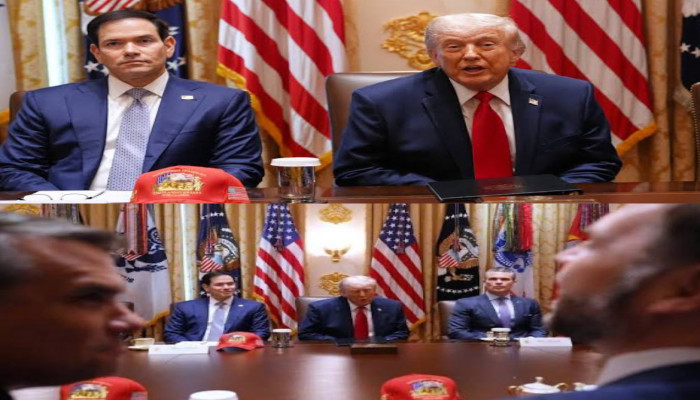
US President Donald Trump on Wednesday shared fresh details about the ongoing negotiations between the United States and Iran during a Cabinet meeting at Camp David. Trump said that “things are going very well” in the talks, but stressed that he would only accept a final agreement if it fully met American expectations. He made it clear that he did not want a weak or incomplete arrangement with Tehran.
“It’s got to be perfect,” Trump said. “I didn’t do this to get a crummy agreement.”
The remarks came at a crucial stage in the negotiations. Although fighting has remained paused since the April 8 ceasefire, both sides are still divided over several major issues. These include the future of the Strait of Hormuz, Iran’s nuclear programme, and the handling of Tehran’s enriched uranium stockpile.
During the meeting, Trump also spoke about expanding the Abraham Accords, the US-backed agreements from his first presidential term that normalised relations between Israel and several Arab countries. Trump said he was “requesting strongly” that more nations in West Asia join the framework, specifically mentioning Saudi Arabia and Qatar. However, he stopped short of saying that their participation was necessary for any Iran agreement to move forward.
One of the strongest comments from the meeting came when Trump was asked about reports suggesting that Iran and Oman could jointly control the Strait of Hormuz under a future settlement. Trump immediately rejected the idea and issued a stern warning to Oman.
“Oman will behave just like everybody else or we’ll have to blow them up,” he said.
Trump added that the Strait of Hormuz should remain open to all countries and insisted that “nobody can control it.” He also said that the United States would continue to “watch over it.” Shortly after making the remark, Trump appeared to soften his tone and added, “They understand that. They’ll be fine.”
The Strait of Hormuz remains one of the most sensitive issues in the negotiations. The waterway is strategically important because a large portion of the world’s oil supply passes through it. Disagreements over its future administration have become one of the biggest obstacles in the talks between Washington and Tehran.
Trump also raised concerns over proposals involving Iran’s enriched uranium reserves. Some nuclear experts have previously suggested that Russia or China could temporarily take custody of Iran’s highly enriched uranium as part of a peace settlement. The idea was aimed at reducing nuclear risks and building trust between the parties involved.
However, Trump clearly rejected the proposal and signalled that Washington would not be comfortable with either Moscow or Beijing handling Iran’s uranium stockpile.
“That would not make me comfortable,” the US president said.
Russia and China both maintain close diplomatic and economic ties with Tehran. Because of these relationships, they have often been viewed as possible third-party mediators in discussions linked to Iran’s nuclear programme. Trump’s comments, however, indicated strong American resistance to allowing either country to play such a role.
The US president also dismissed claims that Iran could benefit politically by delaying negotiations until after the upcoming US midterm elections. Trump said Iranian leaders believed they could gain leverage by waiting for domestic political pressure to weaken his position.
“They thought they were gonna out-wait me. You know, ‘We’ll out-wait him. He’s got the midterms,’” Trump said. “I don’t care about the midterms.”
Trump’s remarks reflected his attempt to show that electoral politics would not influence his approach to Iran. He suggested that the administration would continue following the same strategy regardless of political calculations in Washington.
US Secretary of State Marco Rubio offered a more cautious assessment of the situation during the same Cabinet meeting. Sitting beside Trump, Rubio said there had been “some progress” in the negotiations with Tehran, though he noted that the coming days would be critical in deciding whether the diplomatic process succeeds.
“We prefer the negotiated, diplomatic route, and we’re going to give it every chance to succeed,” Rubio said.
At the same time, Rubio warned that the president still had “other options” available if diplomacy failed to deliver results. His statement reflected the administration’s effort to balance negotiations with pressure on Iran.
Rubio had returned to Washington late Tuesday after completing a five-day trip that included visits to India and Sweden. His comments suggested that the administration was still hopeful about reaching an agreement, even though major differences remain unresolved.
The Camp David meeting highlighted the difficult path ahead for the US-Iran talks. While Trump expressed optimism about the negotiations, his comments also showed that Washington remains firm on key demands. Issues linked to the Strait of Hormuz, Iran’s uranium reserves, and regional alliances continue to create tensions in the discussions.
Despite signs of progress, the negotiations remain highly sensitive. The next few days are expected to play a major role in determining whether the two sides can move closer to a final agreement or whether the talks will face another setback.



 Loading...please wait
Comments