




Trump pledges 5,000 more US troops for Poland as Rubio meets alliance ministers
- In Reports
- 07:51 PM, May 22, 2026
- Myind Staff
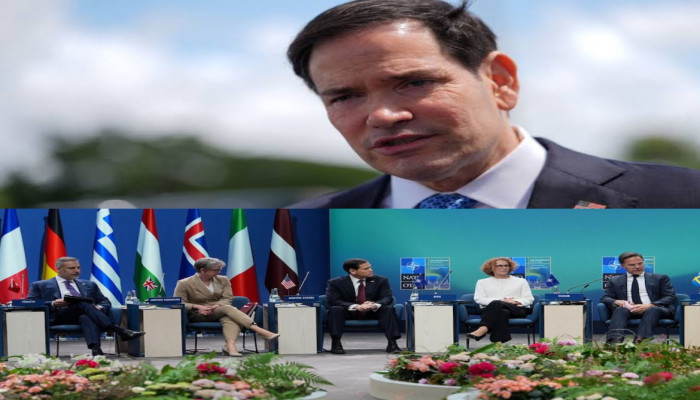
U.S. President Donald Trump announced that the United States will send an additional 5,000 troops to Poland, a move that surprised NATO allies and came just hours before U.S. Secretary of State Marco Rubio met alliance ministers in Sweden on Friday. The announcement comes at a time when divisions within NATO have widened over the ongoing Iran war and Washington’s expectations from its European partners.
Trump put out his decision on Truth Social. He linked the decision directly to his relationship with Poland’s conservative nationalist president, Karol Nawrocki. In his statement, Trump said, "Based on the successful Election of the now President of Poland, Karol Nawrocki, who I was proud to Endorse, and our relationship with him, I am pleased to announce that the United States will be sending an additional 5,000 Troops to Poland."
The decision marked a sharp shift after weeks of criticism from Trump against NATO members. He has repeatedly accused alliance countries of not doing enough to support the U.S.-Israeli military campaign linked to the Iran conflict. Trump has also questioned the value of NATO and even suggested that Washington could reconsider its commitment to the alliance. He has openly raised doubts about whether the United States should continue to follow NATO’s mutual defence obligations.
Before travelling to Helsingborg in Sweden for the NATO foreign ministers’ meeting, Rubio said Trump was unhappy with several alliance members that refused to allow the U.S. military to use bases on their territory during the conflict. Rubio specifically criticised Spain for its stance.
"You have countries like Spain denying U.S. the use of these bases - well then why are you in NATO? That's a very fair question," Rubio told reporters in Miami. "In fairness, other countries in NATO have been very helpful. But we need to discuss that."
NATO officials have clarified that the United States never formally asked the 32-member alliance to participate directly in the Iran war. However, many NATO countries have still allowed the U.S. military access to their airspace and military bases during operations linked to the conflict.
European concerns about Trump’s position on NATO have also increased this year because of his push to acquire Greenland, which is a territory of fellow NATO member Denmark. Many European leaders see the proposal as another sign of growing tension between Washington and its allies.
At the meeting in Helsingborg, European ministers are expected to reassure the United States that they are willing to support efforts related to freedom of navigation in the Strait of Hormuz when conditions allow. Iran has restricted traffic through the strategically important waterway during the war. European countries are also expected to stress that they are ready to take greater responsibility for Europe’s own security.
The troop announcement has also created confusion because it came shortly after the United States decided to withdraw 5,000 troops from Europe. Earlier reports suggested that the withdrawal would mainly affect Germany. Later, U.S. officials said the deployment of a brigade to Poland would instead be delayed. It remains unclear where the newly announced additional troops for Poland will come from.
Washington’s allies have also been unsettled by the way the decisions were communicated. Different statements from U.S. officials have created uncertainty among NATO members about Washington’s long-term military plans in Europe.
The United States has also cancelled plans to deploy long-range Tomahawk missiles to Germany. Along with this, Washington is preparing to inform NATO allies that it plans to reduce the military capabilities it would normally make available to the alliance during a crisis, according to three sources familiar with the matter who spoke to Reuters.
Despite growing concerns among European allies, NATO’s top commander, Alexus Grynkewich, tried to calm fears this week. He said that any future reduction of U.S. military presence in Europe would happen gradually over several years. According to him, this would give European allies enough time to strengthen their own defence capabilities and fill any gaps left by American forces.
The developments have once again highlighted the growing uncertainty inside NATO as disagreements continue over military commitments, the Iran conflict, and the future role of the United States in European security.



 Loading...please wait
Comments