



Trump orders U.S. Agency to provide insurance to tankers travelling through Gulf maritime routes
- In Reports
- 01:10 PM, Mar 04, 2026
- Myind Staff
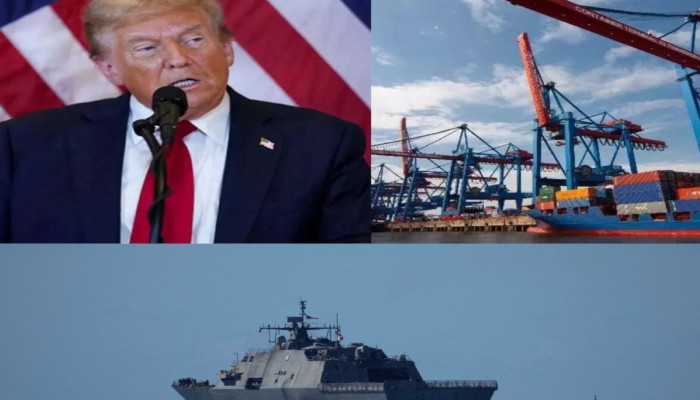
United States President Donald Trump has announced a significant decision to support maritime trade through the Gulf amid rising tensions in West Asia. He said he has instructed the United States Development Finance Corporation (DFC) to provide political risk insurance and financial guarantees to protect all maritime trade moving through the Gulf region. The focus of this support is especially on energy cargoes that travel through the strategic waterway.
In a post on Truth Social, Trump said the insurance cover would be offered “at a very reasonable price” and would be available to all shipping lines. He added that this step was aimed at stabilising the movement of oil and other energy supplies, which face disruptions due to the ongoing conflict around the Gulf.
Trump wrote, “Effective IMMEDIATELY, I have ordered the United States Development Finance Corporation (DFC) to provide, at a very reasonable price, political risk insurance and guarantees for the Financial Security of ALL Maritime Trade, especially Energy, travelling through the Gulf.”
The President also stated that the United States will not hesitate to use its naval power if required. He said, “This will be available to all Shipping Lines. If necessary, the United States Navy will begin escorting tankers through the Strait of Hormuz, as soon as possible.”
Trump added another key point in his message, “No matter what, the United States will ensure the FREE FLOW of ENERGY to the WORLD.”
The U.S. move comes as the Strait of Hormuz, a narrow sea passage that connects the Gulf with the Indian Ocean, has become a focal point of rising security concerns. The conflict involving Iran has led to warnings from Tehran that any “unauthorised” vessels attempting to pass through the strait could be targeted. This has caused volatility in oil markets and fears about possible supply disruptions.
This waterway is vital for global energy trade. It handles a large portion of the world’s crude oil exports, including shipments going to major importers like India, China, and many countries in Europe. Because of its importance, any threat to navigation in the strait has huge implications for energy security worldwide.
In recent days, following the joint U.S.-Israel military operation called ‘Operation Epic Fury’ against Iran, there have been reports of missile and drone activity in parts of the Gulf. These events have prompted several countries to temporarily close their airspace as a safety measure.
Shipping companies have been forced to reconsider their routes. War-risk insurance coverages have become difficult to obtain, and overall freight and insurance costs have risen sharply. This has made trade through the region more expensive and risky than before.
These developments have been especially concerning for countries that rely heavily on imports from the Gulf. For example, India has been reported to face challenges with its crude supplies, with a large percentage of its oil shipments affected by what has been described as a “selective blockade” by Iranian forces. The insurance support from DFC aims to ease the burden of rising war-risk premiums for such nations.
Domestic fuel prices in India have been temporarily frozen, and the government has been seeking alternative sources to maintain supply stability. Reports noted that Russia has offered to help continue energy supplies to India if disruptions from the Gulf escalate further.
Trump’s announcement underscores the U.S. administration’s intent to combine both economic and military tools to protect vital sea lanes and keep global energy flowing. Whether this approach will effectively reduce risks for tanker operators and stabilise markets remains to be observed.



 Loading...please wait
Comments