



Trump issues strong warning to Iran, says 'shootin’ starts' if negotiations fail
- In Reports
- 01:46 PM, Apr 09, 2026
- Myind Staff
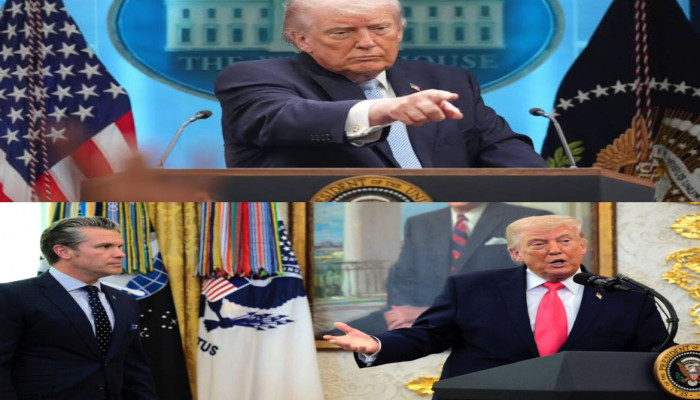
US President Donald Trump has issued a strong warning to Iran, stating that military escalation will intensify if ongoing negotiations fail to produce what he called a “real agreement.” He made it clear that American forces will continue to remain deployed in and around Iran until such an agreement is fully finalised and followed. His remarks come at a time when tensions in West Asia remain high despite a temporary pause in direct conflict.
Trump’s statement followed Iran’s agreement to a two-week ceasefire after a period of rapidly escalating hostilities. The truce is being seen as a crucial window for negotiations between the two sides. However, both nations have presented very different versions of the situation, highlighting deep mistrust and conflicting narratives.
In a post on Truth Social, Trump emphasised that US military readiness would not be reduced during this period. He said, "All U.S. Ships, Aircraft, and Military Personnel, with additional Ammunition, Weaponry, and anything else that is appropriate and necessary for the lethal prosecution and destruction of an already substantially degraded Enemy, will remain in place in and around Iran, until such time as the REAL AGREEMENT reached is fully complied with." His message signalled that the US is prepared to act quickly if talks do not succeed.
He further warned of severe consequences if the agreement is not reached or violated. "If for any reason it is not, which is highly unlikely, then the “Shootin’ Starts,” bigger, and better, and stronger than anyone has ever seen before," he added. This statement reflects a clear threat of intensified military action, even as diplomatic efforts continue.
Trump also reiterated that Iran would not be allowed to develop nuclear weapons under any circumstances. He stressed that the Strait of Hormuz, a vital global shipping route for oil, would remain open and secure. In the same post, he said, "It was agreed, a long time ago, and despite all of the fake rhetoric to the contrary - NO NUCLEAR WEAPONS and the Strait of Hormuz WILL BE OPEN & SAFE. In the meantime, our great Military is Loading Up and resting, looking forward, actually, to its next Conquest. AMERICA IS BACK!" His comments aimed to reassure global markets while projecting US military confidence.
Earlier in the week, Trump had announced a pause on strikes against Iran just hours before a self-imposed deadline. He described the arrangement as a “double-sided ceasefire,” which would depend on the complete reopening of the Strait of Hormuz. This condition remains a key point of disagreement between the two sides.
Iran, however, has presented a very different account of the ceasefire. The country’s Supreme National Security Council claimed that it had secured a major victory. According to a statement reported by Mehr News Agency, Iran said it forced the US to accept its terms, including control over the Strait of Hormuz, enrichment rights, and the removal of sanctions. This directly contradicts the US position, showing how both sides are framing the outcome to their advantage.
The Iranian statement also outlined the next steps for negotiations. It said talks would begin in Islamabad and would be conducted with “complete distrust” of the American side. Iran has allocated two weeks for these discussions, with the possibility of extension if both parties agree. The statement also called for maintaining national unity and continuing celebrations of what it described as a victory.
Meanwhile, the US administration has rejected Iran’s claims. Defence Secretary Pete Hegseth stated that Iran had requested the ceasefire under pressure. Speaking at a press briefing, he said, "Operation Epic Fury was a historic and overwhelming victory on the battlefield. Iran begged for this ceasefire, and we all know it." He also claimed that the US had successfully achieved its military objectives, including damaging Iran’s missile systems, sinking its navy, and targeting its defence infrastructure.
Even as the ceasefire between the US and Iran took effect, tensions in the region did not ease completely. Israel continued its military operations against Hezbollah in Lebanon, a group backed by Iran. The Israeli army said its strikes were focused on destroying Hezbollah’s military capabilities and pushing its fighters away from the border.
Israeli officials have made it clear that these operations will continue regardless of any agreement between the US and Iran. The ongoing strikes have added another layer of complexity to the situation and increased the risk of further escalation in the region.
In response to Israeli actions, Iran once again moved to close the Strait of Hormuz. This development has raised concerns globally, as the Strait is one of the most important routes for oil transportation. Any disruption here can impact energy markets and global supply chains.
Overall, while the ceasefire has created a brief pause in direct conflict, the situation remains fragile. Strong statements from both sides, ongoing military activity, and conflicting claims indicate that tensions are far from resolved. The next two weeks of negotiations will be critical in determining whether the region moves toward stability or faces another phase of escalation.



 Loading...please wait
Comments