



Trump indicates possible US troop cuts in Spain, Italy, Germany
- In Reports
- 12:34 PM, May 01, 2026
- Myind Staff
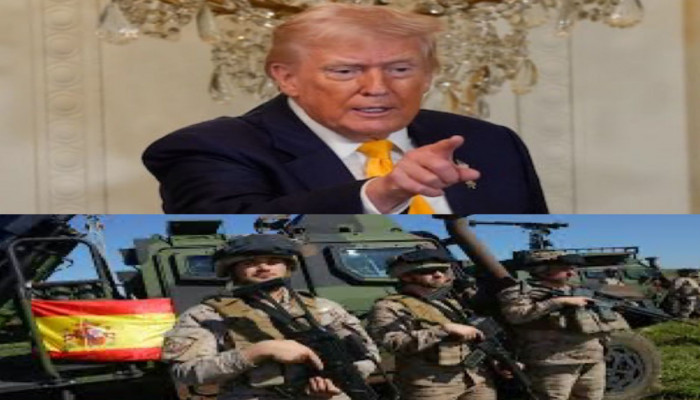
Donald Trump has indicated that he is open to reducing the number of American troops stationed in several European countries, including Spain, Italy, and Germany. His remarks come at a time of growing tensions between the United States and some of its NATO allies, especially over their stance on the ongoing conflict involving Iran.
Speaking to reporters at the White House on Thursday, Trump suggested that a drawdown of US forces in Europe is being seriously considered. When asked directly whether Spain and Italy were also under review, he responded, “yeah, probably.” His comments followed a similar statement a day earlier in which he confirmed that troop levels in Germany were already being reassessed.
The US president linked the potential troop reductions to what he described as a lack of support from certain European nations in Washington’s military efforts against Iran. He openly criticised both Spain and Italy, questioning their commitment to assisting the United States in its strategic objectives. “Look, why shouldn’t I? Italy has not been of any help to us, and Spain has been horrible, absolutely horrible,” Trump told reporters. His remarks reflect a broader frustration within his administration about burden-sharing among NATO allies.
Trump also referred to the ongoing war in Ukraine while defending his stance. “We help them with Ukraine,” he added. He has repeatedly argued that Russia’s invasion of Ukraine is primarily a European issue and that European nations should take greater responsibility for addressing it. Trump has consistently reiterated that US commitments abroad would be reduced unless allies contribute significantly.
Spain has become one of the most vocal European critics of Trump, particularly regarding the US position on Iran. The Spanish government’s actions have angered Washington. It has refused to allow the use of its airspace and two US military bases located on its territory for operations linked to strikes on Iran. This decision directly challenged US military planning and has further strained relations between the two countries.
Italy’s situation is more complex. Prime Minister Giorgia Meloni had initially maintained a close relationship with Trump. However, tensions have recently emerged between the two leaders. The situation worsened after Trump criticised Meloni following her defence of Pope Leo XIV against his remarks. This public disagreement has added to the growing divide between Washington and Rome.
Trump’s comments are part of a broader pattern in which he has repeatedly criticised European allies for not contributing enough to their own defence. He has often argued that the United States carries an unfair share of the financial and military burden within NATO. His latest statements suggest that he may be willing to take concrete steps to reduce US involvement unless these concerns are addressed.
The discussion about troop reductions is not limited to Spain and Italy. Germany is also at the centre of this debate. On Wednesday, Trump confirmed that the United States was reviewing its troop presence in Germany with the possibility of reducing it. This announcement came shortly after German Chancellor Friedrich Merz made unusually strong comments about the US handling of the Iran conflict. Merz said the administration was being “humiliated,” signalling a rare moment of direct criticism from a key ally.
Despite Trump’s remarks, German officials have sought to downplay the potential impact of any troop reductions. They have pointed out that US military bases in Germany are not only important for European security but also serve critical American strategic interests. These bases act as key hubs for operations in multiple regions, including the Middle East and Africa. As a result, any decision to reduce troop levels could have wider implications beyond Europe.
There are also significant political hurdles within the United States that could limit Trump’s ability to follow through on these plans. Any attempt to withdraw troops from Europe is likely to face opposition in Congress. Lawmakers from both parties have historically supported a strong US military presence in Europe as part of NATO’s collective defence strategy.
A similar situation occurred during Trump’s earlier presidency. In 2020, he proposed removing a substantial number of US troops from Germany. However, that plan was blocked by legislative action. Congress intervened to ensure that troop levels were maintained, highlighting the importance many policymakers place on America’s commitments to its European allies.
Current US law further complicates any effort to significantly reduce troop numbers. It sets a minimum requirement of 76,000 troops to be permanently stationed or deployed across Europe. This legal threshold means that any large-scale withdrawal would require congressional approval, making it difficult for the administration to act unilaterally.
Trump’s latest statements have once again highlighted the fragile balance within NATO. While the alliance remains a cornerstone of Western security, disagreements over defence spending, military cooperation, and geopolitical priorities continue to create friction. The issue of troop levels is likely to remain a key point of debate in the coming months, especially as global tensions evolve.
Overall, Trump’s comments signal a willingness to rethink long-standing US military commitments in Europe. Whether these remarks translate into actual policy changes will depend on diplomatic negotiations with allies as well as political dynamics within the United States. For now, the possibility of troop reductions has added a new layer of uncertainty to transatlantic relations.



 Loading...please wait
Comments