




Trump declares national emergency over foreign equipment in US power grid
- In Reports
- 02:04 PM, Aug 28, 2026
- Myind Staff
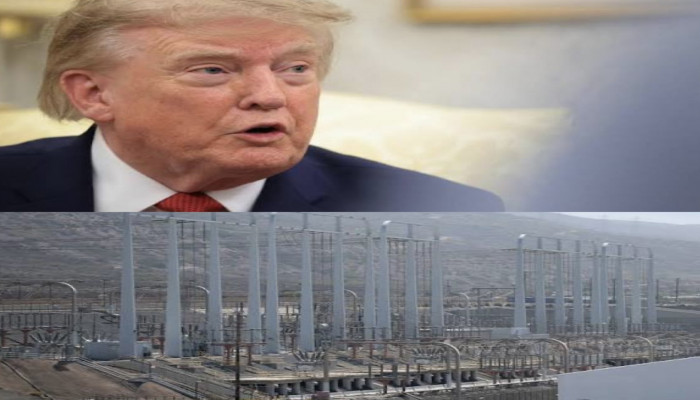
President Donald Trump declared a national emergency on August 26 over what his administration described as an “unusual and extraordinary” foreign threat to the US bulk power system. The order gives the Energy Department wider powers to restrict foreign-made equipment, software and services linked to national security and infrastructure risks. It also allows officials to review some equipment that is already operating on the grid.
The order covers much more than transformers and power plant equipment. It includes major transmission and generation systems, digital controls, firmware, remote access tools, maintenance services and other technologies that could create risks of sabotage, unauthorised access or disruption to the power supply.
The emergency order uses powers under the International Emergency Economic Powers Act and the National Emergencies Act. It allows the Energy Secretary, along with other national security officials, to block the purchase, import, transfer or installation of certain foreign-produced bulk power equipment. The restrictions apply when the transaction involves a “Covered Foreign Entity” and meets specific risk conditions.
These conditions include an undue risk of sabotage, subversion, malicious remote action or disruption of supplies. They also cover risks that could cause serious damage to critical infrastructure or the US economy. Other unacceptable threats to national security or public safety can also come under the order.
The move does not amount to a blanket ban on foreign-made electrical equipment. A transaction must meet the order’s conditions involving a covered foreign entity and a specific security risk. The Energy Department will make the relevant decisions. The order also allows officials to use mitigation measures, licensing procedures and pre-qualified equipment in certain cases.
The administration can also act against equipment that was installed before August 26. The Energy secretary can impose conditions on its continued use, operation, maintenance, servicing or software updates. Officials may require equipment to be identified, isolated, monitored, secured, disconnected, replaced or removed. Before taking steps that could affect operations, the department must consider grid reliability, safety, the availability of replacements and continuity of essential services.
The order focuses on the bulk power system rather than ordinary local electricity distribution networks. It covers the facilities and control systems needed to operate interconnected transmission networks and the generation capacity required to maintain reliability. Transmission lines rated at 69 kilovolts or higher are included, while facilities used for local distribution are excluded.
The list of covered technologies is broad. It includes substation transformers, grid-connected inverters, battery energy storage systems, generators, turbines, high-voltage circuit breakers, protective relays, meters and industrial control systems. Remote terminal units, programmable logic controllers, distributed control systems and other equipment used in substations, control rooms and generating stations are also covered.
The digital side of the order could prove equally important. Officials can examine software, firmware, remote access systems, maintenance arrangements, update mechanisms and other supply chain dependencies when assessing security risks. Modern power networks rely heavily on digital systems with equipment that can be monitored remotely. This can improve efficiency, but it can also create points of vulnerability through software, passwords, communication systems or vendor access.
Trump’s order specifically raises concerns about foreign-produced equipment with digital backdoors that allow remote access. This is the administration’s stated risk concern. It does not mean that every foreign-made device contains such a feature.
Independent grid security assessments have also highlighted supply chain and remote access concerns. In January, the North American Electric Reliability Corporation said growing digitisation and greater dependence on third parties had increased the avenues available to sophisticated cyber threats. Its Critical Infrastructure Protection roadmap called for stronger checks on vendors, better safeguards for remote access and wider baseline cybersecurity protections.
Federal regulators have separately been strengthening cybersecurity requirements. The Federal Energy Regulatory Commission approved new rules in March to improve protections for low-impact bulk electric cyber systems. The measures include stronger password requirements and intrusion detection. These rules are separate from Trump’s emergency order, but show that concerns around supply chains and remote access existed before the latest action.
China is not named in the new executive order. Instead, the order defines a “Covered Foreign Entity” through connections to governments facing certain US arms embargoes or sanctions. Federal officials can also designate other foreign actors whose activities are considered harmful to US national security or foreign policy.
China remains an important part of the wider discussion. Trump took similar action in May 2020 through Executive Order 13920, which also declared a national emergency over foreign threats to the US bulk power system. That order gave the Energy Department powers to restrict certain risky transactions.
In December 2020, the department issued a prohibition order targeting selected Chinese equipment used by a limited number of utilities serving critical defence facilities. Its practical impact was narrower than the broad language of the original executive order. President Joe Biden suspended the 2020 order for 90 days after taking office. The Energy Department revoked the prohibition order in April 2021 while reviewing its approach to building a more stable and risk-based supply chain.
Concerns have since expanded to newer technologies. Reuters reported in 2025 that US experts examining some Chinese-made solar inverters and batteries had found undocumented communication devices. The Chinese Embassy rejected suggestions of malicious intent. The discovery did not establish that all Chinese-made equipment was compromised.
China’s major role in global manufacturing also adds to the concern. The International Energy Agency said in July that China accounted for about 80% of global manufacturing capacity for inverters used in solar and battery installations in 2025. The agency has also said that nearly all grid batteries depend on China for at least one part of their supply chain. Reducing this dependence could improve security, but it could also increase procurement costs and create supply challenges.
The latest order revives and expands the approach taken during Trump’s first term. Its scope now clearly includes inverters, batteries, software, digital services, maintenance and remote access systems. The Energy Department will play a central role in deciding how the policy is applied.
The executive order gives the secretary 120 days to issue implementing rules or regulations as needed. These rules can identify countries, individuals and equipment that require greater scrutiny. They can also establish licensing systems and determine which vendors or products can be pre-qualified.
Industry groups say the details will be important. Bridget Bartol of the National Electrical Manufacturers Association told Utility Dive that the order appeared to update and expand the 2020 approach. She also said software and digital products could create difficult questions about where a product was designed, developed or controlled.
These questions become more complicated when equipment is assembled in one country while its software, cloud services, technical support or firmware updates come from another. The order defines “foreign produced” based on whether an article is manufactured, produced or assembled in the United States. Its security assessment can also consider connected digital services and wider supply chain relationships.
Utilities will need to balance security requirements with reliability and procurement needs. Edison Electric Institute said its members would work with the Energy Department to implement the order while maintaining reliable and affordable electricity.
The White House has linked the emergency to growing electricity demand from advanced manufacturing, data centres, artificial intelligence and defence production. It argues that a grid supporting more strategically important and energy-intensive activities faces greater consequences from cyberattacks, equipment failures or supply disruptions.
Grid planners are already dealing with rising demand. In June, the Federal Energy Regulatory Commission (FERC) ordered six regional grid operators to explain or change their rules for data centres, manufacturing facilities and other large electricity users. The commission said the move was aimed at speeding up connections while protecting reliability and consumers.
The latest order highlights a difficult policy challenge. The US wants faster grid expansion and stronger domestic manufacturing, while many key components remain part of concentrated global supply chains. Moving too quickly to replace foreign equipment could raise costs and cause delays. Moving too slowly could leave security risks in place. The order requires the Energy Department to consider these trade-offs before demanding the removal of existing equipment.
The next phase will depend on the rules issued by the Energy Department. Officials must identify high-risk equipment and develop measures for inventorying, isolating, monitoring or replacing it. The department also has 180 days to recommend changes to federal procurement rules. The aim is to give greater weight to national security risks and prioritise US-made energy infrastructure.
The Federal Acquisition Regulatory Council (FARC) will then have 90 days after receiving those recommendations to consider proposed changes for public notice and comment. The Energy Department must also provide Congress with regular and final reports on the national emergency.
For utilities and suppliers, the key questions will involve which foreign entities are covered, how country-of-origin rules apply to software and services, which equipment can be pre-qualified and how mitigation agreements will work. For the public, the main point is clear: Trump has declared foreign supply chain vulnerabilities in the US bulk power system a national emergency and given the Energy Department significant powers to respond. The order does not state that the US grid is currently under attack. It also does not declare all foreign-made equipment dangerous. Its real impact will depend on the rules and case-by-case decisions that follow.



 Loading...please wait
Comments