




Trump declares national emergency over Cuba, targets oil suppliers with new tariffs
- In Reports
- 06:14 PM, Jan 30, 2026
- Myind Staff
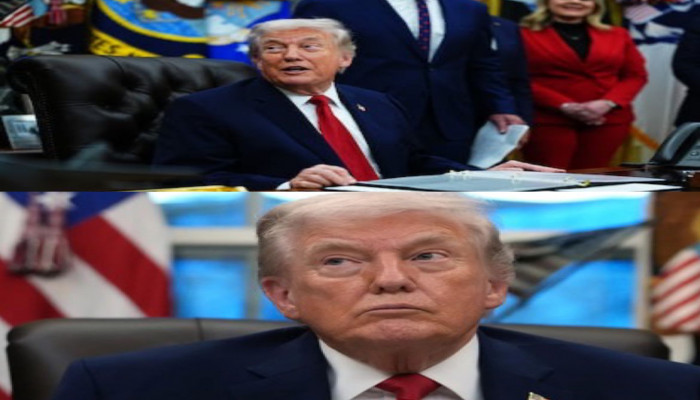
The United States has sharply increased pressure on Cuba after President Donald Trump declared a “national emergency” over the situation involving the island nation. The new move focuses on Cuba’s oil supply, which has become one of its most vulnerable points. Through an executive order, the White House announced tariffs on any foreign country that provides oil to Cuba, directly or indirectly. This decision could impact Mexico’s ability to resume oil shipments to Havana.
In the executive order, the U.S. government stated that Cuba has taken actions that “harm and threaten the United States.” It further said that the Cuban regime aligns itself with and supports “numerous hostile countries, transnational terrorist groups, and malign actors adverse to the United States.” According to the order, “the situation with respect to Cuba constitutes an unusual and extraordinary threat” to U.S. national security and foreign policy.
To respond to what it described as a threat, the U.S. administration said it is “necessary and appropriate” to establish a system of tariffs on products from foreign countries that supply any type of oil to Cuba. The policy is designed to discourage other nations from supporting Cuba’s energy needs and to increase economic pressure on the island.
Mexico has emerged as Cuba’s main supplier of crude oil after Venezuela stopped its shipments following U.S. intervention. Mexican President Claudia Sheinbaum has explained that the oil sent by Mexico falls into two categories: humanitarian aid and contracts signed by Pemex, Mexico’s state-owned oil company, with the Cuban government. Until early January, ships regularly travelled from the Gulf of Mexico coast to Cuba. However, Pemex suspended oil tanker shipments to Havana in mid-January.
Sheinbaum has repeatedly said that humanitarian aid in the form of hydrocarbons will continue. After a phone call with Trump on Thursday, she stated that the oil issue was not discussed during their conversation. According to Pemex’s latest report published in December, Mexico exported an average of 17,200 barrels of crude oil per day to Cuba during the first nine months of 2025. This amount represented 3.3% of Mexico’s foreign oil shipments.
According to calculations by the Financial Times, Cuba currently has enough oil reserves to last between 15 and 20 days. Before the U.S. intervention, Venezuela supplied an average of 46,500 barrels of oil per day to Cuba. Mexico’s average delivery of 17,200 barrels per day stopped in early January, just days after the U.S. operation in Caracas. Other oil suppliers have included Russia, which sent its last ship in October, and Algeria, which has not sent a tanker since last February.
The U.S. military operation that captured Venezuelan President Nicolás Maduro and his wife, Cilia Flores, in Caracas on January 3 marked a turning point in Washington’s approach toward Cuba. Following this event, Trump adopted a more aggressive tone against the Cuban government. He claimed that the Cuban regime “will be failing pretty soon.”
On Tuesday, while traveling to Iowa to deliver an economic speech, Trump told reporters that Cuba “is a nation very close to failing.” His remarks reflected the administration’s belief that economic and political pressure could weaken the Cuban government.
Meanwhile, U.S. Secretary of State Marco Rubio clarified Washington’s position during a hearing before the Senate Foreign Relations Committee. He said that the United States is not directly trying to force regime change in Havana. However, he added, “We would like to see the regime there change. That doesn’t mean that we’re going to make a change, but we would love to see a change.” Rubio further stated, “There’s no doubt about the fact that it would be of great benefit to the United States if Cuba was no longer governed by an autocratic regime.”
With the declaration of a national emergency and the introduction of new tariffs, the United States has taken a significant step in tightening its policy toward Cuba. The move is expected to affect not only Cuba’s energy supply but also its relations with countries that continue to provide oil to the island.



 Loading...please wait
Comments