




Trump claims US has ‘total control’ over Strait of Hormuz, says America may keep it
- In Reports
- 02:58 PM, Aug 13, 2026
- Myind Staff
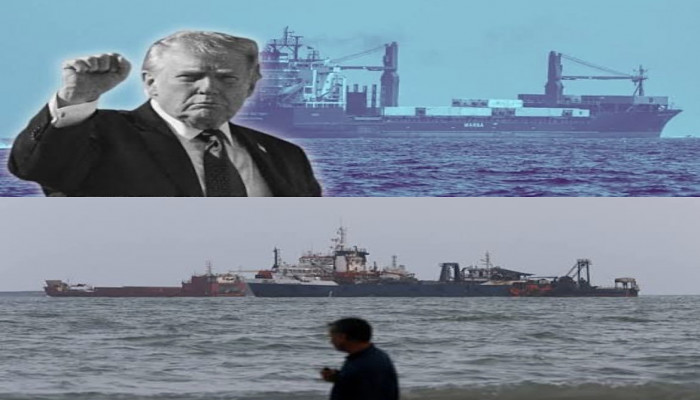
US President Donald Trump on Wednesday claimed that the United States has “total control” over the Strait of Hormuz and suggested that Washington may retain control of the strategic waterway. Trump made the remarks while praising what he described as the success of the US naval blockade against Iran. He said the blockade was being called a “wall of steel” and claimed that Iran had no way to challenge it.
Trump has repeatedly said that the US controls the Strait of Hormuz, a crucial waterway for the movement of oil, gas and other goods through the Middle East. Iran has strongly rejected the claim. Tehran has continued to assert its own control over the waterway amid the ongoing conflict with the United States.
In a post on Truth Social, Trump again defended the US naval operation. He wrote, "The U.S.A. has total control over the Strait of Hormuz. I think we will keep it! Our naval blockade is being called, by everyone, "a wall of steel", and there is nothing Iran can do about it." He also claimed that Iran no longer has a functioning Navy or Air Force and said its soldiers are unpaid. Trump further said that the Islamic Revolutionary Guard Corps, or IRGC, had been “decimated and fleeing”.
Trump also said that Iran was no longer the “bully” of the Middle East. He ended his post with the words, "Praise be to Allah!"
The Strait of Hormuz remains at the centre of the dispute. Iran has said it plans to impose a toll system on the waterway. Iranian forces have also repeatedly targeted ships that Tehran accused of trying to bypass its preferred route. These actions have come in response to the US war launched by Trump on February 28.
Iran has laid out several conditions for reopening the Strait of Hormuz. Tehran has said that the waterway will not reopen until the US lifts its naval blockade, unfreezes Iranian assets and removes sanctions. Iran has also demanded compensation from the United States for damage caused during the war.
Iran’s Revolutionary Guards said on Sunday that Tehran would continue its blockade until its demands were accepted. The force said, "until the enemy accepts all our conditions... the strait is now actually a theatre of war for us and not just a waterway". The statement underlined Iran’s position that the Strait of Hormuz is now part of the wider conflict rather than simply a commercial shipping route.
The dispute has also created an economic and political challenge for Trump inside the United States. The closure of the Strait of Hormuz has pushed up prices for American consumers. The pressure comes as the November midterm elections approach, increasing the political importance of the situation for the Trump administration.
Despite the pressure, Trump has indicated that he is not rushing into full negotiations with Tehran. In an interview with Axios on Sunday, he described his approach as limited and said the US was taking a cautious position. "We are low-keying it," Trump said of his approach in an interview.
Trump added, "We are only semi-negotiating with them," and said the US was watching Iran deal with severe inflation and financial problems. He remained confident that the situation would eventually work in Washington’s favour. "It will work out," he said. "It's like a chess game."
Iranian Foreign Minister Abbas Araghchi has previously described the contact between the two sides in more limited terms. He said Tehran was only “exchanging messages” with the United States through intermediaries. The comments suggest that communication between Washington and Tehran continues, even as the two sides remain sharply divided over the Strait of Hormuz, sanctions, the naval blockade and the wider conflict.



 Loading...please wait
Comments