




Trump calls Hormuz ‘New US Territory’ Iran responds with map claiming entire United States
- In Reports
- 05:51 PM, Aug 19, 2026
- Myind Staff
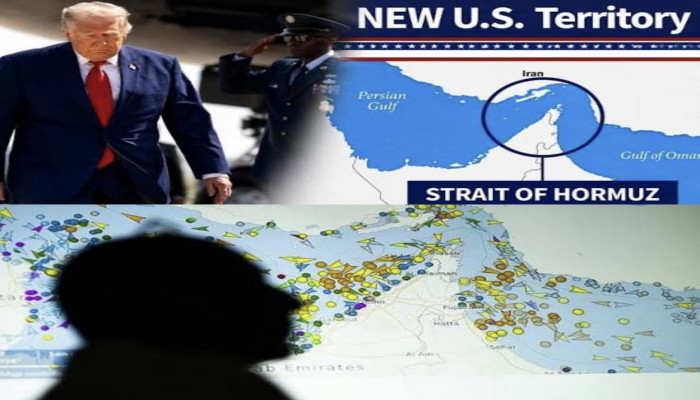
US President Donald Trump’s claim that the Strait of Hormuz is “New US Territory” has triggered a sharp response from Iran on social media. The exchange came as tensions over control of the key shipping route remain high during the ongoing West Asia war. The Strait of Hormuz lies between Iran and Oman and is a major route for global energy shipments.
Trump shared an image on Tuesday showing the Strait of Hormuz circled and labelled “New US Territory”. The White House later amplified the post on X. The image appeared to assert a US claim over the narrow waterway, which has become a major point of conflict amid the war and the wider dispute between Washington and Tehran.
Iran responded with a mocking post of its own. Iran’s Consulate General in Hyderabad shared an altered map on X showing almost the entire United States as part of Iranian territory. California was left outside the claimed area. The image carried the caption “New Territory of Islamic Republic of Iran”. The social media exchange appeared to be intended as satire, but it came against the backdrop of a serious dispute over access to the strait.
The Strait of Hormuz remains one of the world’s most important energy routes. Before the war, about one-fifth of global oil and liquefied natural gas supplies passed through the waterway. Any disruption to shipping through the strait can therefore have a major impact on global energy markets and international trade.
The US and Iran have also offered sharply different accounts of the situation in the waterway. Trump said on Tuesday that the strait was “open and operating”. He said all water mines had either been removed or detonated. Trump also stated that the US naval blockade against Iran was still in force. He added that no talks with Tehran were taking place and that none had been scheduled.
Iran rejected that version of events. Its top negotiator, Mohammad Baqer Qalibaf, said the strait would remain closed until Washington met the conditions set under an interim agreement signed in June.
Tehran has demanded several steps from the US. These include lifting the blockade of Iranian ports, removing oil sanctions, releasing frozen Iranian assets and ending US military operations and threats. The June memorandum had set a 60-day period for negotiations aimed at reaching a permanent settlement. However, the arrangement fell apart within weeks. The memorandum was not renewed after it expired on August 17.
Shipping activity also suggests that the situation remains uncertain despite Trump’s statement that the strait is open. According to Reuters, only six commodity vessels crossed the waterway on Monday. That was below the 10-day average of 11 vessels. No very large crude carriers or LNG tankers were recorded crossing the strait that day.
Oman has also become involved in the dispute. The country has been working with Iran on an arrangement to manage shipping through the Strait of Hormuz. However, Trump threatened military action against Oman over parts of the proposed agreement, according to two regional officials cited by the Associated Press.
The competing claims from Washington and Tehran highlight the growing uncertainty around the Strait of Hormuz. While the exchange of maps on social media appeared mocking, the dispute has serious implications for shipping, energy supplies and regional security. The limited vessel movement reported in recent days also shows that the waterway’s status remains far more complicated than a simple declaration that it is open.



 Loading...please wait
Comments