




Trump-backed Nasry Asfura wins Honduras presidential election
- In Reports
- 01:44 PM, Dec 25, 2025
- Myind Staff
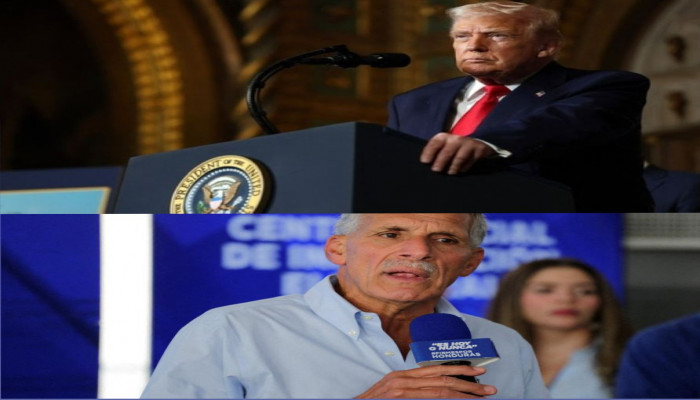
Nasry Asfura, a conservative politician backed by former U.S. President Donald Trump, has been declared the winner of Honduras’ presidential election, more than three weeks after voting on November 30. The election process was marked by delays, technical failures, manual counting of ballots and strong allegations of fraud from opposition parties.
Honduras’ electoral authority, the National Electoral Council (CNE), announced on Wednesday that Asfura secured 40.3% of the vote. He narrowly defeated centre-right Liberal Party candidate Salvador Nasralla, who received 39.5%. Rixi Moncada, the candidate from the ruling LIBRE party, finished a distant third.
The close margin and problems with the electronic ballot system led to a prolonged counting process. According to election officials, about 15% of tally sheets — representing hundreds of thousands of ballots — had to be counted manually to determine the final result. This extended the process and fueled political tensions across the country.
Asfura campaigned on a pro-business agenda, arguing that private investment is essential for Honduras’ economic progress. His platform focused on job creation, improving education and strengthening public security. He has also indicated that Honduras may reconsider its diplomatic recognition of Taiwan and shift its allegiance away from Beijing.
Following the official declaration, Asfura said he was ready to lead the country. “Honduras: I am ready to govern. I will not let you down,” he wrote in a post on X. He is scheduled to take office on January 27 for the 2026–2030 presidential term.
However, the announcement was immediately rejected by rival political groups. The ruling LIBRE party accused authorities of carrying out what it described as an “electoral coup” and repeatedly called for protests. These demonstrations disrupted the manual count, at times preventing officials from accessing the building where ballot papers were stored.
The results were approved by two members of the electoral council and one deputy, while disagreements continued within the body. The third council member, Marlon Ochoa, did not appear in the video in which the winner was formally declared, highlighting internal divisions within the election authority.
Salvador Nasralla refused to accept the outcome, claiming that some ballots that should have been included were excluded from the final count. Despite rejecting the decision, he urged his supporters to remain peaceful. “I will not accept a result based on omissions,” Nasralla said at a press conference in Tegucigalpa. “Democracy does not shut down because of exhaustion, nor because today is the 24th — this is the saddest Christmas for the Honduran people.” This was Nasralla’s third unsuccessful attempt to win the presidency.
The head of Honduras’ Congress, Luis Redondo of the LIBRE party, also rejected the declaration. “This is completely outside the law. It has no value,” Redondo wrote on X, further deepening the political divide.
Donald Trump played a major role in the campaign, openly endorsing Asfura before the election. In a post on Truth Social, Trump described him as the “only real friend of Freedom in Honduras” and urged voters to support him. Trump also threatened to cut U.S. financial aid to Honduras if Asfura did not win and pardoned former Honduran President Juan Orlando Hernandez, a member of Asfura’s National Party, who had been serving a 45-year prison sentence in the United States for drug trafficking and weapons charges.
During the delayed vote count, Trump again intervened, alleging fraud without presenting evidence. He warned there would be “hell to pay” if preliminary results showing Asfura in the lead were changed. Both Nasralla and the LIBRE party condemned Trump’s statements, calling them interference in Honduras’ internal affairs. Nasralla told Reuters earlier this month that Trump’s last-minute comments had damaged his chances of winning.
Experts say Trump’s support for Asfura is part of a broader effort to strengthen a conservative political bloc across Latin America, including leaders such as El Salvador’s Nayib Bukele and Argentina’s Javier Milei.
Despite the controversy, the United States formally welcomed the election result. U.S. Secretary of State Marco Rubio said on X, “The United States congratulates President-elect Asfura and looks forward to working with his administration to advance prosperity and security in our hemisphere.” Rubio also urged all political actors to accept the outcome to “ensure a peaceful transition.”
The Organisation of American States (OAS) responded cautiously. Its Secretary General, Albert Ramdin, said the organisation “takes note” of the results and will release a report with findings and recommendations in the coming days. “The General Secretariat is aware of the difficulties experienced during the electoral process, recognises the work carried out by Honduran institutions, and regrets that the full recount of the votes cast by citizens has not yet been completed,” Ramdin said in a post on X.
Nasry Asfura was born on June 8, 1958, in Tegucigalpa to a family of Palestinian descent. He studied civil engineering but did not complete his degree. In the 1990s, he worked in city administrations and later served as a congressman and minister for social investment. In 2013, he became mayor of Tegucigalpa and the surrounding areas, gaining popularity for infrastructure projects and earning the nickname “Papi, at your service.”
While he presents himself as modest and hardworking, Asfura is currently under investigation, along with former officials from his mayoral administration, over alleged embezzlement and money laundering. He has denied all accusations, calling them politically motivated.
During the campaign, Asfura rejected claims that he represents the far right. “Extremes don’t work,” he said. “People don’t care if you’re ugly or beautiful, left or right, what they want are solutions.”



 Loading...please wait
Comments