




Trump approves major Canada-US oil pipeline project
- In Reports
- 01:14 PM, May 01, 2026
- Myind Staff
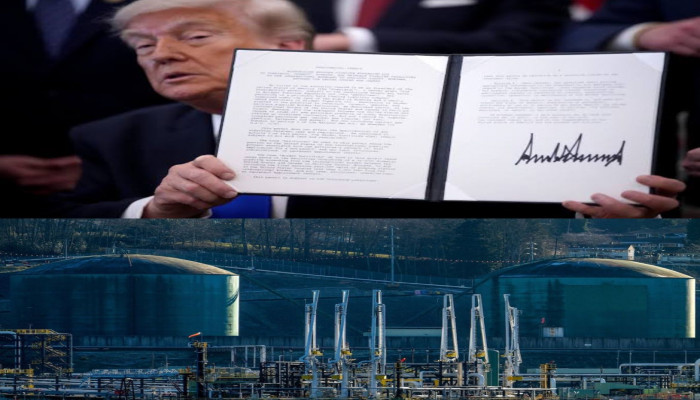
US President Donald Trump has approved a key permit for a new oil pipeline project connecting Canada to the United States. The project, known as the Bridger Pipeline Expansion and often referred to as “Keystone Light,” has drawn attention for its similarities to the controversial Keystone XL pipeline, cancelled earlier. The approval allows the pipeline to cross the international border, marking an important step forward for the project.
The proposed pipeline will be about three feet wide and is designed to carry up to 550,000 barrels of oil per day. It will run from Canada through Montana and Wyoming, where it will connect to an existing pipeline network. Even after this approval, the project still requires several state and federal environmental clearances before construction can begin. Company officials have indicated that they aim to start construction next year if all permissions are secured.
Environmental groups have already raised concerns and are preparing to challenge the project. Their main worry is the risk of oil spills, which could damage ecosystems and water sources. The debate reflects ongoing tensions between energy development and environmental protection.
At its maximum capacity, the pipeline would transport about two-thirds of the oil that the Keystone XL pipeline was expected to carry. That earlier project was partially built before President Joe Biden cancelled its permit in 2021, citing climate change concerns. The decision had disappointed Canadian leaders, especially after Alberta had invested heavily in the project.
Speaking after approving, Trump highlighted the difference between his administration and the previous one. “Slightly different from the last administration. They wouldn’t sign a pipeline deal. And we have pipelines going up,” he said. His remarks underline his continued support for expanding fossil fuel infrastructure.
During his first term, Trump had also backed the Keystone XL project despite strong opposition. Native American tribes had expressed concerns about potential spills affecting their land and water. Environmental activists had also criticised the project for contributing to climate change. Unlike Keystone XL, the new Bridger pipeline is planned to avoid passing through Native American reservations.
According to the company, more than 70% of the pipeline will be built along existing pipeline routes, and about 80% will pass through private land. This approach is intended to reduce disruption and ease the approval process. The pipeline will carry different types of crude oil, including oil from Canada’s oil sands region. The oil will either be refined in the US or exported to other markets.
The permit also allows the transportation of other petroleum products such as gasoline, kerosene, diesel, and liquefied petroleum gas. However, company spokesperson Bill Salvin clarified that the main focus remains on crude oil for now. He explained that including other fuels simply provides flexibility for future operations.
The company is working against time to complete the project before any possible policy changes in the future. If construction begins in the fall of 2027 as planned, the pipeline could be finished by late 2028 or early 2029. Trump’s current term ends on January 20, 2029, which adds urgency to the timeline.
The project has also brought renewed attention to the company’s past safety record. Bridger Pipeline and its related companies have been linked to several major spills over the years. In 2015, more than 50,000 gallons of crude oil leaked into the Yellowstone River, affecting a city’s drinking water supply in Montana. In 2022, a diesel spill in Wyoming released around 45,000 gallons. Another major incident in 2016 saw over 600,000 gallons of crude oil spill in North Dakota, contaminating the Little Missouri River and nearby areas.
Following these incidents, subsidiaries of the parent company agreed to pay a $12.5 million civil penalty to settle a federal lawsuit related to the spills in North Dakota and Montana. These past events have strengthened the concerns of environmental groups about the risks associated with the new pipeline.
In response, the company said it has taken steps to improve safety. Salvin stated that they have developed an AI-based leak detection system to identify problems more quickly. The pipeline design also includes plans to drill 30 to 40 feet beneath major rivers like the Yellowstone and Missouri. This method aims to reduce the chances of leaks, especially compared to older pipelines that were placed in shallow trenches.
Defending the project’s safety measures, Salvin said, “We designed the pipeline with integrity and safety in mind. We have emergency response plans should something happen where oil happens to get out of the line, which is fairly rare.” His statement reflects the company’s effort to reassure regulators and the public.
The company, based in Casper, Wyoming, currently operates more than 3,700 miles of pipelines. These are spread across key oil-producing regions such as the Williston Basin in North Dakota and Montana, and the Powder River Basin in Wyoming.
Despite these assurances, environmental groups remain strongly opposed. Organisations such as the Montana Environmental Information Centre and WildEarth Guardians have voiced their concerns. They argue that no pipeline can be completely risk-free and that spills are an inherent danger.
Jenny Harbine, an attorney with the environmental law firm Earthjustice, emphasised this point clearly. “The biggest concern we see right now is the concern inherent in all pipeline projects, which is the risk of spills,” she said. “Pipelines rupture and leak. It’s just a fact of pipelines.”
As the project moves forward, it is expected to face legal challenges and continued public debate. Supporters see it as a boost for energy supply and economic growth, while critics view it as a step backwards in efforts to tackle climate change. The final outcome will depend on regulatory approvals, legal battles, and how the broader political landscape evolves in the coming years.



 Loading...please wait
Comments