



Trump administration pauses China tech restrictions ahead of Xi summit: Report
- In Reports
- 01:38 PM, Feb 13, 2026
- Myind Staff
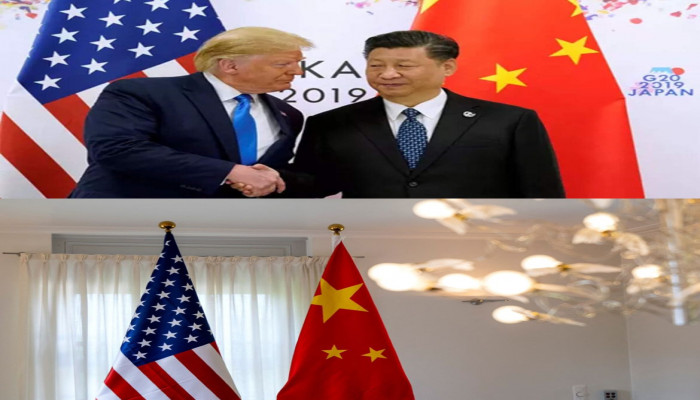
The Trump administration has put several major technology-related security measures against China on hold ahead of an expected April meeting between U.S. President Donald Trump and Chinese President Xi Jinping, according to sources.
The paused measures include a proposed ban on China Telecom’s U.S. operations, as well as restrictions on the sale of Chinese equipment used in U.S. data centres, the sources said.
The U.S. government has also temporarily stopped work on other proposed actions, including a ban on domestic sales of routers made by TP-Link and restrictions targeting the U.S. internet business of China Unicom and China Mobile. Another measure that would block the sale of Chinese electric trucks and buses in the United States has also been paused, four people said, speaking on condition of anonymity.
These decisions have not been previously reported. According to sources, they are part of the administration’s broader effort to limit U.S. actions that might anger Beijing after Trump and Xi reached a trade truce in October.
That October meeting reportedly included a pledge by Chinese officials to delay export restrictions on rare-earth minerals, which are critical for global technology manufacturing.
The Commerce Department defended its approach, saying it is actively using its authorities to deal with security risks. The department said it is working to “address national security risks from foreign technology, and we will continue to do so.”
However, critics argue that pausing these measures could leave American infrastructure exposed, especially as U.S. data centre construction grows rapidly due to rising demand for artificial intelligence technology.
“At a moment when we are desperately trying to remove ourselves from Beijing's leverage over rare-earth supply chains, it is ironic that we're actually letting Beijing acquire new areas of leverage over the U.S. economy – in telecoms infrastructure, in data centres and AI, and EVs,” said Matt Pottinger, who served as deputy national security advisor during Trump’s first term.
The Chinese Embassy said Beijing opposes “turning trade and technological issues into political weapons.” It also welcomed cooperation between the two countries, saying such engagement could make 2026 “a year where our two major countries advance toward mutual respect, peaceful coexistence and win-win cooperation.”
TP-Link Systems Inc., which is based in California and was spun off from a Chinese firm in 2024, stressed that it is an independent American company. The company said it operates “with U.S.-managed software, U.S.-hosted data, and security practices that meet U.S. industry standards.”
It added, “Any suggestion that we are subject to foreign control or pose a national security risk is categorically false.”
Meanwhile, the White House and China’s state-owned telecom companies, China Telecom, China Mobile, and China Unicom, did not respond to requests for comment about the paused measures or why they were put on hold.
Trump is expected to visit Beijing in April and has invited Xi to visit the United States later this year.
Some Democratic lawmakers have criticised the administration’s decision to delay the security actions.
“You can’t claim to be ‘tough on China’ and let the Chinese Communist Party flood their technology into critical infrastructure and companies across America – from the auto industry to telecommunications," Senate Minority Leader Chuck Schumer said in a statement.
He added, “In his rush to please Chairman Xi, Trump is selling out our national security, industry, and risking the private personal data for millions of Americans.”
According to two sources, the paused measures were originally designed to prevent China from accessing sensitive U.S. data for blackmail or intellectual property theft. They were also aimed at stopping China from embedding itself into internet-connected systems that could be used to sabotage critical U.S. infrastructure.
Sources said that throughout much of last year, Commerce Undersecretary Jeffrey Kessler delayed moving forward with the measures, saying he needed approval from the White House and Commerce Secretary Howard Lutnick. However, the Commerce Department and Kessler did not respond to questions regarding this claim.
After the October trade truce, leadership reportedly told staff in the office responsible for handling foreign tech threats to “focus on Iran and Russia,” according to two sources. The report notes that Iran is not considered a technology threat at the same level as China or Russia. The Commerce Department did not respond to questions about this shift.
Last month, the Commerce Department removed the woman who had been leading the office. According to two sources, she will be replaced by Katelyn Christ, a political appointee who has previous experience working in the office.
One source said Christ could bring back some of the paused measures if U.S.-China relations worsen after the April summit. Christ and the Commerce Department did not comment.
Some critics argue the U.S. should not wait. U.S. data centre capacity is projected to rise by nearly 120% by 2030, according to global real estate firm Jones Lang LaSalle.
David Feith, who served in Trump’s first and second administrations, warned that Chinese-linked data centre hardware is becoming a major national security risk and said action is urgently needed.
He said American data centres could become “remotely controlled islands of Chinese digital sovereignty,” while the U.S. quietly creates “strategic vulnerabilities into our AI and energy backbone.”
Wendy Cutler, former acting deputy U.S. trade representative and now with the Asia Society Policy Institute, said it makes sense that the administration would pause restrictive measures while seeking stability with China.
She said, “The Chinese have made it very clear that stabilisation in their mind means no more export controls and other restrictive tech measures..., so particularly in the lead-up to the April visit to China, I would not expect the issuance of more… controls.”
She also pointed to the risk of renewed Chinese restrictions on rare-earth exports, saying, “Not only does it have leverage, it is willing to use it. It ties the president’s hands.”
Sources also said TP-Link contacted the Commerce Department last year with suggestions to address security concerns. This reportedly opened the possibility of a less strict approach to regulating the company’s router sales in the U.S.
In response to questions, TP-Link said its routers are not uniquely vulnerable to cyberattacks. It said its code has been thoroughly tested by U.S.-based experts to prevent covert methods that could bypass security protections.
The company also said it has “fully cooperated with the Commerce Department” and does not comment on the “specifics of a government investigation.”



 Loading...please wait
Comments